Around the nation, people are celebrating the 2016 Verizon strike. I don’t usually celebrate until the affected members have voted on the contract offer, but there are important lessons to be learned here. Americans can use strikes to win, not just a little bit but everything!
Here’s what “Gawker” had to say on its web site about Verizon:
“Strikes have always worked. Strikes still work. Pro-business forces like to deride unions as socialist parasites, but strikes are, in a sense, one of the purest free market actions that workers can take: the refusal to sell
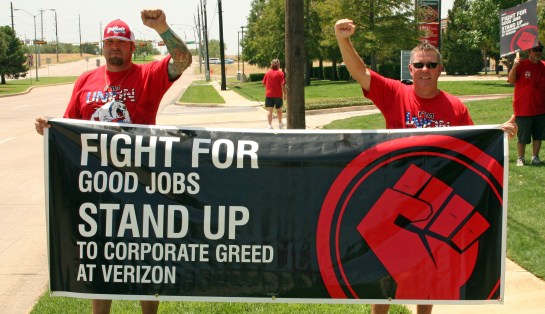
The public is asked to join in — and they should!
labor at a price that is deemed too low. This has the effect of raising the price of labor. Though “Economics 101″ idiots like to pretend that the free market will always magically produce the perfect wage for every job, the reality is that working people-people with less money-are always at a disadvantage when it comes to asserting the leverage necessary to raise their own wages, because they can’t afford to stop working and lose a paycheck. This is the biggest hurdle that strikes have to clear. It’s hard for working people to leave work, demanding better wages and working conditions. It’s a gamble. But it tends to pay off.
‘As much as workers need wages, businesses need labor even more. The free market has not raised your wages in decades. The government has not raised your wages in decades. You need to raise your own wages. Organize. Then strike. It’s always good to be reminded that it works.”
Working People Have Few Weapons
The ability to withhold our labor, either through strikes or slowdowns, is the strongest thing we can do. Nearly every tactic in our arsenal is just a way to lead up to a strike or a slowdown. We need to think seriously about how we can use our main power.
Do Strikes “Still Work?”
A lot of people might disagree that “strikes still work.” If you look at the Bureau of Labor Statistics on strikes, you can see that strike activity dropped tremendously in 1982, and there have been fewer than 100 big strikes in the entire nation in the years since then. In 2015, there were only 12. In 2009, when the recession was at its worst, there were only 5! In 1952, there were 470!
What Happened in 1982?
Reagan happened in 1982. The spokesperson for General Electric and corporate America in general dragged out an obscure court ruling, NLRB v. Mackay Radio, that cut away most of our legal right to strike in America. He used it to “permanently replace” the Flight Controllers. Unions have to think long and hard about conducting an economic strike now, because the company can hire scabs and keep them permanently.
The Reagan presidency signaled the end of any hope of labor-management partnership, even though many labor leaders clung to their illusions. Government was clearly on the side of business, and both of them were against American workers!
Why Bring It Up?
There are more than one kind of strike. I don’t mean the legal difference between an “economic” strike and an “unfair labor practices” strike. I mean that there are strikes against companies and there are strikes against governments.
Strikes Against Governments?
The idea of a political strike to change government policy is well known in Europe, and it used to be known here in America. The great worldwide strike of May 1, 1886, is celebrated all over the planet, and it was centered here, in Chicago! It was a political strike to get government to set an 8-hour day. The “student moratoriums” and the “Chicano Moratorium” of the 1960s were political strikes.
We usually treat the Industrial Workers of the World (IWW) as part of our illustrious union history. But they weren’t exactly unionists. They were revolutionaries.
The IWW intended to organize all workers, or at least a large enough percentage of workers, to be able to shut the entire nation down. They weren’t planning it so they could get a raise or a 10-minute coffee break. They intended to overcome capitalism and institute socialism in America. If only the workers had known about it, they might have won; but the bosses found out, too.
Economic and Political Strikes Both Deserve Our Support
In a way, every little strike action in America is a dress rehearsal for something much more profound. The Communications Workers at Verizon asked for, and got, a lot of public support and participation. The Wal-Mart workers strain to get everybody’s help, as do other groups from time to time.
Participating in a strike for better wages and participating in a strike for government change — both — are good training for everyone. They result in a better organized, better informed, more capable, stronger progressive movement.
Let’s Daydream Together about Political Strikes
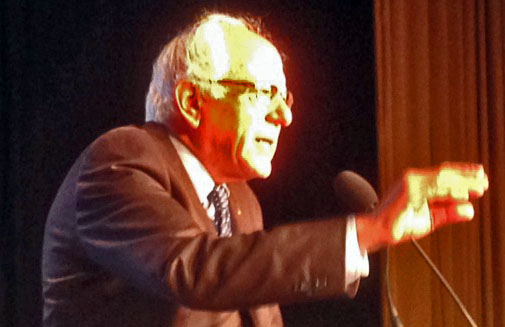
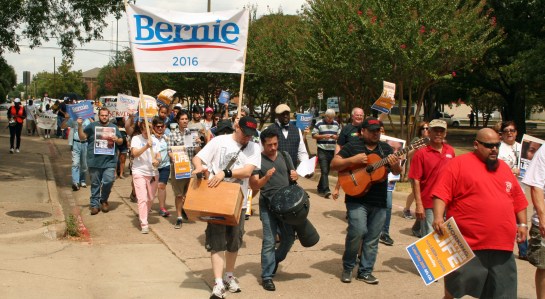
Suppose someone was able to unite the progressive Americans who really want fundamental change. Suppose they had the technical know-how and the access to internet servers to organize us by the millions. That’s not as crazy as it sounds. Bernie Sanders just did it this year!
Suppose those millions agreed on some fundamental demand. It might be raising the minimum wage to $15/hour. It might be cutting working hours. It might be saving the planet. Anyway, suppose they came to agree on something.
Then suppose they set a date, for example May 1, 2017. Then suppose they said that date would begin a “virtual” strike. Nobody would actually stop working, but people would declare their willingness to participate. We’d learn from that, every time we did it.
Eventually, suppose somebody examined the data from the “virtual” tactic, found it very good, and then actually called for a do-or-die nationwide political strike until the goal had been met. You see where I’m going with this?
–Gene Lantz


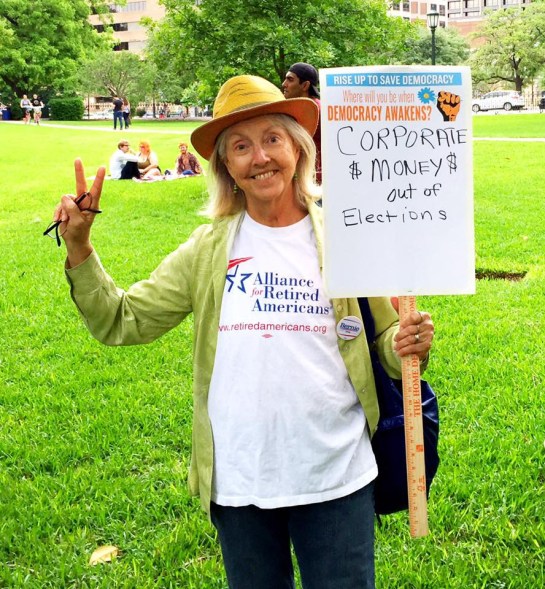
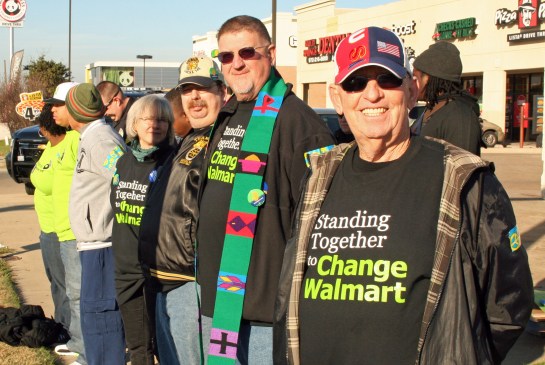 Traditionally, it’s easiest to organize economic units working under the same employer in more or less the same vicinity. It’s even better, as the auto workers showed us, if they work on assembly lines, so that just a few missing workers can stop production.
 Working people have long dreamed of having a political party that consistently represents their interests. I’ve heard radicals blast union leaders because they haven’t stepped out alone to start a workers party. I’ve heard people so desperate for a workers party that they formed a pretend one.


 genelantz