
When Did Capitalism Go Bad?
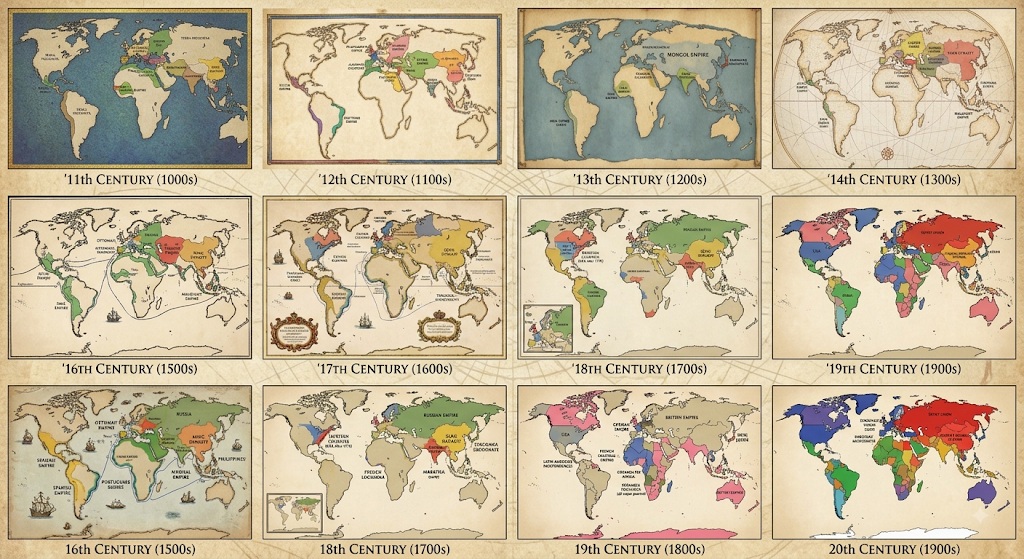
I’ve been starting arguments about when capitalism went bad. I haven’t won any.
One reply is “When was it ever good?” Using common sense, which is the accumulation of our personal experiences, the conclusion is obvious: “capitalism is no danged good and never was.” But common sense, while nearly always correct, isn’t always adequate for analysis.
Another interesting reply was “It depends on your point of view.” I think that person was saying that things have always been bad for people of color and that the particular stages of economic circumstances haven’t made any difference. There’s a lot of truth there, but it’s a subjective and ahistorical view. Also, it’s easily disproved because “people of color” ruled vast empires in some periods.
I suppose I realized that capitalism used to be a good thing while reading Frederick Engels’ Origin of the Family, Private Property, and the State. He relied on the work of another anthropologist to show that capitalism ended serfdom. The so-called “free” workers under capitalism had better lives than they did when they were serfs.
Some of the people I talked to were confused about chattel slavery in the American South. One guy said that it was the “heyday of slavery.” I had to interrupt this one, because the heyday of slavery was clearly in olden times when slaves were captives instead of chattel property. The Romans had so many slaves that they lived in terror of a slave takeover, and Spartacus nearly gave them one.
It’s true that the Southern slaveholders were capitalists, but it’s also true that the productive power of Northern capitalists was the main factor in winning that war. One could make a good argument that Southern slaves freed themselves, but it would still be true that they were better off afterward as so-called “free” workers.
I never argued that capitalists were good people. As far as I’m concerned they have about the same morality as the Tsar, Hitler, or any autocrat. That’s not the point. The point is that quality of life improved for those who had been serfs and became laborers under capitalism. They could quit their jobs and serfs couldn’t.
The reason that capitalists conquered everybody else was their productive power. They could produce more commodities and make them cheaper. Maybe they didn’t have any intention of improving anybody’s quality of life, but they did all the same.
When Did Capitalism Change?
So far, I’ve found only one person who agreed that capitalism improved standards of living at one time, but doesn’t do it now. He thought the change came at the beginning of the 19th century. I asked if he was basing his guess on the slave uprising in Haiti, but he said that wasn’t it. I think his guess was somehow based on military changes, not the economic changes I was looking for.
I believe that capitalism generally improved its subjects’ standards of living until the 20th century. At that time, they had pretty well completed their takeover of all the world’s territories. There were still plenty of kings and emperors, but the power had gone to the capitalists. Their problem was that they had nowhere else to expand, and they have to expand.
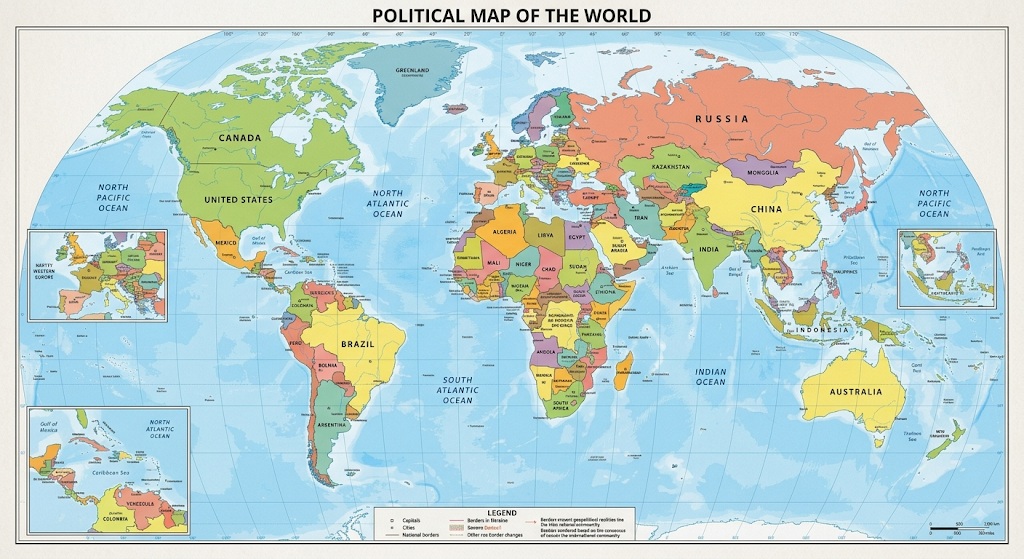
So they started their first world war. I think that having millions die or get crippled in war, and having even more die from the so-called “Spanish” flu, put a big dent in the overall standard of living. Afterward, the winners had big improvements in their standards of living, but the losers certainly didn’t.
Also, World War I didn’t offer any long term economic solution. Even the winners were in crisis soon enough, and another world war, this one originated by capitalists desperate enough to turn to fascism, resulted. These awful wars and the resultant inequality were a real drag on standards of living.
Americans were winners in both wars. Winning distorted our understanding of the historical process. Also, Americans don’t know much honest international history. If we did, we would know that war has been almost perpetual for the United States in the 20th and 21st centuries. We would also know that a general worldwide economic crisis has been evident.
If we understood our history and its underlying economic causes a little better, maybe we could avoid the coming fascist dictatorship and perpetual war that is trending now, in 2026.
–Gene Lantz
I’m on KNON.org 89.3FM in Dallas every Saturday at 9AM. I speak every where I’m allowed. I put my personal stuff on http://lilleskole.us.

