
Multilateralism vs Constant War
I was inspired by an article about China’s views on the United Nations and restoring multilateralism in all international relations. They encourage the United Nations to stand up for it.

The opposite of multilateralism is intense competition, including wars between states. I think most of us would agree with what the Chinese say in the article, but is multilateralism even possible? Maybe we need some clarification.
What’s a State? What’s a Nation?
Let’s do the easy one first. A nation is a group of people sharing some things such as history, language, religion, and culture. A good example that we often use is the Cherokee nation. Lots of them live in Oklahoma because they were forced to move there when their state was subjugated.
A state is an administrative body through which a ruling class carries out its affairs, including the subjugation of any other economic class that might get in their way. Our modern state is not run by the Cherokees, even in Oklahoma. It is run by rich capitalists who command police, armies, prisons, and border agents to control or kill anybody penetrating their turf.
Borders Are Central to Capitalism
When capitalism began, around the middle of the 16th century in England, they tightly defined their borders. They defend those borders with every kind of armament. They don’t let anybody in or out without their permission. This fixation with borders was fairly new in history and doesn’t always make sense to working people.
Mexican Americans, for example, often say that they didn’t cross any borders but “the border crossed us.” Most of the Western United States was taken from Mexico, so it’s understandable that Mexican Americans believe they should be able to cross back and forth over the imaginary lines that capitalism established.
The way to understand capitalism’s borders is to think of gangster movies where the various criminals get together and define their “turf.” If a gangster is selling drugs on the wrong street corner, he/she is punished by the gang bosses. Similarly, capitalists established their borders by force of arms.
Borders Change, Or Get Changed
Long ago, what people called “China” was considerably bigger than what is pictured above.
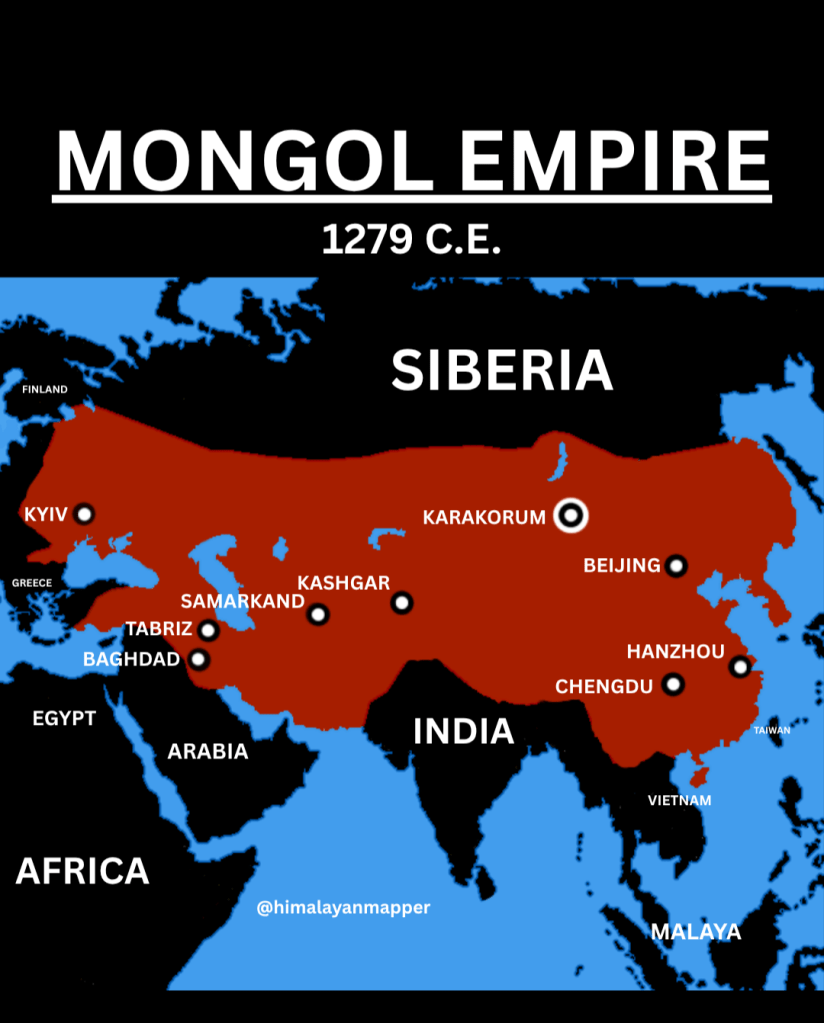
“China,” or the “Mongol Empire” extended well into Europe, as you can see on this old map. The Mongols conquered a lot of territory, but subsequent dynasties lost it to other aggressors.
Plenty of modern borders weren’t drawn by the capitalists who lived there. They were drawn by the great imperialist powers. In World War I, for example, the Austrian Empire and the Ottoman Empire were on the losing side. Here’s a map from before the Great War:
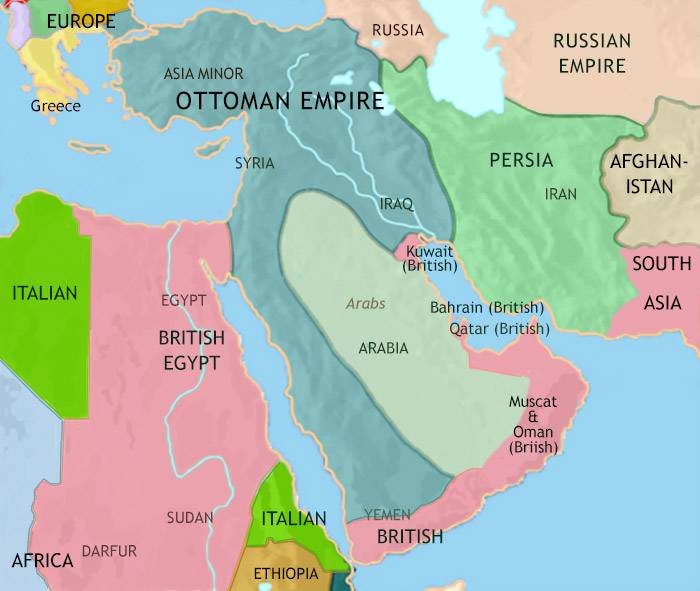
Their former territories, along with a lot of Africa, were carved up by the victorious imperialists. Here’s a map of the Middle East from after WWI:
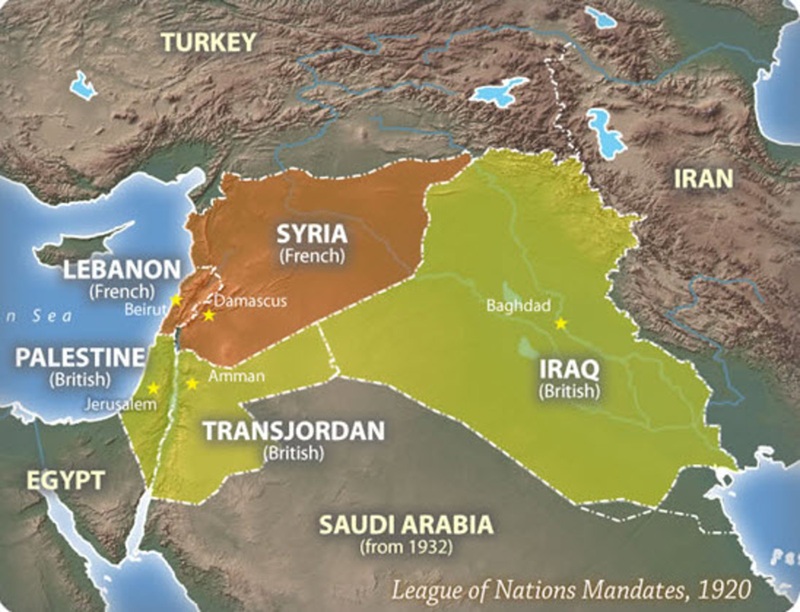
The joke goes that one of the squiggly lines on the border of Iraq was caused when somebody jostled Winston Churchill’s pencil.
Keep in mind that “nation” and “state” are entirely two different things, but nothing in this world is absolute and ideal. The Cherokee nation may not have its own state, but they have some administrative powers. There are nations that were able to win their own state. Pakistan is a good example.
Are We Going to Get the Multilateralism We Deserve?
No, we’re not. The modern state, with its defined borders and defending armies, is a capitalist creation. Capitalists have to expand. That’s why they had World War I, to settle who gets to expand where.
Remember the gangsters and their turf? Do you think the gangsters actually respect each other’s “territory” for any length of time?
We may long for socialism and the eventual “withering away” of states, but right now what we have is a world full of capitalist states and a few places where socialism is trying to defend itself from them.
After World War II, when the United States was firmly in control of most of the world’s economy, they were happy to allow the United Nations to exist. They talked about “multilateralism” all the time, just as long as they were the ones in charge.
But their hold on the world economy is slipping, and that’s exactly why they have started attacking other people’s borders. No border is safe.

