Archive

elections

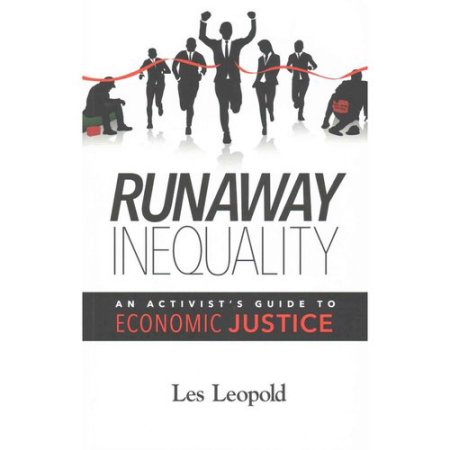
The Communications Workers of America is doing what unions almost never do — studying the actual mechanics of American capitalism and figuring out how to fight it! They are distributing and studying a book by Les Leopold of the Labor Institute.

runawayinequalitybook

Leopold, Les: Runaway Inequality. An Activists Guide to Economic Justice, Labor Institute Press, New York, 2015. (click for a review)

The foreword by CWA President Chris Shelton urges all union members to read the book. Shelton is also quite specific in recommending an electoral strategy: “…we need to build our own, independent, anti-corporate, pro-union, political organizations! Wall Street has two parties. We need one of our own.”

He recommends the Working Families Party, (click here) which already exists in 10 states. Could this be the labor party that American progressives have been begging for since forever?

The fact that one of America’s largest, best distributed geographically, and most vibrantly active unions is putting this body of information out is significant. It’s also a timely prescription for the national illness. The negative images of Donald Trump and Hillary Clinton are moving people away from the traditional two-pronged capitalist political system while the hopes aroused by the Bernie campaign are still not settled on a program and course of action.

It’s the Economy

Most of the book consists of graphs and explanations of the wealth gap and income gap that have become deep chasms since around 1980. Most of us have seen some of this striking data before, but nowhere is it presented so thoroughly and connected so well to an underlying cause. Around 1980, when Reagan was elected, America’s ruling elite adopted an extreme anti-worker and pro-corporate program that included deregulation, tax cuts for the wealthy, service cuts for the poor, and attacks on unions and democracy in general.

We have all felt parts of this ugly program firsthand, but Leopold’s book connects the parts into a whole, then begins an optimistic discussion on what we can do about it.

Let’s Get Behind It!

One could make an intellectual discussion about the better or worse aspects of Leopold’s book, but doing so would be frittering away an opportunity that the Communications Workers are giving us. Here’s a chance to join in an educational process that can give immediate direction to the progressive movement. We can’t afford to miss it!

–Gene Lantz

Click here for more of these ideas
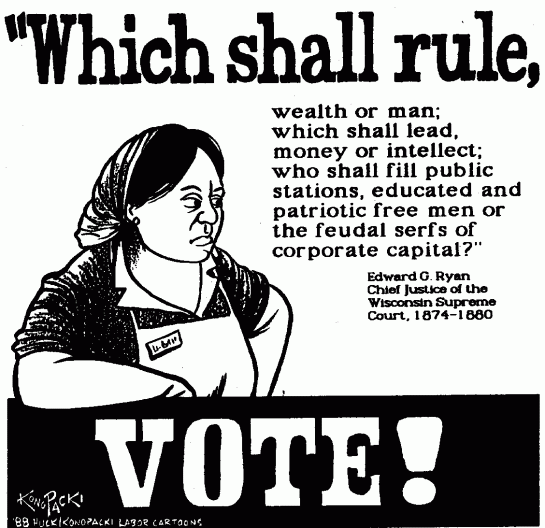
People were shocked recently when French President Francois Hollande, head of the Socialist Party, forced legislation through that would make it easier for bosses to lay people off, make them work longer hours, cut their pay and cut into some of their special leaves — such as maternity leave. Click here for BBC version. Protests were very large. I read that 70% of the people were against the new labor rules. But they passed!

lincolnlabor

How could that be?

The simple answer is that Hollande is a SINO — Socialist in Name Only. But simple name calling doesn’t really provide any answers. Undoubtedly, France is a capitalist nation with a president who calls himself a socialist and leads a party that calls itself socialist. They got elected, but they didn’t overcome the bosses and, probably, never intended to.

As long as the bosses are in power, workers will never win any permanent gains. Everything we can win, even the 35-hour week that they enjoy(ed) in France, can still be taken away.

France is a capitalist nation and subject to the same economic laws that govern all the capitalist nations. All of them function in competition with one another. When the competition gets rough, as it is worldwide right now, the employers turn like vicious cannibals against their own people in order to drive down costs. Most costs are labor costs, so capitalist governments, including ours, are in the process of competing with one another by chopping away our standards of living.

Even nations that actually have overcome the employers have to compete with other nations within a world capitalist system. Did the Soviet workers ever win a 35-hour week? I don’t think so.

It doesn’t matter much what the government calls itself as long as it is still capitalist and still operating under the capitalist rules.

–Gene Lantz

Click here for more of these ideas
I sometimes think of politics as a football game where each side pushes for yardage.  The goalpost ahead of us is a decent democratic society. The one behind us is slavery and want. In all of American history, we have struggled for yardage between those goal posts. The little upright yard markers are the court decisions and legislation that show progress or setbacks.

footballplayers

The 2016 elections will not result in a perfect society. Neither did the 2008 elections, even though, to listen to the complaints, that’s what some voters expected. All things considered, the Obama Administration has been a whole lot better than what might have happened in 2008, and what will happen after 2016 can be a whole lot better than the Republican alternative.

Lesser evil?

That’s not “Lesser Evil” politics. It’s just an honest assessment of where we are and what the possibilities are in the current election.

The Outlook for Seniors is Promising

Nowadays, I mostly work with the retiree movement. Over the years, my speeches have been long, whiney complaints about all the attacks against the right to retire. There was a lot to whine about. Since Reagan was elected, most pension plans have been lost. Employer-sponsored health care plans have disappeared or been shamefully altered to the advantage of management. Social Security, so far, has not suffered a fatal blow, although several have been fired at it, but it’s been hit hard around the edges. The budget for administering Social Security has been cut so severely that there are empty buildings all over the nation where seniors used to be able to get help, but are gathering dust now. The Republicans in the House of Representatives just voted to cut another $1.2 billion!

Thanks mostly to the Bernie campaign, things are looking up for retirees in 2016. The Democratic Party platform and presidential nominee are publicly committed, not to “saving” the right to retire, but to extending and improving it!

But Seniors Have to Organize and Fight

Older Americans are going to have to do a whole lot more than hope for the best to make the Democratic Party promises come true. Fortunately, the AFL-CIO has made that possible by creating the Alliance for Retired Americans and a bunch of state affiliates.

Over the month from July 26 to August 25, the Texas affiliate scheduled nine separate actions in 6 different cities. Click here for list. The period includes the anniversaries of Medicare/Medicaid and Social Security.

At the July 26 event, State Rep Chris Turner read the words of ex-president Harry Truman on July 30, 1965, when Lyndon Johnson signed the Medicare/Medicaid amendment:

“No longer will older Americans be denied the healing miracle of modern medicine. No longer will illness crush and destroy the savings that they have so carefully put away over a lifetime so that they might enjoy dignity in their later years. No longer will young families see their own incomes, and their own hopes, eaten away simply because they are carrying out their deep moral obligations to their parents, and to their uncles, and their aunts. And no longer will this Nation refuse the hand of justice to those who have given a lifetime of service and wisdom and labor to the progress of this progressive country.”

That was progress. In 1965, we moved the football and the yard markers in the right direction. We’re moving them now!

–Gene Lantz

Click here for more of these ideas
 

Watching the Republican convention may have convinced America that never have so many white people gathered for such malevolent purposes. But, every now and then, the TV cameras pick up a dark face and zoom in. A handful of African Americans took the podium, as did a handful of Latinos, women, and a tiny handful of gays. This for a party whose avowed platform reeks of racism, misogyny, homophobia, and hatred. It’s legitimate to ask “Why?”

judasiscariot

Long before the mafia started using the kiss of death, Judas laid it on Jesus

It’s also a good time to expound on the common political phenomenon known as “opportunism.” My glossary of political terms says opportunism is “Sacrificing higher ideals for personal gain. Specifically, someone within the progressive movement who profits by selling out the interests of others.” Judas Iscariot, who turned Jesus in to the Roman authorities for thirty pieces of silver, is a classic example.

In other words, some of those few African American spokespersons for racists are getting paid, as are some of those women and gays. Did you ever wonder if Clarence Thomas is on the Supreme Court because he’s a reactionary, or if he was a reactionary because he is on the Supreme Court?

Closer to home, you can see opportunism every day in your workplace. Almost all of us feel some solidarity with our co-workers, because they’re in the same boat we’re in. Yet, almost all of us would take a promotion into a management job if we got the chance. Once in management, solidarity is gone — even though nobody will admit that. Managers always claim to feel exactly like their employees, but their every action proves otherwise.

When somebody moves from worker to management, he/she is taking advantage of an opportunity. From the point of view of worker solidarity, he/she has also committed an error of opportunism. It’s common. Almost everybody does it or would do it if they had the chance. It’s just the way our economic system works. It turns us against one another.

American politics is filled through and through with opportunists. It’s tempting to say that almost all the politicians in our economic system are opportunists. All of them aren’t. But some of them would sell out their own mothers.

The more you observe politics, the more you’ve got to admit that each party is worse than the other. –Will Rodgers

–Gene Lantz

Click here for more of these ideas
Working Americans have always fought the bosses. We’ve won a few battles and lost many, but we always fought on.

redflag

The closest we ever came to a “cease fire” in America’s class war came between 1947 and 1972, “The American Century.” During those few years, the United States had so much economic domination over the rest of the post-war world that they were able to buy off militant workers and collaborationist leaders. Unionists regularly received 3% annual raises and steady improvements in their benefits packages, including retirement. Non-union people got their improvements, but only as a result of the unions.

Then Came International Competition

After 1972, when President Nixon was obliged to change the worldwide monetary agreement set up after the great war, the bosses returned to business as usual. Their usual business is screwing their workers whether they are organized into unions or not. From those days forward, bosses in every capitalist country have been getting government handouts for themselves and austerity for everybody else.

They would like to continue that, but, as I said, we’ve always fought them. We’ve never won a decisive victory and, for the most part, never even thought about a decisive victory. Our battles have been over immediate objectives such as a pay raise for a limited number of workers or voting rights.

Our Victories Have Been Temporary

Even when we win, our victories are temporary because the bosses are still in power and, sooner or later, will try to reverse our successes. Thus, for example, we won the Voting Rights Act and then lived to see it gutted by the Supreme Court. We fought to see our American standard of living rise to the highest in the world, then saw it fall ignominiously.

The trends on our side of the class war are getting hopeful. Just on the wages front, for example, we aren’t just fighting a few scattered battles over peanuts here and there, we are engaged today in a nationwide battle to raise the minimum wage to a respectable figure. The Fight for Fifteen can involve everybody, and actually does involve quite a few of us.

Things Are Looking Up

On the political side, millions were drawn into action by the Bernie Sanders campaign, and I do not believe it is over. Instead, we are on our way toward a working people’s political party that would give us a real choice in elections. I don’t know if that is what Bernie Sanders intends, but I think the momentum of his followers is going that way. Union leadership is better integrated, more militant, and far more progressive than it has been since 1947.

Most exciting of all, I believe that Americans are better informed, more capable, more connected, and more sophisticated than ever in history before.

–Gene Lantz

Click here for more of these ideas
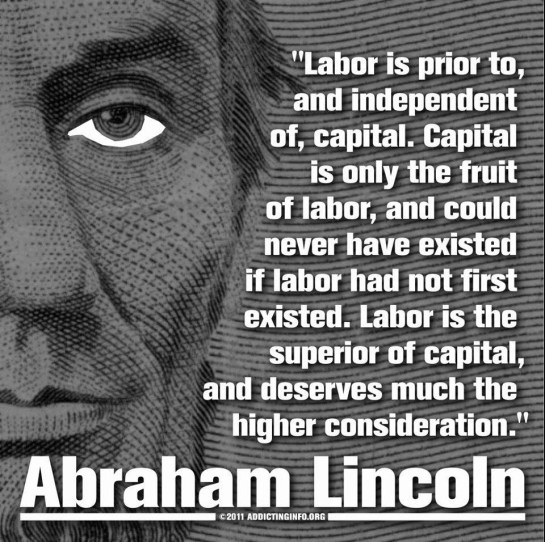
Do you have a lot of confidence in the law and justice?

gavel

I recently wrote that there are a lot of psychos in corporations. I didn’t mention the ones in government.

Texans have their sense of justice eroded away almost every time they read a newspaper. They just found out, for example, that a Dallas judge ruled that the state’s Attorney General, chief law enforcer Ken Paxton, can’t wiggle out of facing his three felony indictments. He is expected to face judgement on the fraud and swindling charges against him. Click here.

Paxton’s government job seems to be waging war against every kind of justice that comes from federal sources. He recently lost his Supreme Court suit against women’s health care. Click here. He joined in a lawsuit against U.S. Virgin Islands Attorney General Claude Earl Walker because Walker had tried to subpoena records from Exxon. The issue was global warming.

Paxton doesn’t have to worry much about state criminal laws, because they are reviewed by the Texas Supreme Court. All their judges are elected, all are Republicans, and it’s hard to remember when they ruled against a corporation or in favor of an individual.

Paxton is probably inspired by our last governor, who still isn’t in jail for having used his power to remove an attorney with a criminal suit against him. Or there’s the Texas Congressman who re-rigged all the congressional districts and never spent a day in jail.

Where I live in Dallas, District Attorneys are supposed to stand for justice. But there are more exonerated former prisoners from here than from anywhere. The current officeholder isn’t holding office quite a bit of the time because she goes in and out of a mental hospital. Dallasites would kind of like to see her removed and there have been some public calls for it, but some of us are reluctant. If she doesn’t step down pretty soon, the Governor, a paragon of Republican virtue, will appoint her replacement.

That could be a lot worse!

Leave a Reply

The exciting new organization “Brand New Congress” (BNC, click here)  just held its first meeting in my town. Its provocative electoral program may be the most innovative set of ideas in a century or more. In the 2018 primary elections, they plan to run more than 400 candidates without any regard to political party. The candidates will be people who have contributed to their communities, are good at it, and will uphold a radical progressive program similar to Bernie Sanders’ present campaign.

bnc-zac

Brand New Congress met at the Dallas CWA 6215 Hall, where Bernie has his offices

One of the most interesting twists in the projected scenario is their intention to totally disregard party affiliations. The main speaker said, ““Parties are so 19th century!” Polls are showing that a lot of Democrats and Republicans are not so crazy about their own parties. Youth has been showing its disdain for some time; I recently read that only 19% of Americans 19 to 29 years old voted in 2014!

How It Will Work

The Brand New Congress strategy would have their candidates running mostly as Independents, but, where it’s easier, as Democrats, Republicans, Greens, or anything else that’s useful! In other words, they would use political parties the same way they said Bernie Sanders used the Democratic Party — to get on the various state ballots and to obtain a wider hearing.

Turnout at our meeting was good, but not nearly as good as earlier Bernie meetings. Like the Bernie meetings, diversity was not its strongest characteristic. I’d estimate about 8% African Americans, maybe 10% Latinos, 2% Native American, and 40% women attended. Like the Bernie meetings, they were considerably younger on average than most political gatherings.

It’s worth noting that neither of the two presenters claimed that Bernie Sanders would publicly support this program.

Will It Work?

After having seen the electoral miracles accomplished by the 74 year old socialist from Vermont this year, who is prepared to say that Brand New Congress won’t be successful? Who could say that almost anything couldn’t be done by the younger people around the Bernie campaign? One of the BNC organizers maintained that Bernie had raised $240 million and moved tens of thousands of volunteers!

During the last decades, a growing number of citizens has developed a severe distaste for the status quo and a yearning for something different. Maybe these are the “people with a plan” who bring that change!

On the Other Hand

The idea of such a broadly innovative electoral campaign is breathtaking. But after I resumed regular breathing, my age and experience began to ask questions. In the immediate sense, I didn’t like all of the answers. Hope I’m wrong on every count:

  1. The strategy is purely electoral and limited to the U.S. Congress. Whenever somebody tells me that a single tactic is going to revolutionize America, I start wondering if they aren’t making a fetish of that tactic. Remember Occupy? A revolutionary program, it seems to me, would have to relate to all forms of struggle.
  1. Although one of the BNC presenters talked a lot about his views on the economy, little or no mention of the international situation was mentioned. People who think that their country is the only one that matters may be a little bit out of step with the economic situation today.
  1. Where are the working people in all this? I heard one mention of the term “working class,” but it was parenthetical and in passing. The idea that all Americans can be brought together under a single program seems idealistic to me. Only working people can confront the bosses and beat them, not a vague idea of “everybody.”
  1. Much worse, I didn’t hear any mention at all of the bosses and how they were going to relate to all this. Do people think that there’s only one side in this fight? There are two sides, and the other side isn’t just sitting around waiting to see what happens. They are really good at all forms of political fighting, especially elections. Also, they blacklist people. They arrest people. They kill people. You can’t expect success with a strategy that ignores them.
  1. How would we govern? No one would be happier than I to see somebody make gigantic fundamental change in American politics by 2018, but this electoral trick sounds more like a coup than a revolution. In a revolutionary process, people organize themselves by communities, by workplaces, and by their interests. They get better and better at meeting challenges and utilizing opportunities. Leadership develops at every level. Revolutionary struggle is a giant learning process whereby everybody learns more than how to take power, they also learn what to do with it.

Maybe my skepticism has no place as America yearns for improvement. Let’s not condemn, but encourage. Let’s do what we can!

–Gene Lantz

Click here for more of these ideas
Listening to almost anybody talk about American politics today unavoidably leaves one with the impression that they don’t know what they’re talking about. Populist? Nationalist? What do all those terms mean, if anything?

nationalismquote

Click here for a glossary and lesson on political words. Click here for my previous analysis.

What one considers good or bad in politics depends on how one understands the idea of progress. Everything is moving in one direction or another all the time. A positive trend in politics is one that strengthens our side in the lifelong battle with our employers, or one that weakens the employers’ side. That’s progress.

Progressive for Whom?

If ordinary working people are strengthened by being more unified, or better informed, or by attaining positions of power, that’s progress. Progressive people are those who strengthen workers against their employers. Organizing a new union, for example, would be a progressive thing to do. Helping workers make good electoral decisions by providing useful information would be progressive.

Causing an unnecessary split in a workers’ organization is a reactionary event, the opposite of progressive.

“Left” and “Right” are Fuzzy Concepts

During the capitalist revolution in France around 1789, one group sat to the speakers’ left in parliament and another group sat to the right. That’s where we got “left wing” and “right wing,” but it’s really hard to tell what they mean today. Besides, everything is moving so what’s left today is right tomorrow!

If “Left” is Good, Then Is “Ultraleft” Even Better?

Serious activists might think “left” means “favoring the workers,” but “ultraleft” is a special term that does not mean “even more favorable toward the workers.” An ultraleft is an egotist willing to do anything, progressive or reactionary, to draw attention to themselves. Ultraleftism is a real pain in the movement. It’s been called “the infantile disorder.”

“Liberal” and “Conservative” are Confusing

If a liberal is a nice person who cares for others, what’s a neoliberal and why do the South Americans seem to hate them so? Is a neoliberal the same thing as a neoconservative or neocon? Actually, yes.

If a politician is racist and misogynistic, but votes for a giant boondoggle for his/her home district, is she/he a liberal or a conservative? If another politician is really stingy on government spending but promotes abortion and gay marriage, what is he/she?

Who’s Middle Class?

It’s common now to confuse “middle class” with “middle income.” I think the unions distorted the definition because union people, it’s true, make more money than other workers and, especially with overtime pay, often get into the middle income range.

The only useful meaning of “middle class” is that they’re neither bosses nor employees. So small shop owners, professionals, preachers, policemen, union staffers, and all the people “caught in the middle” in the great fight between workers and bosses, they’re the middle class.

The French revolutionaries called them “petit-bourgeoisie” or “small capitalists.” Ultraleft supercilious nut cases use it as a derogatory term.

Everybody hates being called middle class and will argue with you until they’re blue in the face about it, but if you can’t understand “middle class,” you probably can’t understand “worker” or “employer” either. Without clarity on those concepts, I don’t see how anybody understands anything about politics.

What’s a Populist?

It’s gotten popular today to talk about “populism of the left” and “populism of the right.” Supposedly clever people refer to Senator Bernie Sanders and Presidential Candidate Donald Trump that way. But what does it mean?

The populist movement of old was made up of agricultural interests banded together politically to fight against the industrialists who were taking over the nation. The populists lost. That battle has been over for some time.

Google says a populist is “A member of a political party claiming to represent the common people.” But don’t all politicians do that? Click here for Wikipedia’s treatment.

I’m pretty sure that what the pundits mean nowadays by “populist” is a candidate that doesn’t directly represent the employing class. As no candidate ever says he/she directly represents the employing class, it’s a pretty meaningless term.

What’s a Nationalist?

There are books on this. Nationalism, dividing people’s interests more or less by their region of origin, is usually divisive and hence reactionary. Not always, though. Groups of people fighting imperialist domination may be using nationalism in a very progressive way. People that use it to split the overall progressive movement, though, need to be avoided.

Think of the Class

If one sticks to the idea that workers are the only ones who can really overcome their employers, and that strengthening our side or weakening the employers’ side is the definition of “progressive,” one can be more clear in their communicating and their own thinking. Always, think of the class!

–Gene Lantz

Click here for more of these ideas

 

Don’t let the dry lifeless movie critics talk you out of seeing this wonderful film!

freestateofjones

Movie review: “Free State of Jones,” Directed by Gary Ross, 139 minutes

Movies, books, statues, and historical markers all over the country romanticize the Confederacy. The truth is that it was a nasty war fought for nasty reasons. Here and there, southern people resisted the confederacy to the point of armed struggle. It’s incredible but true, though, that local farmers, deserters, and runaway slaves combined to win military victories against Confederate soldiers around Jones County, Mississippi

I read the book some time ago and was really looking forward to this movie. If there was anything at all disappointing, it’s because the film followed the book a bit too closely. The facts for the book were mostly taken from a miscegenation trial in the 1930s involving one of the many descendants of guerrilla leader Newton Knight and his runaway slave wife, Rachel. The people’s uprising in Jones County is the best part of the story, but the book and movie add on a lot of the dismal history of Mississippi afterward.

BTW, the state just closed the case of the murder of civil rights martyrs Chaney, Goodman, and Schwerner; so ugly history marches on in Mississippi. We just noted the anniversary of the gutting of the Voting Rights Act by the Supreme Court, and it’s extremely relevant to this film.

Movies like the blockbuster success “Gone With the Wind,” are ordinarily more than happy to lie about what really happened. This one doesn’t. Go see it!

Movie review: “Genius,” Directed by Michael Grandage. 104 minutes

People who like a little action and a lot less talking in their movies aren’t going to like “Genius,” but I cried through part of it and thought it was really worthwhile. Fans of Ernest Hemingway, F. Scott Fitzgerald, and, especially, Thomas Wolfe, are already aware that their editor, Maxwell Perkins, is given a lot of credit for their books’ successes. This is about Perkins and Wolfe, and it’s almost 100% dialogue.

The movie critics don’t like this one either, because the two men are more or less reduced to stereotypes, or so they say. I say that trying to explain Perkins and Wolfe would be a difficult assignment, but one worth doing. I’d be curious to know if other film makers could have done it better.

If you don’t know or care about Maxwell Perkins or Thomas Wolfe, you wouldn’t like this movie. If you do, though, it’s a fine film.

Movie review: “The Neon Demon,” Directed by Nicolas Winding Refn. Not sure of length.

If someone is just dying to see Elle Fanning in her skivvies, they might want to see this movie about innocence and high fashion. Oh yes, there’s one really nice shot of a mountain lion. As the wide-eyed protagonist meets savage fashionistas, one begins to realize that something truly terrible is going to happen at the ending. But is it worth sitting through long, boring, unrelated technical movie tricks to get to it?

The only real crime that will cause me to walk out of a movie is that it’s boring. This one is.

–Gene Lantz

Click here for more of these ideas