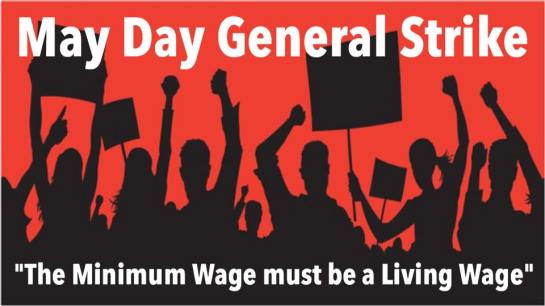
Facebook has a number of events calling for a general strike on May 1, 2017.
maydaygeneralstrike

I have no idea whether or not it will “succeed,” but it ought to, and, sooner or later, it must!

What Is It?

A general strike, also known as a political strike, is a labor action that is not limited to a single employer. Instead, it takes in a geographic area. The great Seattle general strike shut down Seattle. There was a general strike in Houston 1946, according to the book, “Rainbow at Midnight.” The 1886 strike for the 8-hour day was worldwide.

The idea is to add economic struggle to our usual progressive arsenal of voting, lobbying, and protesting. A general strike asks that we don’t go to work unless our demands are met.

Recently, we saw “A Day Without an Immigrant” and “A Day Without a Woman” show some limited success throughout the United States. It is very hard to assess how many people actually missed work, because they are likely to keep it secret. Also, no clear demands were put forward and it was never clear exactly who was organizing. We do know that a lot of students took the day off and a few small businesses shut down.

In my opinion, both of these operations were worthwhile because, for the first time since 1946, Americans are seriously discussing the idea of nationwide participation in economic struggle. If you read this far, that’s a victory!

What Could Happen?

“A strike is an incipient revolution”

–Big Bill Haywood, head of the Industrial Workers of the World

It is possible to achieve great goals if participation levels are high enough in a political strike. We see successes in Europe from time to time. Brazilians just struck March 17 over cuts in their government pensions. They shut down Sao Paulo!

What Should Happen On May 1, 2017?

“It is not sufficient to fight, comrades, it is also necessary to win!”

–Leon Trotsky, organizer of the Red Army

Pursuing the economic struggle is not only exigent but necessary. Ultimately, the corporations in power have no concern for democracy. They’ve already eroded American democracy considerably and will do their best to destroy it completely. That’s why we have to learn to use economic struggle.

Organizers who want a successful general strike on May 1, 2017, need to come together on demands and strategies. Legislation guaranteeing a national minimum wage of $15/hours would be a good target demand. If Congress should pass such legislation and the President were to sign it into law, the May 1 general strike should be called off. If not, organizers should make certain that employers feel the consequences.

A good strategy would be to organize “flying pickets” on May 1. In advance, sign-making parties could be set up that would help develop and train volunteers. A rendezvous point and some picketing targets could be discussed. On May 1, organizers would gather at the  rendezvous point and send carloads of picketers to selected low-paying enterprises such as fast-food restaurants. The more the better, but even a small turnout at a limited number of targets might have a measurable effect.

What WILL Happen on May 1, 2017?

We’ll see!
Does the progressive movement have its leadership today?

trumkarichardafl

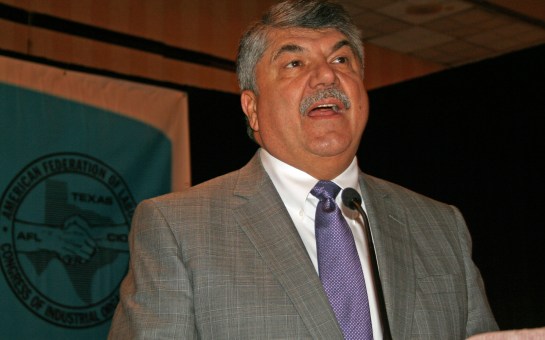
Richard Trumka, President of AFL-CIO

Leadership is everywhere – popping out of our computer screens every time we look! The problem is that they are nearly all self-appointed, untested, and mostly unqualified.

The most popular leaders – Senator Sanders, Senator Warren, Mrs Clinton, etc – all suffer from tunnel vision — a single-minded determination that we will win at the ballot box, while the truth is that democracy keeps shifting away like sand in an hourglass.

Not that elections aren’t critical – but they’re not the only form of struggle. The best leadership available today is the American Federation of Labor/Congress of Industrial Organizations, the AFL-CIO.

Not That Labor Leadership Is Perfect

What we really need is a mass workers’ political party beholden only to working families. We don’t have one, and I don’t see one on the immediate horizon. But when it does come, it is most likely to come out of the AFL-CIO.

Here are some of the positive arguments for AFL-CIO leadership of the progressive movement:

  1. Unions have more money than all the tiny little organizations that are begging for contributions every day.
  2. They have physical buildings, meeting places that are long-established in communities. Here where I live, nearly all the progressive groups try to get into the Communications’ Workers Hall, and the AFL-CIO encourages them.
  3. Say what you might against the better-paid union members, they are solidly working class. If you think about it, most of the progressive groups vying for leadership are actually led by preachers and professionals – people in the ideologically uncertain “in between” class.
  4. While the AFL-CIO works hard on elections, they also work hard year-round on lobbying, organizing workers, participating in protests, economic struggle, and organizing mass demonstrations
  5. Since the leadership turnover of 1995, AFL-CIO leadership has affirmatively tried to end its old policy of isolation. For example, they no longer call for deportation of all undocumented immigrants – they call for organizing them. They have active Constituency Groups trying to organize working people as interest groups such as women, Latinos, gays, etc. Some of the better labor leaders are also coming out strong for public presence and improved communications. They also established Working America to incorporate, politically, all American workers whether or not they work under union contracts.
  6. Many unions maintain a relationship with their vast numbers of retirees and, consequently, greatly increase the union’s political clout. Non-union retirees, like non-union workers, are pretty much on their own, and largely helpless, as political entities.
  7. Increasingly, unions are partnering across national lines. It’s not there yet, but it’s on its way to becoming a world movement.
  8. The basic idea of unionization is cooperation of all workers in a workplace, consequently today’s unions tend to be anti-racist, anti-sexist etc. Women in unions, for example, have already largely achieved the American dream of equal pay for equal work.

OK, There’s a Downside

The reasons that union movement leadership isn’t as good as a mass Workers Party could also be listed:

  1. Individual unions, which make up the AFL-CIO and provide its revenue, are defensive organizations with one dominating purpose – to defend their members against their particular employer. Broader social concerns aren’t the main business of union locals nor of their national leaderships. This constraint has less of an influence on labor’s federation, the AFL-CIO, but it is fundamental to understanding the union movement.
  2. As mentioned above, union members tend to make more money than non-union members; consequently, they don’t share exactly the same viewpoints. While many workers dream of making $15/hour someday, some union members are already making $35!
  3. Union contracts are based on seniority. That means that older longer-term workers tend to displace the younger workers. There is almost no other way to keep bosses from applying work rules unfairly, so seniority rules in union contracts. The aging of the union membership is a harmful consequence. “Who has the youth has the future,” goes the saying, and some of America’s unions try hard to cultivate younger leaders, but seniority keeps pushing them out the door!
  4. While the unions fight hard against losing jobs to outsourcing, they have virtually no defense against losing jobs to automation. This was not always true – the CIO (pre-1955) always fought for shorter working hours – but it seems to be true now. The reason may be that workers, including union workers, are also consumers. As consumers, they are debt-ridden and addicted to overtime pay. They may be averse to discussing shorter working hours as a social solution.
  5. To someone outside the unions, it may seem strange, but some union leaders tend to want to keep things the way they are rather than embrace change. The reason, believe it or not, is fundamental democracy within the labor movement! The present corps of union leaders were democratically elected by their members just the way things are. Any change, especially change that involves mobilizing the membership, is change that will “rock the boat” before the next union elections. If the membership undergoes change, how will the next union elections turn out? This has to be on the minds of local union and national union leaders, but is less of a problem for the AFL-CIO federation.
  6. The AFL-CIO, I think intentionally, has no real sense of history. Without an honest history, they tend to ask people to believe the self-serving union histories that exist. In those histories, all labor leaders of the past were heroes who never actually made a mistake.
  7. Unions aren’t intentionally revolutionary. Their revolutionary potential comes from their consistent advocacy for workers’ rights. The AFL-CIO’s anti-capitalism doesn’t come by intentional design, but from the nature of things. Bosses continually accuse union organizers of trying to destroy their own workplaces, but it isn’t true. Unions simply want a better deal for workers within existing workplaces, not a revolutionary overturn. The union struggle, then, might be seen as eternal, with unions always fighting bosses and always wanting to win in the immediate sense, but never wanting a decisive victory.

Summing Up: Stick With the Unions!

AFL-CIO leadership is today the best option for the progressive movement. An actual Workers Party that seeks power would be better, but a true mass Workers Party is more likely to come out of the AFL-CIO than from the imaginations of radical activists, the Democratic Party, or anywhere else. Consequently, those of us seeking progressive leadership should look to join a union, organize a union, join Working America, and/or, at the least, consult with the AFL-CIO for leadership in the progressive movement.

Hard is the fortune of all womankind

She’s always controlled

She’s always confined

Controlled by her parents until she’s a wife

A slave to her husband the rest of her life

–The Wagoner’s Lad (Joan Baez)

Why the Patriarchy Succeeded the Matriarchy

During Women’s History Month, it’s good to reflect on the oppression that we are dealing with and how to fight it.

For most of humankind’s existence, matriarchies were more common than patriarchies. Up to 5 or 6,000 years ago, humans were hunter-gatherers. They barely survived and had nothing that that they could keep. Whatever they obtained was consumed right away.

Humans lived in cooperative societies where everyone’s contribution was completely necessary for survival; consequently no one was undervalued. People traced their lineage through their mothers, the only parent of whom they could be certain.

Woman’s Downfall was Cows, Not Apples

womenoppression

At the dawn of civilization, people began to accumulate wealth. Their wealth may have been cattle or agricultural products, but, for the first time, human beings had something that they could keep and pass on to their heirs. That was the downfall of women’s equality.

The men wanted to be sure of their heirs, so they ended women’s rights. Marriage was invented and adultery, for women, became a capital offense. Polygamy thrived and polyandry was rare.

Women were the first oppressed class

–Frederich Engels (Origin of the Family, Private Property, and the State)

It Wasn’t Just Women

The men with the wealth didn’t just oppress women. They oppressed everybody they could. They enslaved everyone they could conquer. Slavery became the dominant form of work for centuries. But people, including women, struggled for a better deal. As capitalism became the dominant form of economic production, starting only about 400 years ago, labor became more “free,” and really big gains began to come.

America Was “The Beautiful” for White Propertied Men

In 1776, when the United States began to form, white propertied men of a certain age were the only ones who could vote. Blacks were enslaved and Natives were murdered. Women couldn’t even own property. Millions would die before significant change came about, but change did come.

American democracy peaked toward the end of the 20th century, and has been generally headed the other way since then. Our electoral system is now awash in money. Previous restrictions on racist voter suppression are being put aside. The Equal Rights Amendment is a distant memory, except in Nevada, where it passed in 2017.

How to End Women’s Oppression

Women’s oppression has the same basis as oppression of others — it is the will of the holders of wealth. They have to be removed from power. Women, as one of the more oppressed groups, have a special role in this fight. It is heartening that the biggest demonstrations in American history, weekend of January 20-21, were led by women. It is significant that women called a general strike on International Women’s Day, even though there is no way to evaluate the participation.

I work on organizing people who support the right to retire. I especially prize our women activists because they tend to have the clerical abilities that organizers need, while men who have worked with their hands all their lives tend to have less ability to use modern technology.

I don’t believe that women, acting alone, will overcome the propertied oppressors. It will take virtually everyone. But I don’t think it could be done without women!

There was a union maid,

Who never was afraid

–Woody Guthrie

In our lifetimes, we have never seen the American people as ready to fight as they are right now. Case in point: the January 21st demonstrations put more protesters on the streets than ever in American history.

wom-012117 (4)

Is It Enough?

At the same time that our potential strength is growing, the challenges are growing, too. The far right, the dark money people, the Koch brothers, all of the worst of America’s ruling rich, are far stronger than ever. They were bad enough when they were just the crazies in the John Birch society  the Tea Party and Ku Klux Klan, but now they hold state power!

Does it seem likely that these merciless and unscrupulous power mongers are going to be “touched” by our sentiments? Will they have a “change of heart” after they hear our arguments at Town Hall meetings? Does anyone think they will give up state power just because people carried signs?

What About the Next Elections?

If everything were the way it used to be, or the way it usually is, the Democrats could expect to win big in the 2018 mid-term elections. There is a lot of enthusiasm for fighting the Republicans, thanks to the Republicans. Also, the party in power normally loses in mid-term elections. A lot of our leaders, thinking things are the way they used to be, or the way things usually are, are focusing entirely on the next elections. We’ll warm up in the local elections that occur between now and then, and then we’ll be “really ready” in November, 2018.

American Democracy Is On the Wane

We should fight in the local elections at hand. We should get ready for the 2018 mid-terms. We should continue building giant protests. We shouldn’t concede anything. But is it enough? Even if we think it’s enough, can we be sure?

Consider that the level of democracy that we enjoyed just a few years ago is being eroded away. When Bill Clinton was President, for example, we thought our voting rights were secure. Not only that,  we more or less expected to continue expanding American democracy just as we had more or less consistently since 1776. We’ve seen big money take over our elections with the blessings of the Supreme Court. We’ve seen a President appointed by the same court. We’ve seen the near-sacred Voting Rights Act gutted. We’ve seen unfair redistricting and myriad voter suppression laws become common. Just recently!

Maybe we have enough democracy left to assert ourselves in 2018 and put America back on the path to freedom. I hope so, but I’d like to have something stronger just to make sure.

What Else Is There?

Here in the United States, we know almost nothing about the kinds of economic struggles that are common in other parts of the world. The only truly successful economic boycott we know of was the United Farm Workers’ fight against grape growers. We’ve never seen a successful political strike in our lifetimes. Union organization has almost stopped completely in America due to the combined hostility of bosses and governments.

Those are the things we have to learn if we want to win.

Did You Shift To the Right?

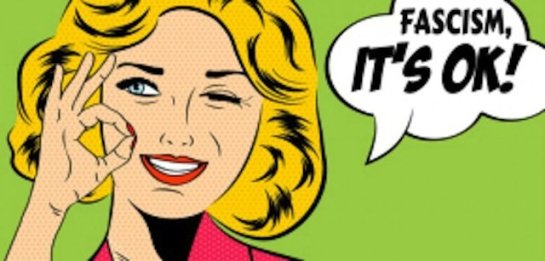
Fascist_OK

The reactionary candidate in the Dutch elections didn’t do as well as predicted. Maybe the fascists won’t win in France, either, but Donald Trump will still be President of the United States and the talking heads of the news will still be saying that there’s a “shift to the right”

They don’t say that somebody else shifted to the right, they say that the electorate did. We’re the electorate, so they mean us. Did you shift to the right? I doubt it.

In fact, a “shift to the right” by the electorate is not what is happening at all. If the electorate were becoming more reactionary, we wouldn’t have seen the liberal election results on marijuana and minimum wage. What we’re seeing is something else.

What Are We Seeing?

We are seeing a shift in tactics by the rich.

Throughout written history, the more-or-less propertyless have fought against the propertied for basic sustenance, for rights, and for freedom. We have done pretty well for ourselves, especially under capitalism. Once workers freed themselves from slavery and serfdom, we went on to get better living conditions, a little bit of dignity for workers, and limited democracy.

Limited Democracy?

We’ve always fought for more democracy, more control over our lives, and in generally we’ve been winning. Winning at least until lately. American workers did particularly well during the golden days from the end of World War II to the late 1970s. That’s when American industry completely dominated the world. We got rid of all-white primaries, poll taxes, English-only ballots, fake literacy tests for Black voters, prohibitions on voting for 18-year-olds, and we made other great accomplishments during that period. But our democracy was always limited.

We never won the right to vote on wars, on plant closures, on layoffs, on hiring policies, and lots of other things that are exclusively done by the propertied class. Only recently, most of us realized that we’ve never had the right to vote on Federal Reserve officers. So our democracy has grown, but it was always limited.

After 1982, when the government started coming down on our right to unionize, our democracy began to erode. When the Supreme Court opened our election process to unlimited financial intervention, when they gutted the Voting Rights Act, and when unfair redistricting and voter suppression laws became common, we began to realize that the long-term trend toward more democracy was being reversed.

Why The Reverse in Democracy?

Around 1980, the propertied class changed their tactics. Instead of kidding us along with limited democracy, they decided on an all-out war against our rights. What changed for them was international competition. The United States no longer had the only functioning factories in the world and had to compete with countries who could make better products cheaper. The squeeze was on.

One can validate this with any account of inequality. From 1945 to the late 1970s, American workers constantly improved our lot. After that, it’s been downhill economically. One good book about it is “Runaway Inequality” by Les Leopold. Leopold shows what happened, but he is a little skimpy on “why” and “what the heck do we do about it?”

The owning class changed their tactics, and we have to fight them! That’s the why and what.


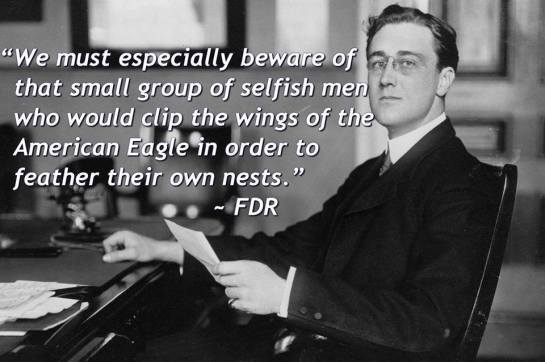
fdrquote

Like a lot of us, I get several requests to “take action” every day lately. The progressive movement, if would seem, is up in arms and raring to go.

Some of my friends are skeptical. They say that these activities are “going off half-cocked” and don’t merit our support if they can’t show that they are well organized. The March 8 general strike, “A Day Without A Woman” is a case in point. As far as I could tell, it wasn’t organized at all. So, my friends told me, we shouldn’t recommend it and we didn’t need to participate.

They were wrong.

Organization or Action?

Organizing and action have the same relationship as the chicken and the egg. Organization in the movement can’t take place without action. Action can’t take place without organization. Neither one comes first. Both have to happen, and they augment each other.

One could make the same case for leadership. Without leaders, one could say, there can be no action. But there are no leaders without action. “Leadership comes out of the struggle,” as my friend Kenneth Williams said on my radio show on KNON. That was the wisest summary of today’s situation.

Everything Is In Motion, Nothing is Stable

The problem that people have is that they see things in rigid, unmoving categories. In fact, everything moves all the time. The only constant is change. Action and organizing interact, they develop one another. Both are necessary. Neither is exclusive.

Or, just take it from Franklin Delano Roosevelt, who said, ““Do something. If it works, do more of it. If it doesn’t, do something else. But above all, do something!”

March 8, 2017, could be gigantic!

me-aug31marchlaborday

Good strategies and tactics only come from understanding the situation we’re in. If one overestimates people’s willingness to take action, one tends to try things that can’t be done and make other “ultraleft” errors. If we underestimate people, we end up settling for petty reforms when we could get bigger changes.

For most of my political life, I’ve tended to think people would do a lot more than they actually did. I thought, for example, that voters would really turn out to defeat the Orange Menace last November.

Afterward, when individuals and small groups began to call for militant political action, I fell on the timid side of evaluation. I never imagined that the January 21 marches and rallies would be the biggest in American history, but they were.

Now, to my surprise, I’m seeing some actual results from calls for a “general strike.” Even in my town, some small businesses shut down and a lot of students — of all ages — stayed out of school on February 16. For my entire political life, and all of almost everybody else’s, the call for a “general strike” was just a foolish dream of ultralefts and knee-jerk activists who weren’t even interested in whether it would work or not.

Even a broken clock is right twice a day

Now, calls for a general strike are beginning to get some traction. People are discussing the idea and beginning to talk about what it would take to be successful. I imagine that some people are looking at the general strikes in American history. The years 1877, 1886, and 1919 would be good ones to look at, but general strikes occurred in limited geographical areas right up to the big government attacks on workers that began in 1946. None were effective since then that I know of, until February 16, 2017.

To really make a difference, a general strike needs to be organized. Leadership needs to agree on the demands. They need to make those demands clearly understood, and they need to call off the action if the demands are met. It is hardly fair, and certainly not smart to ask people to make sacrifices without knowing what they are fighting for.

Leadership also needs to figure out how the strike should be conducted and how people’s needs can be met during the action. I have always loved reading about the successful strike in Seattle in 1919 where Rob Rosenthal wrote this poem:

“Nothing moves in the city,

Without our say-so

Let the bosses curse,

Let the papers cry

This morning

I saw it happen, with these ancient eyes of mine

Without our say-so

Nothing moves but the tide!”

March 8 is Coming. Look Out!

As I understand it, the February 16 activities were largely organized on social media. A lot of people didn’t know about “A Day Without An Immigrant,” but a significant number of the ones who knew about it went ahead and participated. That’s the times we live in.

As I understand it, the leaders that organized the biggest demonstrations in American history on January 21 have called for actions on March 8 — International Women’s Day. If “A Day Without  A Woman” goes anything like “A Day Without An Immigrant” –given that more people will know about it, that the leadership has already made itself credible and somewhat seasoned, and that there are more women in America than immigrants — a general strike on March 8 could be the most important political event in America since World War II.

That is, if I understand the times.

–Gene Lantz

I’m on the “Workers Beat” talk show ever Saturday at 9AM. 89.3fm in Dallas and http://knon.org everywhere. If you’re interested in what I really think, click here.

The Luddites took matters into their own hands when they saw that machines were destroying their jobs. They smashed the machines!

luddites

The argument in favor of new production equipment has always been that it brings down prices as it increases the total amount of wealth. The argument against it is that it doesn’t benefit the workers.

The Bureau of Labor Statistics keeps figures on productivity — the amount of wealth that one worker creates in an hour — and it’s incredible how much it has changed. They publish annual or quarterly changes in productivity, but one can use a spreadsheet to show the cumulative effect. From World War II to present, one worker makes more than four times as much as he/she did in an hour!

We didn’t get four times as much in wages and benefits. Instead, we suffered loss of jobs and diminishing power in the workplace as organized labor rolls dropped by two-thirds during the same period.

We have a fighting program against outsourcing, which also takes away our jobs, but American workers seem helpless against automation.

It Wasn’t Always That Way

The American labor movement used to have the correct answer to automation. When the Congress of Industrial Organizations (CIO) was a fighting organization (1938-1947) they demanded “30 for 40 with no cut in pay” in virtually every contract fight. It means that they wanted to work thirty hours for forty hours’ pay. Not long after labor took its wrong turn in 1947, they gave up the demand for shorter hours. It’s hardly ever heard of today.

One thing that CIO militants did win was cost-of-living-adjustments (COLA) in contracts. As the government’s measure of inflation went up, union wages were adjusted upward. The formula used was never quite fair, but the general idea was very good. They used to call COLA an “escalator clause.”

Why No COPA?

Union negotiators could have demanded a cost-of-productivity-adjustment. Instead of higher wages, it should have given us shorter hours. If a person doubles their productivity, then, they should only have to work half as long! If we had done that successfully, we wouldn’t have lost a tremendous number of union jobs. Our unions would be just as big, and have just as much political clout, as they had in 1947!

Why didn’t they? Why don’t they now? That’s kind of a mystery.

–Gene Lantz

I’m still on the “Workers Beat” radio talk show, 89.3FM in Dallas and KNON.ORG everywhere. If you want to know what I really think, click here.


To go on strike basically means to stop working until some particular demand is met.

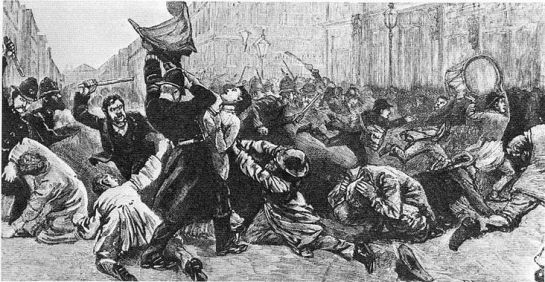
strikelondon

Since Trump was elected, I have received two calls for a general strike. One was for January 21, the other is pending, February 17.  No exact demands accompanied on either one. I think it’s dangerous business, but must be considered.

What Is a Strike?

The word comes from British sailors who would “strike sails” and refuse to take their ships to sea. A “general strike” in a given area means that everybody, not just one particular organization or category of people, stops working until their demands are met. General strikes may not be over economic issues, but political.

Since the U.S. government moved against the union movement in 1947, the only union strikes we have seen were limited to one union, the few other unions legally able and willing to participate, and whatever community support a local union could get. Usually since 1947, American union locals have faced their employers virtually alone.

Prior to 1947, in fact in 1946 in Houston, there were general strikes in America. Probably the most dramatic and best-remembered was the strike for the 8-hour day, worldwide, May 1, 1886. Like most general strikes with potential for change, it was met with armed violence from the employers and their government.

We hear of general strikes in other countries from time to time. Over there, unions are involved but it is unlikely, given their legal situation, that organized labor would call any  general strike in America today. That doesn’t mean somebody else couldn’t!

Strikes Are Part of Economic Struggle

A strike is not the only form of economic struggle, as differentiated from armed struggle or electoral struggle. Any kind of refusal to cooperate with the employers’ system of production fits the description. Workers might, for example, try a “slowdown.” Lately, union leaders call it “work to rule” and ask employees to do only what they are required to do legally and by contract, nothing more. In modern strikes, especially since Reagan, people sometimes lose their jobs. With slowdowns, there’s less risk of job loss. But a slowdown is a harder to organize and carry out.

Economic boycotts are economic struggles. The United Farm Workers carried out an effective one in the early 1970s against grape growers. Economic boycotts, like general strikes are very easily called by some unthinking hothead, but extremely difficult to carry out.

The employers and the government may be counted on to team up quickly against any kind of economic struggle by workers.

Who Wins? Who Loses?

According to the employers, workers always lose every strike. Even if the strike has short duration, the workers at minimum have to go some time without income. The strain on families and friendships is terrific. Nowadays, when many workers are carrying heavy loads of debt, the thought of a strike, even for a few days, terrifies everybody.

According to the workers, we win pretty much every strike. Even if our demands weren’t met, we feel that we’ve stood up for our dignity and for the dignity of all working people.

But putting points of view aside, the actual winner of a strike is generally the side that holds out one day longer than the other side. “One Day Longer” makes a good workers’ slogan and is the title of one of my songs.

“Winning” for us means getting whatever we wanted. “Winning” for the bosses means getting whatever they wanted plus the ability to take retaliatory action against every worker that crossed them.

A Strike Is Serious Business

A successful strike is one that grew out of careful analysis of the situation and had good planning and strong leadership. A good example was the three-month strike recently carried out by the Fort Worth Symphony Musicians. Somebody needs to write a book about that one.

Calling a strike without careful analysis, good planning and strong leadership is irresponsible and likely to get lose and get people fired. It isn’t much better than calling “fire” in a crowded movie theater.

But We Need Economic Struggle, and We Need It Now

I can only think of one thing worse right now than an irresponsible call for economic struggle — and that is no call for economic struggle.

Every American who is not a fool knows we need to resist the attacks underway. Economic struggle is, right now, our best option.

Don’t Go Off Half-Cocked

We need careful study and careful planning to win any economic struggle. Fortunately, we have the ability to do that thanks to modern communications. We could, for example, call for a “virtual strike” over a certain demand and for a certain day. We could make our preparations virtually. We could sign up the people willing to participate and, afterward, evaluate the results. Then we could call another one and see how it goes.

Study up, think it through, and share your thoughts.

–Gene Lantz

I talk about these things on KNON.org’s “Workers Beat” program at 9 Central Time every Saturday. 89.3FM in Dallas. If you want to know what I really think, click here.