Trump is blasting his prevarication machine, and most people think he is “out of control.”

mad-hatter

The pundits and columnists seem confused by all the “alternate facts” blasting out. See, for example,

Trump’s disregard for the truth threatens his ability to govern
Dallas Morning News

But there is method to his madness

As I’ve said before on this blog, watch out for major attacks against democracy during this political period. They can’t fix the economy for the voters, so their only alternative is to make sure the voters’ power is diminished BEFORE the 2018 Mid-Term elections.

Trump and his minions are repeating this nonsense about millions of undocumented workers voting because he is building a case for more voter suppression. 

As Nazi propagandist Josef Goebbels taught us long ago, the most outlandish lies will be believed if they are repeated often enough. From his “bully pulpit” the presidency, Trump can repeat a lie many many times.

Liars are blaming liars

The “responsible” journalists, of course, are doing what they should do today and calling him a liar. But who will believe them in these days of failing trust? Who will believe newspersons who basically echo the beliefs of their six giant corporate employers? The most popular television news service, Fox, is by far the least honest.

The newspersons are already largely discredited, they largely did it to themselves. And Trump is discrediting them more and more by repeating, more and more, that they aren’t to be trusted. That’s the second part of Trump’s conspiracy against democracy.

Will it work?

One is tempted to say that a national prevarication campaign won’t work because the people have their own access to information, particularly through the internet and particularly through social media. One is tempted to say that even the discredited newspersons, if they stick to their guns, will be believed by a significant part of the population. BTW, I wouldn’t count on their sticking to their guns. People work for whoever signs their paycheck.

The big lie technique worked for Goebbels. It worked for Hitler. Millions died for their lies. Whether or not it will work now and here in America depends on us.

–Gene Lantz

I’m still on knon.org radio and 89.3 FM every Saturday at 9 in North Texas. If you want to know what I really think, click here.


I just can’t get away from these cow metaphors. I grew up in the country and worked, for a while, in a dairy. You can learn a lot from cows.

stampede-cows

But what I’m actually trying to wrap my mind and yours around is how to deal with the difficult political situation we’re in. The question came up because of one of my earlier posts. It drew a comment, more or less, to the effect that one of the major tasks confronting progressives is re-educating or replacing our union leadership.

I Used To Be a Lot More Intelligent Than I Am Now

Long ago, I was a member of an organization that didn’t like the union leadership. In fact, I don’t think we liked any leaderships. Not in the women’s movement, not in the civil rights movement, not in the anti-war movement, not in any of the progressive movements. It’s not that we were anti-leadership anarchists, it’s just that we thought we alone knew best. We only liked one leadership, ourselves. Everybody else, everybody in leadership of any organization, was just wrong. We were the smart ones!

The result was that we almost always got into squabbles with the leadership of any organization we tried to relate to. We had a reputation for it, and knowledgeable activists didn’t look forward to our company.

Build Up Our Side, Don’t Tear it Down

I don’t think that we need, at this time, arguments with the leaders of the unions or of any progressive organization as a way for the progressive movement to go forward. I can’t say that I actually agree, point-by-point, with the leaders of any of the organizations that are doing so much and moving so many people into action right now. But I’m sure glad they are building the movement!

We should be deliriously happy to see so many people starting to get active, and we should encourage it in every way possible. When it’s appropriate, we can make our suggestions on program, on tactics, on strategy, or even on broad ideology. But we should do it in a friendly helpful cooperative way, not an argumentative or confrontational way.

Arguing and confronting are what we do to our enemies, not our friends.

How to Get Cows to the Right Place

Cows tend to meander along. It’s kind of hard to figure out why they go where they go, what influences them, who they look to for leadership, what they try to avoid. We’ve all seen the stampedes in the western movies, where some poor old cowboy gets killed while trying to “turn the herd.” Death by stomping.

It’s mighty hard for a cowboy to do it. But it’s even harder for a single cow. And in this metaphor, we aren’t cowboys. We’re cows, stampeding right along with everybody else. It would be inadvisable to get in front of a mad stampede and try to argue. We’d get stomped and maybe hurt some of the other cows, too.

We’ll be more effective if we go along with the herd and do our best to nudge one here, poke one there, moo loudly when appropriate, moo softly if it will work better, and try to get the herd over where we all need to be. That’s leadership in a cow stampede. Also in a mass movement.

–Gene Lantz

I’m on KNON.org and 89.3FM in Dallas every Saturday at 9AM central time. If you want to know what I really think, click here.

Book review: Cowie, Jefferson, Stayin’ Alive. The 1970s and the Last Days of the Working Class. New Press, New York, 2010.

travolta

According to this author, the American working class met its death in the 1970s. Some of it was suicide, some of it was homicide, some of it was chronic depression.

He goes to great length to talk about how America’s powerful labor unions lost their clout, but he spends a lot more time and energy talking about the culture of the 1970s. “Saturday Night Fever” gets about as much play as the Hardhat attack against anti-war protestors.

Combining political and cultural changes isn’t a new approach. One of my favorite books is George Lipsitz, Rainbow at Midnight. Labor and Culture in the 1940s. University of Illinois Press, Chicago, 1994. Lipsitz explains where labor went wrong, 1940s and 1950s, while Cowie merely comments at length on the resulting shipwreck in the 1970s. Of the two books, Lipsitz’s is by far the stronger and more informative.

Cowie weaves a fascinating tale with very few heroes, but some stunning villains. One of the biggest reasons given for labor’s downfall is AFL-CIO President George Meany, who deliberately split the Democratic Party and destroyed the hopes of presidential candidate George McGovern in 1972. The vivid description of these events is the strength of Cowie’s book, but its weakness is that he doesn’t explain why. He says that Meany hurt the union movement very substantially because he was a “cold warrior” who didn’t want a peace candidate to carry the Democratic Party standard. But he doesn’t explain why Meany was such a “cold warrior.” Maybe Cowie didn’t know.

Back in those days, and for some time before and after, the AFL-CIO got a lot of money from the CIA. That’s why Meany was a cold warrior.

Cowie also explains that a lot of labor’s strength disappeared when steel plants were shuttered and when other American industries went overseas. He doesn’t say why. He doesn’t explain that international competition had recovered from World War II by the early 1970s and American corporations were forced to compete with excellent German and Japanese imports.  Maybe he didn’t know.

Cowie explains that labor was blindsided by clever politicians like Richard Nixon and Ronald Reagan. He explains that they made mistakes of commission and omission and they just weren’t farsighted leaders. He didn’t say why. He didn’t explain what Lipsitz’s book had explained so well, that the militant leadership of the American union movement had been expelled and blacklisted during the post war witch hunt. Maybe he didn’t know.

The unions may have squandered their basic strength and their political clout in the 1970s, or at least they may have done better than they did. But the inference that the American working class just evaporated is just wrong. People still work, nearly all of us still work, and the working class is just what it was and has always been — the only people who can stand up to capitalism.

Cowie’s great strength is in vivid description. Whether you lived through the 1970s or are just curious about how things got as bad as they did for working people, this is a good book to read. The AFL-CIO promotes it through Union Communications Service. That’s how I found it and I’m glad I did.

–Gene Lantz

you can hear me on knon.org or 89.3fm at 9AM Central Time every Saturday. If you want to know what I really think, click here.


I’ve been investigating the various strategies for dealing with the upcoming Trump government.

williamskennethmlk

Rowlett activist Kenneth Williams

The best was the simplest: “Get active, because leadership will emerge from the struggle!” Kenneth Williams said that on my radio show, “Workers Beat” Saturday at 9.

Another guest on the show, historian Max Krochmal who was talking about his new book, Blue Texas,  offered a lot of encouragement when he pointed out that Texans have organized successfully under much more difficult circumstances than we face today.

Here’s what Franklin Delano Roosevelt advised in the depths of the Great Depression, “Do something. If it turns out to be wrong, do something else. But, above all, do something!”

Several Strategies Are Being Offered

So far, I’ve had opportunities to check out strategies offered by the Communications Workers of America, Our Revolution, Indivisible, Democratic Socialists of America, Communist Party USA, and just about everybody I know. I like all of them and none.

A Union Idea

The CWA held a webinar on the topic of the upcoming Senate confirmations of Mr Trump’s cabinet nominees. They explained how terrible they are, of course, but we knew that. Their idea is to get the Democrats to delay the confirmation while we use our union networks, social media, and informal communications to rouse the population. In the short term, it sounded pretty good.

The Bernie Sandinistas

For over the weekend of January 7, I sat through about 7 hours of education, planning, and organization with Our Revolution in Dallas. I missed the first 5 hours. I was a little bit surprised to hear them talking almost exclusively about winning elections and conducting successful lobbying campaigns. Only one person mentioned street actions, and I actually had whispered the idea to him before he spoke.

I don’t think it’s because they were excluding street actions, I think it’s because lobbying and election work are what originally brought them together and, for many of these young activists, it’s the only kind of political work they’ve ever had.

At the end of the second day, I asked if I could make a proposal. I proposed that we support activities around the coming MLK birthday. It passed unanimously, enthusiastically, and with no discussion. Then they went right back to talking about elections and lobbying.

The Bernie people, where I live, are the largest, youngest, and most optimistic group in local politics. I was delighted to see them setting up a regional structure and electing officers. I understand that we’re going to be something of a model for organizing Our Revolution nationwide. I have high hopes.

“Indivisible” Plans to Copy the Tea Party

I saw some of this on Rachel Madow, and there were two guys at the Our Revolution meeting promoting a pamphlet and web page called “Indivisible.” It is apparently made up of former congressional staffers who had firsthand experience with the obstructionist tactics of the Tea Party during the Obama years. They recommend that Democrats do the same thing to Mr Trump.

One of the presenters said, “If we want to preserve what we are used to, our top priority needs to be… Use obstruction and delay to minimize the damage that we know is coming.” He explained that the one thing the Tea Party had going for them was the fact that they were organized.

One could drive a truck through the hole in this argument: Tea Party success came from their access to big money, not their organizational genius.

Our role in this strategy is to lobby the Democrats to get them to act like Tea Partiers. I’d  say it’s a whole lot better than doing nothing.

Democratic Socialists Are Fired Up

The Democratic Socialists of America, an offshoot from the old Socialist Party during the Vietnam War, have always wanted to take over the Democratic Party. They still do. Bernie Sanders got them close in 2016, so they are growing in numbers and enthusiasm today. If Bernie’s, and labor’s, candidate to lead the Democratic National Committee, Keith Ellison, gets the job, it will add even more credibility to this venerable political strategy.

Meanwhile, DSA activists are moving faster and with more certainty than just about anybody. Whether or not one agrees, long term, that the Democratic Party is going to transform into a working people’s party, anybody who craves action would do well to follow DSA.

Communist Party, USA Has Been Changing

I read a series of articles on People’s World, which is “sort of” associated with CPUSA, and sort of not. The writer recommended fighting the Trump government on all fronts and with all strategies. That makes a tremendous amount of sense, but doesn’t winnow down the opportunities very much. If you recommend everything, is it very much different from recommending nothing?

But CPUSA and its worldwide network justly claim to have more experience fighting fascism than anybody. Their basic text, Dmitrov’s “Against War and Fascism,” is the best exposition of what fascism is and how to put together a united front against it. Those are lessons from the 1930s, of course, and not directly applicable to today. I don’t think CPUSA thinks fascism has come to America, but they point out that there are certainly trends in that direction.

Historically, the communists would have put a lot more emphasis on workers and the working class. They would have had a clear aim of eventually taking power through class struggle. Nowadays, it’s pretty hard to tell the difference between them and the larger, more socially acceptable, less red-baited, legitimized-by-Bernie, DSA. Both of them say what Kenneth Williams said at the beginning of this article: “get busy!”

My Two Cents

I’ve been thinking through this strategy thing a lot. It’s the reason I started this blog.

I think there are things missing from all of the suggestions above. They don’t start with a solid analysis of what’s wrong, they are basically short-term solutions, and they tend to pine for the “good old days.”

What’s actually wrong is that American capitalism is at the end of its rope. It can’t deliver the goods any more, hasn’t been able to for some time. It isn’t fascist yet, but it’s going that way and the only thing that can stop the process is you and me.

The good old days weren’t that good, and nobody but nobody wants to go back to them. Americans want to go ahead to something better and they won’t settle for anything less.

Voters haven’t turned racist or backward, they’re just desperate. A lot of them voted for Trump for the same reason they voted for Obama — anything other than what we have!

As I said in an earlier article, there are no long term solutions for those of us caught in this system.

That’s why we need long-term plans for fundamental change. The goals are in Bernie’s book — things like free education, decent health care, democracy, and all the many fine things he explained so well. I think Bernie has set the goals very well, the argument should be over how to achieve them. For that, we have to organize everybody, and we organize through successful struggles.

Each of us need to adopt long term goals like those Bernie set down. We need to recognize that elections and lobbying are not the only way to struggle and that, in fact, real change is more likely to come from organized economic activity than from generous politicians. That means that fundamental fights over economic benefits weigh more heavily than purely social questions. It means that workplace organizations mean more than idealistic social groupings.

We have to analyze our own resources and opportunities so we can pick the struggles we join, even if we have to skip some of them.

Then we have to get busy and organize. Leadership will emerge from struggle.

–Gene Lantz

KNON hasn’t fired me yet, so I’m still on the radio at 9 AM every Saturday. 89.3FM and knon.org. If you are curious about what I really think, click here.


We’re forced today to battle to hang on to what little we have. But it’s good to keep in mind what we actually want.

jobs

For example, we are trying to keep the bosses from shipping our jobs overseas. Mr Trump says he will help us. We say we want to keep those jobs, but is that really our ultimate goal?

In a Better World, We Don’t Want Jobs

What we actually want is wages, not jobs. We get fooled on that when politicians announce that they have brought in a certain number of jobs after giving away millions in tax abatements and other concessions to this or that corporation. The jobs, if they ever materialize at all, often turn out to pay very little. Texas is a great example of this. Texas politicians claim that they brought in more jobs than any other state, but they hide the fact that they also have more minimum wage jobs than any other state.

Texas and the rest of the South had full employment up to 1860. Everybody who wanted a job had one. Lots of people who didn’t want a job still had one. Slaves didn’t make any wages, but they by Golly had full employment!

It isn’t jobs we want.

If all our gains in productivity (wealth produced per worker per hour) went to shortening our working hours, out jobs would only last about two hours a day, 5 days a week. As the wealth produced would still be the same, we could enjoy the same wages that we made with the old-time long hours.

In a Better World, We Don’t Want Obama Care

Right this minute, the fight is on to try to save the Affordable Care act. But is it really what we want? Wouldn’t we really rather have free health care as a right — so we could have great public health services and medical experts consulting with us to keep our health at the peak?

In a Better World, We Don’t Want Electoral Reform

The Republicans have severely battered the democratic system, and they are probably going to try to do a whole lot more damage before the Mid-Term elections. We have to fight to stop voter suppression, the flood of money into elections, and the outright falsehoods perpetrated against us in election campaigns. But what would we like to have?

Now that almost everyone in America has access to a telephone or a computer, why shouldn’t we do away with representational democracy altogether and begin direct democracy? It would be a lot easier and cheaper than the present system, not to mention being far more fair. Why not have a national discussion over, for example, the federal budget, and then take a day or two for everybody to register their vote electronically? Computers could count the vote and let us know the outcome right away!

We could say similar things about free education, ending chauvinism, the right to emigrate, ending wars, child care, military expenditures, etc. There are better ways to do things than the options we are presently being offered.

A Better World Is Attainable

Shorter working hours, free health care, and direct democracy may sound like science fiction. It’s probably true that they wouldn’t have worked as well in the past as they could work now, and they would certainly work better in the future than they would work now, but they could work now!

The system that we live under doesn’t adapt to the possibilities of improvements for its constituents. Mostly, it only adapts to the possibilities of improvements for a tiny few rich people, and those rich people do the best they can to hold everybody else back.

But we could have a better world for everyone. Having a clear idea of what we want is Part One of developing a strategy to get it.

–Gene Lantz

I’m on http://knon.org and 89.3 FM radio every Saturday at 9 CST. If you are curious about what I really think, click here.


We can better understand the system we live in by taking a long historical view.

rottenapple

Our economic and government system, while a great improvement over its predecessors, rotted to its core by early in the last century.

After that time, there were no solutions for the society as a whole. There were, however, solutions for certain wealthy people.

World War I and World War II, although they cost millions of workers’ lives and reversed a great deal of progress, turned out pretty good for the wealthy people of the United States. They enjoyed a prosperous, though temporary, period after each successful war. The people in the nations that lost suffered terribly, of course, but as I said, there were solutions for certain wealthy people after the 20th century began.

That so-called “solution,” world war, isn’t available to them any more because of nuclear proliferation.

Some time during the 1970s, the “American Century” of post war prosperity began to wane. Working Americans haven’t done particularly well since then, and have in fact begun to slide backward. The temporary economic “solutions” worked only for the very wealthy, and they continue that way today. Some people call this a crisis of capitalism.

The Crisis is Natural

If an economic system has to sell its products for more than they cost, and if the workers of a given nation do not have the resources to pay, then the products have to be sold somewhere else. The wealthy owners have to compete for that “somewhere else.” Since the 1970s, the wealthy owners of the United States have stopped winning that competition. It shows in all the statistics. Their only way to beat out their competitors is to reduce the wages, benefits, and social benefits of poorer people. That’s what they have been doing and what they continue to do.

Deregulation, Privatization, Corporate Welfare and Outsourcing are Necessary Props

To prop up the wealthy, to provide a “solution” for the wealthy (not for us), they cause their government to deregulate their businesses, privatize the socially-owned sector, hand out tax breaks and outright gifts to corporations, and outsource work to countries where wages and environmental regulations are more advantageous to them.

It’s Temporary

Even though the wealthy people are able to get their government to cooperate in their economic “solutions,” the results are only temporary, because the wealthy people in other countries are doing the same thing. It’s a competition usually, nowadays, called, “the race to the bottom.” That’s what we call it. They probably call it “good business.”

Things get temporarily better for the wealthy class while everybody else suffers.

Comes the Trump Government

President-elect Donald J Trump will accelerate all of the “solutions” listed above, solutions only for the wealthy and not for us, and they will be, if anything, temporary fixes. The crisis will continue, there is no way to turn it around because the international competition will still be there.

No matter what reforms we may attempt, the overall competitive system will remain rotten and will continue to get rottener.

We need a new system.

–Gene Lantz

I’m on knon.org and 89.3FM in Dallas at 9 AM every Saturday. If you want to know what I really think, look at my life’s lessons

I’m about to celebrate 50 years in the progressive movement.

spy

When I began, we still had Ku Klux Klan trying to attack our activities. We had federal agents around all the time. Some of our own people were the most dangerous of all.

Lookout! Times are Changing!

We are entering upon times unlike those with which we have had experience. We’re about to inaugurate the most anti-worker, pro-corporation government of our lifetimes. It is likely that democracy is their enemy and violence a close friend.
The progressive movement needs to think our actions through. We can’t just throw together a mob on the street and call it a picket line. We need trained marshals with clear marking, we need legal (ACLU) observers, we need written rules for our street actions. Above all, we need responsible leadership and careful planning.
We have all studied, or at least seen in movies or TV, when fascists and communists battled in the streets of Germany. Note that the fascists, being better equipped and organized, won. After they took state power, the street fights became executions.

Who Is Out to Ruin the Progressive Movement?

The opposition has a great deal of money and can hire all kinds of agents to oppose the progressive movement. Informants, spies, agents, and provocateurs are cheap for them. They may or may not organize street fighters, because they don’t necessarily need them, but the reactionary interventions of one kind and another are certain.
In my period of activism, agents primarily had two goals: gathering information and looking for ways to discredit groups and activities. I always found that cameras were the best defense against them — they’re deathly afraid of exposure! I once had the pleasure of chasing an agent all over inside a bank that we were picketing. He finally got a local cop to stop my trying to take his picture. We never saw him again.
The other “best defense” for an organization is to do a lot of work. Agents want to be involved  in discussions, but they don’t like to work.

It is Insufficient to Fight…

As long as an organization stays on the “peaceful and legal” side, they don’t have to worry as much about agents as they have to worry about some of their own enthusiastic members. “Ultraleft” activists are people who have more courage than brains. They don’t necessarily care about accomplishing anything as long as they put on a great show or have a really wonderful time. Some of them are agents seeking to discredit a group, but most of them are just idiots.
I quote Trotsky at them, “It is insufficient to fight, Comrades,” Leon Trotsky said, “It is also necessary to win!”

National Leadership Is Needed

I greatly admire all the spontaneous outbursts of local activities since November 8. But the coming storm is a national problem that needs national leadership and coordination.  Local groups would be wise to work more on coordination and planning than knee jerk activism.
It’s a little bit embarrassing today to see every group going this way and that, all of them asking everybody else and each other for money, none of them with a plan. We can do better.
It seems to me that everybody is going every whichaway. While I consider that a whole lot better than periods when nobody does anything, it’s also kind of a mess and a little bit perilous. I would have a liked it a lot better if national AFL-CIO had come out with some guidelines — but so far they haven’t. I’m giving them more time, because unions work slowly.
One thing I’m hoping is that the Jan 16 MLK events will tend to shake out the leadership tangle and give us a better idea of how to create a responsible movement. Meantime, I intend to encourage activism — but I also intend to encourage thinking!
I’m on “Workers Beat” radio 89.3FM in Dallas and http://knon.org everywhere each Saturday at 9AM Central Time. If you’re interested in what I really think, click here.

Bernie Sanders, “Our Revolution—A Future to Believe In.” St Martin’s Press ebook, September 26, 2016. Available from Amazon Books and on Kindle

sandersberniefragmented

S’Wonderful, S’Marvelous!

This must-read book details two important political contributions:

  1. A blow-by-blow account of the miraculous Bernie presidential campaign
  2. Detailed explanation of legislation needed to rescue and advance the people of our nation

The account of the campaign answers the question about how they managed to get so far toward the Democratic Party nomination when they started with virtually nothing and refused to sell out to big contributors. Most of America and even Bernie seem to be surprised at how well people responded to a truthful, direct, approach to America’s actual needs. It’s an inspiring story that needs to be studied.

Part Two, “An Agenda for a New America: How We Transform Our Country” details the problems we face and proposes practical solutions in the form of legislation needed. In many cases, Bernie Sanders had already proposed proper legislation in Congress. In general, his proposals are designed to:

  • Restore and advance democracy
  • Remedy injustices, including racial injustices
  • Restore equality
  • Fix the economy

But It’s No Good

The big problem with Bernie’s wonderful book is the last line, “September 26, 2016.” He completed the book before Donald Trump’s upset victory for the presidency and before Republicans completed their take-over of all three branches of the federal government plus the majority of state governments.

So what do you do with wonderful proposals for legislation when progressive legislation has almost no possibility of passage? What do you do with an inspirational story of a hopeful electoral campaign when our foundation of democracy is crumbling?

Apparently, Bernie thought, on September 26, 2016, what most Americans thought – that the Democrats would have a big victory on November 8. The glaring fact that they didn’t, and the anti-democratic trends already underway, put new perspective on politics in 2017. Bernie’s thoughts of September 2016 are certainly good to know, and actually kind of miraculous to behold, but not much actual use, are they?

We’re going to have to do some thinking of our own.

Some Positive Suggestions

Rather than leave off on such a negative note, let me make a couple of general proposals that might be helpful in 2017

  1. Electoral politics is not the only form of struggle. The most important power that working people have is our ability to withhold our economic cooperation. It is essential, therefore, to dedicate ourselves to organizing workers – to vote, yes, but to work together in other ways too.
  2. We may think that history only repeats itself, but it doesn’t. Bernie Sanders (and also Donald Trump) campaigned on the idea of re-setting the calendar to some earlier date, but we can’t go backward even if we tried. We have an entirely new situation that needs entirely new proposals. For example, we don’t need to fix the Electoral College or even the electoral system as it exists. We need direct participation in government decisions, and for the first time in human history, direct participation is now possible!
  3. Economies can’t be re-set to earlier times. Sanders, and other writers, seem to want to move us backward to pre-Reagan days. Trump apparently wants us some time before the Civil War. We actually need proposals that account for our present situation and then advance into a better future. For example, if certain financial institutions are “too big to fail,” Bernie Sanders suggests that they are “too big to exist” and need to be downsized to the levels of the 1990s. With our present technological abilities, we don’t need them in the downsized version either. If they are “too big to fail,” certain banks and insurance companies need to be taken over and run for the public good.

We must be grateful to Bernie Sanders and others who have taught us so much. A great future awaits!

–Gene Lantz

Hear “Workers Beat” on KNON radio, 89.3FM and knon.org every Saturday at 9 CST

Click here if you want to know what I really think

We can hang together or separately, as the saying goes.

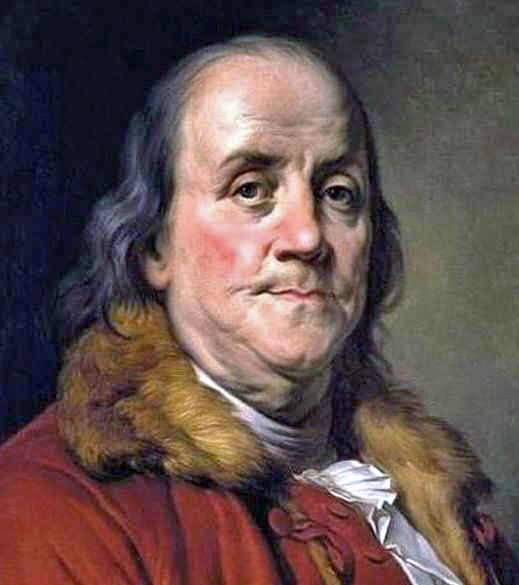
benjamin-franklin

We must, indeed, all hang together, or assuredly we shall all hang separately!


Almost everybody I’ve talked to wants to “do something” right away as concerns the anti-worker government anticipated  for January 20, 2017. For several nights after the election results were announced, thousands protested in the streets of several cities, including mine. As far as I could find out, they had a lot of enthusiasm but no program, no structure, and no strategy.

A month and a half later, we still don’t.

I’ve been asking around about inauguration weekend. So far, it sounds like there will be three rallies, one march, some people going off to the state capital and others going to the national capital. There are probably several more activities being cooked up.

The problem is that there is no coordination among them. As far as I’ve been able to find out, each of them is sponsored by one separate group of people and has demands created by and for solely that group.

Can We Afford to Stay Divided?

As far as I know, the progressive movement in my town (Dallas) has always been divided this way and that.  Every naive young innocent who ever got involved has said, “We’ve got to get together!” And of course it’s true, but I’ve never seen anybody do it.

The book I’ve been promoting, “Runaway Inequality” talks about “silos” and says that all the progressive groups are in their own silos. The solution, says author Les Leopold, is that we have to come out of our silos and start working together. He doesn’t say why we’re in those silos to begin with, nor how to get out.

The basic reason for the silos is funding. Nearly all “progressive” organizations have to raise money. In that sense, they are competitors for the almighty dollar, not partners in any real sense. No matter what high-minded reasons people may have had for creating an organization, their main purpose in life soon becomes raising enough money to pay staff salaries, not whatever they originally intended to accomplish. In a very real sense, they are exactly like churches, most of whom seem to have lost their sense of purpose centuries ago, and they have to raise money or die! How do you change that?

You have to appeal to individuals. Bernie Sanders showed us that it can be done and how to do it.

Why Can’t We Just Hit the Streets?

The main problem with “knee jerk” activism is that it doesn’t go anywhere. Witness the Occupy movement that had thousands of charged-up protesters. They had no program, in fact they deliberately avoided having a program. As a result, they left nothing behind but some really good slogans and memories. But there’s another, very serious, reason to be cautious about spontaneous street actions.

Leftists may not continue to own the streets in America. Remember, that the progressives in Germany tried to take on the better-organized, more unscrupulous, and better financed Storm Troopers in the streets, but it didn’t work out well for them!

In our lifetimes, leftists and leftist causes pretty much ruled the streets. The fascists have stayed inside the corporate boardrooms and left picketing, street rallies, and marches to the riff-raff (us). But Mr Trump regularly puts together rallies of tens of thousands of hotheads today, and he has already shown that he’s willing to encourage violence against any detractor!

I’m not saying we shouldn’t rule the streets. But we aren’t in the same situation we were in before November 8, 2016. It’s different now.

One Proposal for Unity

Progressive people who want to survive and thrive during the Trump Administration need serious strategies for coordinated activity. My proposal is a series of “teach ins,” conference calls, and, possibly, “retreats” to work on programs and to coordinate activities. At the very least, we could set up a “clearing house” function so that different groups would know what the others were planning.

Labor, as the most responsible and most consistently progressive part of the left, needs to center itself in this process.

Everybody going their own whichaway isn’t affordable any more.

–Gene Lantz

Hear “Workers Beat” on KNON radio, 89.3FM and knon.org every Saturday at 9 CST

Click here if you want to know what I really think