Archive

democracy

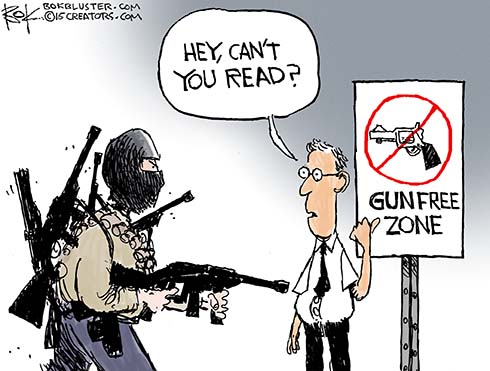
Mass shootings are regular events in America. In today’s newspaper, I just read that Americans have ten times as many guns as anybody else, and that’s the fundamental reason for all the killing.
guncontrol

My own view may surprise you. When it’s all said and done, I am not for taking guns away from the citizenry.

Are Criminals and Terrorists the Issue?

The popular logic is that taking away a lot of people’s guns will also take a lot of guns away from screwballs, criminals, and terrorists. The NRA and the gun-nuts argue that the people who shouldn’t have guns will find a way to get them anyway, and the rest of us will be defenseless after we’ve given up our own. There’s a lot of heat in that argument, on both sides, but neither one deals with the essence of the question.

Let’s Start From Another Angle

If the citizenry gives up our weapons, then only the police will have weapons. That’s what worries me. I don’t know what percentage of the umpteen gun-caused maimings and deaths in America came out of police gun barrels, but I know that there are too many of them. Police shootings are treated as a separate controversy, but they actually go right to the heart of the matter.

The question of the proliferation of guns and the proliferation of police shootings are related. One can’t be solved without the other.

Community Organization is the Answer to Both Problems

If we had effective community organization, we’d have less crime, less need for protection, and a lot fewer police. Neighborhood watches, consisting of the neighbors themselves, could watch out for and report crimes. We would still need professional investigators similar to the ones we see on British BBC television, but we would no longer need armed and dangerous policemen on patrol. In the BBC murder mysteries, the investigators can call out armed units when necessary, and our militias should be able to do the same.

What is the Obstacle?

I can imagine people laughing as they read the preceding paragraph. They’re right, The police in America are not going to be disarmed. Our employers aren’t going to get us organized for self-protection either. But that’s not because it wouldn’t be a good idea. It’s because they don’t work for us. The police, and for that matter the military forces, all work for the plutocrats that run America. They are the armed agents of the people who rule us.

Our our problem is not the NRA, not the gun-nuts, not the terrorists, not the criminals. It’s the bosses.

–Gene Lantz

I’m on http://knon.org/workers-beat every Saturday at 9 Central Time .if you want to know what I really think, check out http://lilleskole.us

 

On the “Workers Beat” radio show this morning, I interviewed advocates for Dallas County Schools, a public service that provides transportation and safety for children going to North Texas schools. We are experiencing a propaganda blitz calling for us to vote “against” them in the November 7, 2017, election. How we came to this little historical intersection is an interesting story, and it illustrates a much larger problem for our world under capitalism.

privatization-stop

Today’s radio program was the third time I’ve had advocates for Dallas County Schools. The first ones were bus drivers organized by an independent union. They complained that somebody was out to smear their driving records but, when one considers that they log 106,000 miles per day, their driving record was pretty good. Co-Host Bonnie Mathias and I smelled a rat even then. We decided, without any explanation or prompting, that somebody was out to privatize Dallas County Schools.

When I interviewed the interim superintendent and the organizer for National Education Association later on, I was convinced that privatization was indeed the issue. They said that Texas Senator Don Huffines had originated the entire process with legislation calling for the vote. Although the “remedy” he proposed was complicated, it was skewed toward privatization, said my interviewees.

A Board member who hasn’t been on my radio show had contacted the Dallas AFL-CIO for help a few weeks ago. I sat in on the meeting. Later on, she and I corresponded as I tried to get to the bottom of what was going on.

Today I talked with a Board member and another union official. They went over the charges listed on the three expensive 4-color mailings I have received. They refuted them one by one. Mistakes had been made in the past, they said, but the superintendent and most of the Board had been replaced since then and rectification was under way. Further, the charges against them were overstated or even out right lies!

Nobody mentioned it on the radio, but they said there have been at least 5 robo-calls urging the voters to vote against them. Who paid for five robo calls and 3 big mailings? They said that the mysterious “Protect Dallas Kids” organization that opposed them had filed the required legal reports. They received money from the Dallas Citizens’ Alliance and one of the biggest corporation in North Texas, AT&T. A great deal more had been spent than had been reported, they said.

The Dallas Citizens Committee’s involvement was no surprise. Their main front is the Dallas Morning News, which has editorialized against the Dallas County Schools.

Other than Senator Huffines, I could only find one name associated with the propaganda blitz. The Treasurer, which is required to be listed on political propaganda, is also the Treasurer of the Dallas Republican Party. The address given is right outside Dallas County, but is in Huffines’ Senate District.

As I wrote in the Dallas AFL-CIO newsletter, the anti-worker credentials of Senator Don Huffines, the Dallas Morning News, and the Dallas Republican Party are well established. We stand with the workers!

There’s a Much Larger Lesson

In general, capitalists want to privatize everything. They have already privatized many of the prisons, much of the space program, and a great deal of America’s war machine. They argue that business can do everything cheaper and more efficiently than government, even though even the most shallow thinker can see why they can’t — to every expense they have to add profits.

Almost any form of economic activity can be used to generate profits. That’s why they keep trying to privatize everything. It’s a major issue in so-called trade negotiations as the big transnational corporations try to crate more profit centers all over the world.

The Speaker of the House, Paul Ryan, has been trying to privatize Medicare for years. So far, the Senate has stopped him, but that doesn’t mean he won’t keep trying. They also want to provide everything having to do with veterans’ care.

Unions generally oppose privatizing. We argue that it leads to fewer services and more costs.  On the other side, the bosses look for any kind of problem that a public service may have, then they use that to argue for destroying the public entity and substituting themselves. That’s what’s going on with the Dallas County Schools, and it’s going on all over the world.

When we have a public service, there is always a possibility of corruption; but when we privatize, corruption is guaranteed!

–Gene Lantz

I’m on http://knon.org/workers-beat/ every Saturday at 9 Central Time. If you’re interested in what I really think, try http://lilleskole.us


Three hours after we went into the theater, we emerged dazed and questioning.

Movie Review: “Blade Runner 2049,” Directed by Denis Villeneuve, 163 minutes

bladerunner

The last hour, or so it seemed, was the credits. The more the graphics arts in a movie, the longer the movie credits. My movie buddy always sits through to the final frame, because she wants to know if it was union-made or not. This one had three union logos at the end: Sag-Aftra, Teamsters, and IATSE.

Frankly, I loved every minute of it and would still be sitting there if it had gone on, but I suspect that this movie, like the 1982 Blade Runner, will undergo some cutting and re-cutting before they’re done. The original was one of the greatest accomplishments in movie sci-fi of all time. That’s not because of the incredible graphics. I suppose the incredible graphics award will go to one of those Transformer movies. It’s the way that all the elements of the movie, including music, backgrounds, special effects, acting, stunts — all of it — come together to produce a moody symphony.

Like the first movie, this one is basically a hard-boiled detective story set in a horrible future world dominated by corporations whose greed has left the planet barely inhabitable. Near-human android slaves (replicants) have all the jobs. There is no happiness in either group. There’s no sunshine anywhere at all. It’s as grim as if the Trump Administration had lasted until 2049.

I may have to see the film again, because I caught a number of tributes to other movies and other art forms, and there were probably a lot that I didn’t catch. And like all good sci-fi, there were some really great philosophical and moral questions raised by the replicant-killing Blade Runner, the not-so-bad replicants that he didn’t kill, the evil replicants that he did, and the even-more-evil corporation at the root of it all.

—Gene Lantz

I’m on KNON radio every Saturay at 9 AM Central Time. If you want to know what I really think, click here.

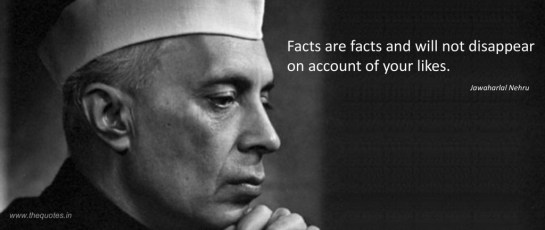
Movie Review, “Viceroy’s House,” Directed by Gurinder Chadha, 106 minutes.

Like most useful political movies, “Viceroy’s House” is showing in a very limited run. In Dallas, it’s at the Inwood, but showing only twice each day and sure to disappear on Friday.

nehru-quote

Critics compare the movie to “Upstairs Downstairs” or “Downton Abbey,” partly because it stars Hugh Bonneville, who was the Earl for years on “Downton Abbey.” Actually, it compares much more with “Doctor Zhivago” or “The Year of Living Dangerously,” because it’s an epic historical movie with a tangentially related movie-type love story in the foreground, while great events are going on behind.

Lord Mountbatten, a British war hero, arrives to take over as the last viceroy in imperial India. The weakened empire wants to free its millions of subjects and, for most of the movie, the problems seem fairly realistic. The Lord and his very able wife and daughter try to deal with them as well as possible. But there’s dirty business afoot and tens of thousands of Hindus and Muslims will kill each other before the film ends. In Kashmir and other parts of India today, they are still at it.

I don’t want to give away who the real dirty s.o.b. villain is, but his initials are Sir Winston Churchill, about whom I have already delivered some opinions.

As you know, the British didn’t just turn India over to Nehru and his democratic government. Instead, they partitioned it along religious lines as they had earlier with Palestine and Ireland — two other places where a lot of people have died. The entire scheme of partitioning at the end of World War II merits some scrutiny. Why, for example, did we end up with East and West Berlin, North and South Korea, Iraq/Iran/Kurdistan, and one of our old favorites, North and South Indo-China (Vietnam).,

Come to think of it, we might look through a lot of histories and consider what governments really intended when they partitioned geographic areas. I live in Texas, for example, which was partitioned away from Mexico along with California and the entire Southwestern United States.

The movie’s director is no novice She has put together a very satisfying movie with some real political and historical significance. Her own family members were among the victims of the period. The acting is superb at every level, from Lord Mountbatten to his least servants. There are hundreds of extras in wide-lens shots that must have cost a fortune. BTW, Mountbatten’s daughter served as a consultant on the film.

Don’t miss it!

—Gene Lantz

Catch me on KNON radio 89.3 FM Saturdays 9-10 AM CST


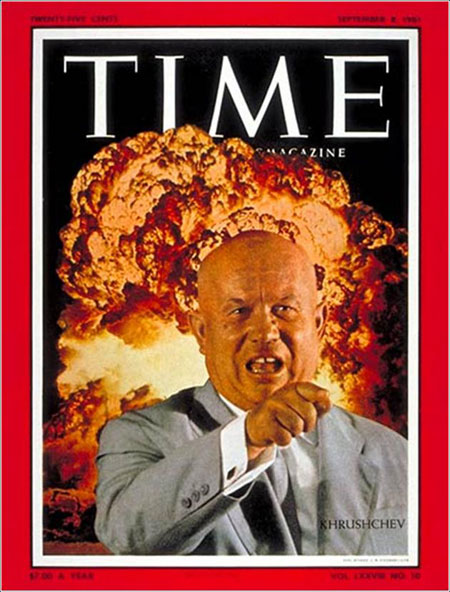
Book Review: Gaddis, John Lewis, “The Cold War. A New History.” Penguin Press, NY. 2005.

khruschev

I got the book from the Oak Cliff Dallas library. Gaddis had already written several earlier books on the period, so this one is sort of a compilation, he says.

What I liked about it was that he included some of the significant events of the Cold War period. It’s not chronological. He presents events in the order he wants in order to make the point he wants to make: that the Cold War was not so much a part of the long confrontation between labor and capital, but rather an historically isolated one of democracy versus totalitarianism. From the first, in his detached academic way, he cheers the American side.

Although it’s presented way out of order, he does talk about the 1948 CIA intervention to keep the Italian Communist Party from winning their national elections. He talks, a little bit, about America’s overthrow of the elected government of Chile and the installation of fascist terror. He mentions the CIA overthrows of the elected governments of Guatemala and Iran.

Like a lot of post-Soviet Union books, he gives his explanation for the failure of that government. He seems to think that Premier Gorbachev was confused and easily swayed by that smooth-talking Ronald Reagan. He says that the Soviets erred by trying to live up to their commitment to worldwide revolution by supporting the Cubans, the Angolans, the Vietnamese, and the many other peoples that tried to advance beyond capitalism and called to the Soviets for help. He says the Soviets couldn’t afford them.

But the fundamental problem, he says, was that the Soviets could not provide the standard of living that their people had been promised. When Khruschev said “We will bury you,” no matter how that was interpreted here, he meant that the Soviets had a superior economic system.

Over the years, I’ve heard a number of smart people talking about the mistakes of the Soviet Union. Some of them imply that those mistakes were also made by the worldwide socialist movement and, especially, by CPUSA here. I think this book nudges us toward an idea of what those mistakes might have been:

1) They mistakenly thought they could extend cooperation with the United States and other capitalist nations after Hitler was defeated.

2) They mistakenly thought that capitalist economies would resume their desperate pre-war economic depression after the war

3) They mistakenly thought that no single capitalist nation could unite the others against them

4) They underestimated the post-war prosperity phase.

Having lived through the Cold War, and after visiting the Soviet Union twice and doing some of my own studying, I have to agree with the book’s author on this important main point: I don’t know if the Soviets could have provided a superior standard of living for their citizens, but I am convinced that they didn’t.

Gaddis, the author, says that a market economy is fundamentally superior to a planned economy because it is more flexible. The Chinese economy, he says, succeeds because they embraced capitalism.

Certainly, the Korean War, the Missile Crisis, and the Vietnam war are covered.  But some things were not.

I just glanced at the book’s index to see if he included some of what I considered the most important aspects of the Cold War: The Taft-Hartley law that put America’s unions into a long downward spiral, the trial and execution of the Rosenbergs, Senator Joe McCarthy’s hearings, the McCarran Anti-Subversive Act(s) that sent American activists to prison, and the House Unamerican Activities Committee which destroyed so many lives. None of them are mentioned; none even made the index. If he had mentioned such things, I might have given more credibility to his thesis that the Soviets and Americans were equally to blame for having started and perpetuated the Cold War.

I don’t think that this “equal blame” idea can stand the test of history, because the wealthy capitalist countries opposed the Soviet Union in every possible way from its inception, 100 years ago. World War II provided only a brief interruption in attacks against the Soviets, and they did that only because Hitler had become such a threat to all of them. From 1917 to 1941, and again immediately after the war, the United States and the other imperialist nations did all they could to undermine and overthrow the Soviets.

I think that the Soviet Union fell as the result of an attack. The frontal attacks, although there were plenty of them, could not bring the Soviets down. But the long siege did.

World War II ended with a gigantic Soviet and American victory in 1945. The declaration of Cold War came from Winston Churchill, sharing a podium with President Truman,  in Fulton, Missouri, March 5, 1946 – less than a year after the hot war ended.

–Gene Lantz

I’m on KNON radio 89.3 FM from 9 to 10 every Saturday. Call in your opinions!

For the past several weeks, I’ve been hosting on-line meetings on digital organizing.

digital-organization-computer

It’s not that I know a lot about it. I do these meetings because they need doing. Our progressive movement is exploding like an adolescent in a growth spurt. But, like an adolescent, it isn’t very well coordinated and doesn’t seem to know where it’s going.

The on-line part of the work could bring us together, it could coordinate our activities, and it could help turn this strong but clumsy adolescent into the soldier we need.

Techies Don’t Usually Set Organizational Policy

I have been around computers since 1963. In business and in politics, the techies usually get called into strategy meetings, but only to provide a general idea of what is possible. The overall goals of each organization are set by somebody else, and the techies shoehorn their abilities into someone else’s parameters.

It’s still like that within most organizations. Some glaring exceptions are  MoveOn and Facebook — where the techies created and ran the entire operation.

Today’s Techies Run Wild

Almost everybody with a computer, or even with a smart phone, has the potential today to play a big role in politics — for good or for evil. In our mish-mosh progressive movement, the techies create their own strategies, if they have any at all, and they tend to go every which-a-way.

There are a lot of classes, some excellent ones are on-line, about digital organizing, but they are primarily concerned with HOW to implement various technologies. I see very little about WHY?

That’s why I freely admit that I’ve been doing this for thirty years and still don’t know what I’m doing.

Disseminating Information Is Not Enough

If we know a lot about communications and social media, we can reach a lot of people with a lot of information. So what? If we aren’t working together to build a progressive movement that can stand up to the challenges from the other side, the 1%, the enemy, then why throw out all this info?

Organizing, even the segment of organizing called digital, means joining people together for a common purpose. It isn’t how many people we can reach, it’s how many we can move!

Organizations Often Work Against One Another

Who doesn’t dream of unity? But it’s just a dream if we don’t take stock of the very real reasons that disunity persists in the progressive movement. We have to recognize obstacles if we are to overcome them.

One big obstacle, probably the biggest, is how the “progressive” organizations are funded. In general, we beg for donations from the people who have money. Often as not, they are, as a class, the very people we are trying to overcome. The donor class keeps all of us begging and, far worse, competing against each other for contributions.

If we asked individuals about the need for unity, almost all of them will agree. But those same individuals, working in “progressive” organizations, are primarily competitors for money, not co-operators. As a movement, we’re killing ourselves with our own opportunism!

There are other reasons for disunity, of course. Big egos get in the way. Deliberate saboteurs and agent provocateurs are among us all the time.  Our adolescent obsessions with one part of the progressive movement over the others disunites us. Arguments over tactics are often a source of friction. Putting aside tactics, we don’t really even agree on our major goals.

Unity Requires Agreed-Upon Principles

The first thing the progressive movement should agree on is what we are trying to do. That goal is to overcome those who are now running the world (into the ground) and implement a better, more democratic, system.

The second is an overall strategy based on empowering working families, as opposed to bosses. The bosses are running things now, for their own benefit, and their employees have very little say-so about the important things. Unions, because they represent working families, are especially important.

Then comes tactics. Progressives should be taking part in every arena of political struggle that benefits working people and disadvantages our bosses. Everything we do that makes our side stronger and their side weaker is a good tactic.

Our resources vary, and some tactics are better than others. That’s why we need democratic discussion among ourselves to sort out the best immediate activities. But the guideline, the first thing, always has to be uppermost in our thinking.

So, What Do We Do Right Now?

Figure out which activities are best moving us toward our goal. Use our digital magic to boost those progressive activities. Participate in the ideological discussion around those actions so that participants will get all possible value from being part of it. Agitate, educate, and organize!

–Gene Lantz

I invite your opinions. I’m on http://knon.org 89.3FM in Dallas every Saturday at 9 Central Time

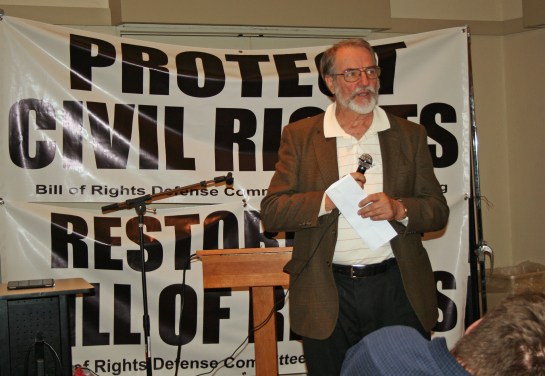
It’s incredible, but lots of people don’t know the difference between right and wrong!

mecivilrightssupper

It’s evident from today’s discussions around Confederate monuments, white supremacy marches, and free speech. President Trump, that fountain of wisdom, says that we have to take down the Washington monument if we’re opposing Jefferson Davis. Some of my liberal friends, gritting their teeth, say they will defend white supremacists’ right to march and speak out “to the death.”

The racists in Boston today say they aren’t rallying for bigotry, but for “free speech.” They’re trying to frame the argument so that anybody opposed to their disgusting views is against freedom.

There’s a good explanation for the confusion

The confusion over right and wrong today has the same root cause as a tremendous lot of confusion — people have no standard of measurement. With no actual standard, they are going by their feelings. No one would admit that, but it’s true. People are trying to decide very important questions simply by the way they happen to be feeling.

All philosophies are branches of idealism versus materialism. Idealists believe that the standards for everything exist only in their minds — in their ideal world. All the stuff that we see, touch, and smell, is only an approximation of the perfect ideal.

Materialists believe in the real world. We believe that any concept of a perfect ideal would have to be generalized from all the stuff we can sense. The material world comes first, and perfection is just something to talk about when we have extra time.

What standard would work?

The good of humanity is an excellent standard. “Good,” then, is what helps humanity. “Evil” detracts from us. “Right” advances us and “wrong” pushes us backward.

If everyone used that simple standard, the arguments would be over.

Getting back to the present situation, tax dollars should no longer be used to honor the Confederacy. Racism should be suppressed. It’s not a moral issue nor a difficult philosophical problem. It’s just knowing the difference between right and wrong.

–Gene Lantz

You can hear me on “Workers Beat” on KNON.org or 89.3FM in the Dallas area, 9AM central time every Saturday

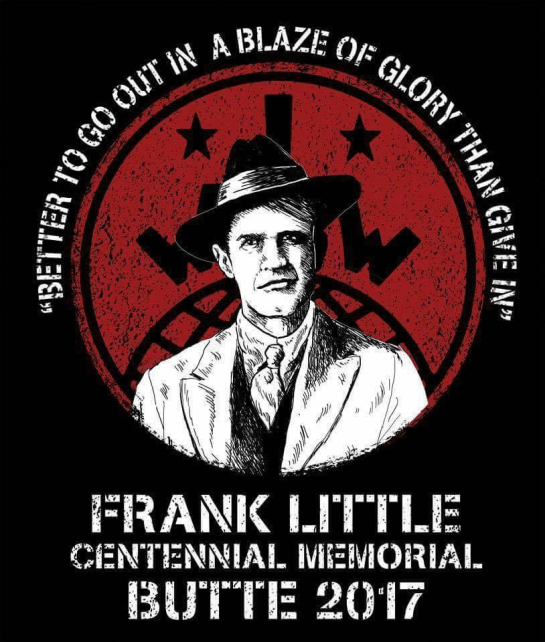
Botkin, Jane Little, Frank Little and the IWW. The Blood that Stained an American Family. University of Oklahoma Press, Norman, 2017

19990476_10213796116440546_8070776055463485877_n

The author will speak in Butte, Montana, on August 1

A giant hole in American labor history has been filled.

Frank Little’s Great Grand Niece has explained every known detail of the great union organizer’s life. 125 pages of careful notations testify to her ability as an historian of the first rank, but she also reveals family records hidden for a century. She has written not only the best biography of Frank Little possible, but she also put the events of his life and times in context so that a reader can, from this one book, draw the important lessons of the missing chapters, 1905-1919, of American history.

Why Frank Little and His Times Matter

Frank Little was a top organizer for the Industrial Workers of the World, the IWW, the Wobblies, the One Big Union, the OBU. At the time he was lynched, one hundred years ago on August 1, he was Chairman of the General Executive Board. Not all details are known, but his legacy probably includes:

1. Implementation of passive resistance tactics decades before Gandhi or MLK
2. Implementation of organizing itinerant farm workers decades before Cesar Chavez
3. Implementation of Industrial Organizing (as opposed to craft organizing) decades before the CIO
4. Champion of the argument that workers should stay out of World War I
If Frank Little had survived his 39th year, and if his ideas had survived, civil rights would have been greatly advanced. Labor would have put aside all arguments against minorities and immigrants long ago. Itinerant farm workers would have been organized far earlier. Divisions in the ranks of organized labor would have melted away. Thousands of soldiers’ lives would have been saved and American workers would have had a far better understanding of capitalism, imperialism, and socialism than they do now or have ever had. This last point is based on Frank Little’s adamant opposition to World War I. He was one of the two most outspoken labor leaders in the world on this point. The other one was V.I. Lenin in Russia.
In our spare time, my wife and I have tried to collect what little we could find out about Frank Little. I posted it years ago at http://labordallas.org/hist/little.htm.
The new book shows that I was wrong on several small details, but my only general mistake was to have underestimated the man and his importance.

Why Didn’t We Already Know All This?

Within a month of Frank Little’s lynching at the hands of the copper bosses of Montana, The United States government launched the fiercest attack against the working class in our history. Free speech, one of Frank Little’s greatest accomplishments, was trampled. Unionists were hunted down and deported or arrested and tortured. Heavy jail sentences were laid on any of the hundreds railroaded for having “conspired with Frank H. Little” to undermine war production.

Union halls were raided and all records were confiscated. History, especially any history associated with Frank Little, was wiped clean. Fear was so great that even Frank Little’s relatives dared not remember him. Fear was so great that the silence lasted almost 100 years, until now.

–Gene Lantz

You can still find me every Saturday at 9AM Central Time on http://knon.org. 

I write on http://tx.aflcio.org/dallas and http://texasretiredamericans.org


Movie review, “Churchill,” Directed by Jonathan Teplitzk, 110 minutes

churchillquote

I can only think of one good reason to go and see the new biopic, “Churchill.” It’s an opportunity to see the great Miranda Richardson, who plays his wife.

The movie takes place in the last few days before June 6, 1944, when Allied forces invaded Normandy. Sir Winston is portrayed as a greatly flawed hero, but a hero all the same. It’s all dialogue with, it seems, millions of closeups of the old gentleman’s kindly and concerned face. The real Churchill looked exactly like a bulldog. Compassion is the last thing one would associate with him.

But in this movie, he tries to stop Generals Eisenhower and Montgomery from invading France out of his overwhelming compassion for young soldiers. The reason given is his sense of guilt over the massacre at Gallipoli during World War I. He has been blamed for that and it’s inferred in this movie.

To give credit where it is due, Sir Winston’s rhetoric helped inspire and organize the Britons through extreme duress. We still listen to his speeches, and one of them is the high point of this film effort. But that is no excuse for boring moviegoers for nearly two hours and presenting one of the least-admirable characters of British history as someone to love.

Far from compassion, Churchill burned with elitism and anti-semitism. He helped make anti-communism a world religion. Among the many world figures who allowed Hitler to gain enough power to threaten the entire world, Churchill is a standout. Hitler came to power in Germany because he was seen as the best way to overcome German communism, and Churchill was a co-thinker. Instead of stopping the fascists in Spain, or earlier or later, the “great powers” allowed him to build his great war machine in hopes that he would throw it against the Soviet Union first.

I find it impossible to associate Churchill with compassion for soldiers for one main reason: he advocated for war after World War II was over and done. It was Churchill’s “Iron Curtain” speech that popularized the cold war.

Try an internet search for “Churchill and anticommunism.” Here are a few of the things that pop up:

“…His deep early admiration of Benito Mussolini was rooted in his shrewd appreciation of what Mussolini had accomplished (or so he thought). In an Italy teetering on the brink of Leninist revolution, Il Duce had discovered the one formula that could counteract the Leninist appeal: hypernationalism with a social slant. Churchill lauded “Fascismo’s triumphant struggle against the bestial appetites and passions of Leninism,” claiming that “it proved the necessary antidote to the Communist poison.” From “Churchill Extols Fascismo for Italy” New York Times, January 21, 1927. Churchill even had admiring words for Hitler; as late as 1937, he wrote: “one may dislike Hitler’s system and yet admire his patriotic achievement. If our country were defeated, I hope we should find a champion as indomitable to restore our courage and lead us back to our place among the nations.” James, “Churchill the Politician,” p. 118. On the conditions of the Fascist takeover in Italy, see Ralph Raico, “Mises on Fascism and Democracy,” Journal of Libertarian Studies 12, no 1 (Spring 1996): 1-27.  https://mises.org/library/rethinking-churchill

Churchill is credited with having begun the cold war:

http://www.theimaginativeconservative.org/2014/05/winston-churchills-iron-curtain.html

He is credited with helping the Nazis take power outside Germany:  http://azvsas.blogspot.com/2015/01/winston-churchill-anti-communist-who.html

He is credited with sharing Hitler’s anti-semitism:

https://jodebloggs.wordpress.com/2015/05/29/winston-churchill-and-the-rise-of-bolshevism-1917-1927/

If you think I say outrageous things, you might check out my weekly radio show on KNON.org or 89.3FM in Dallas.  –Gene Lantz