Archive

politics

Important as they are, elections are just battles within a much greater war. With the mid-terms over, we now have opportunities to organize working families.

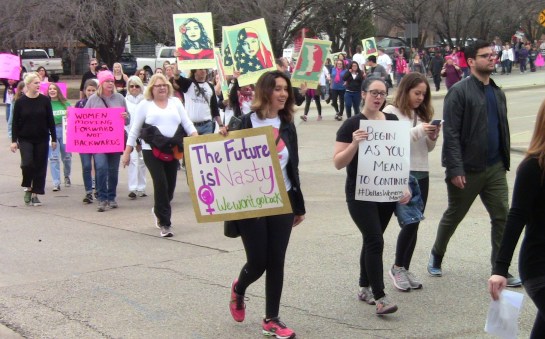
Here in Dallas, for example, there’s an action against Trump’s proxy war in Yemen on Monday. There will be more. Christmas and New Years’ are great times for social organizing. The nationwide coalition watching the Mueller investigations may be calling more street actions any day now. The MLK birthday falls on a Tuesday next year. The event with the most potential is the Women’s March set for Saturday, January 19.

January 19, 2016, was the biggest day of protest in American history. Women set the pace, but all kinds of issues were included in the giant marches all over the nation. None of those issues has been resolved. In fact, the outlook has generally worsened; consequently, one might expect January 19, 2019, to surpass the 2016 events.

Here are two more good reasons for expecting an even bigger protest in 2019:

  1. The worldwide situation is causing unprecedented demonstrations in other parts of the world. Americans are learning from them
  2. Success inspires more success, and the number of women elected to Congress in 2018 set a new record.

Starting now, let’s add a third reason for a big turnout on January 19: you and I are already started working on it!

–Gene Lantz

I’m on KNON’s “Workers Beat” program 89.3FM in Dallas at 9 AM Central Time every Saturday. They podcast on Itunes. If you are curious about what I really think, check out my tacky little personal web site


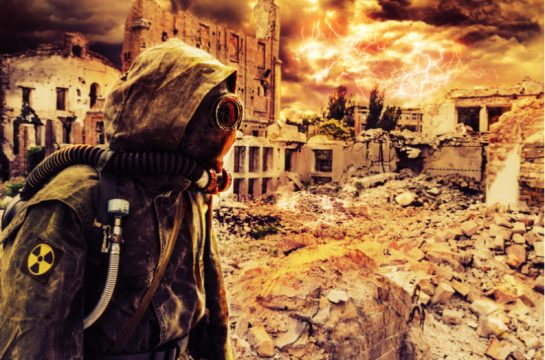
Worldwide disaster is nearing. Pick your disaster trend:

  1. War is more possible than when Trump took office
  2. The environment is getting worse and Trump policies are making it worse
  3. World economies are interlaced, but out of kilter; a serious crisis anywhere could lead to a worldwide nightmare
  4. Democracy is being eroded

It’s not an exhaustive list. I kept it to four because it makes a good metaphor with the Four Horsemen of the Apocalypse. Google any of the four topics and you will find plenty of expert opinion on looming disaster.

Rising nationalism is the most problematic, because it means less international cooperation, and international cooperation is the only way to lessen the danger from any of the horsemen listed. The new nationalism in America and some other countries such as Poland, Italy, Austria, Hungary, and Brazil means that nations have stopped trying to cooperate. England’s Brexit goes in that same direction, too.

Why worry?

Not everybody is trying to solve these problems. Here are some of their arguments.

Why worry when there’s nothing we can do about it?

Certain religious people actually believe that Armageddon is ordained by God and will happen whether we do anything or not, so why try? It’s a convenient excuse

When things get bad enough, people will take action, so let them get worse!

There is no historical basis for this idea. People begin to act, in fact, when they experience victories, not when they experience defeats. The great strike upsurge in America during 1946 is a good example. When unions were winning, everybody wanted to join one.

The coming fascism is only one way to administer capitalism, and capitalism itself is doomed, so just wait it out!

Fascism may be able to remain in power for a long time. It could create untold suffereing and, at the end, not bring us any closer to any solution than we are now

The Democrats just made some headway against Trump in 2018 and are poised to remove or neutralize him in 2020

We had an argument like that about George Bush, and many of us thought that the Obama Administration would be able to right all wrongs. Obama made some progress, but the underlying problems did not go away and they created the conditions that got Trump elected. Going back a little bit, we thought that same thing about Clinton during the Reagan/DaddyBush days. They thought it about Roosevelt when Hoover was President, and about Wilson when Coolidge ruled.  Our problem is not about individuals, but about systems.

Radicals are forever prophesying disaster, yet humanity goes on

They did so in 1859 before the American Civil War, they did so in 1914 before World War I, in 1929 before the Great Depression, in 1933 when Hitler consolidated his power, and in 1947 when the American government turned anti-worker. They were right, of course, and great disasters followed, but people kept trudging onward anyway. So why get upset about the current threats to human existence? Here are some reasons to worry more today:

  1. They didn’t have nuclear weapons before
  2. Plutonium, one of the most poisonous materials in the world, hadn’t even been refined
  3. The world economy has never been as integrated as it is today
  4. Climate change was never so drastic
  5. We never even had such a large world population, and they were never packed, as we are now, into cities
  6. We never had so many displaced people wondering the planet. I’m not just talking about the half-million sleeping in America doorways, but also the millions trying to escape from the Middle East, Africa, and Central America.

If you think it through, you will see disaster(s) on the horizon. If you think it further, you will begin to take action.

–Gene Lantz

I’m on KNON radio’s “Workers Beat” program each Saturday at 9 AM Central Time. 89.3 FM in Dallas. They podcast it on Itunes. If you are curious about what I really think, check out my personal web site

Are these recent news articles related?

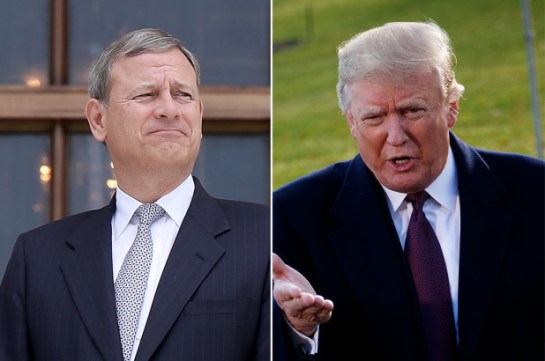
  • American Chief Justice John Roberts publicly strikes back against President Trump
  • Poland is forced to re-seat judges who had been forced out
  • Top political leaders of Brazil are forced out by judiciary

On the front page of the Dallas newspaper, Roberts is quoted: “We do not have ‘Obama Judges’ or ‘Trump Judges’ or ‘Bush Judges’ or ‘Clinton Judges.'” Trump insists that we do. Two main points take up the rest of the article:

  1. Trump has consistently vilified Roberts and any other judge who disagrees with him
  2. It is completely unprecedented for a Supreme Court Justice to fight back

Over on page 16, under the headline, “Poland: Judges Will be Reinstated,” we learn that the reactionary government of Poland has been forced to bring back their nation’s top judges after pressure from the European Union.  A couple of weeks ago, we learned that an outright dictatorial fascist had been elected President of Brazil after their judiciary put his two most important political adversaries into prison. It’s more complicated, but it’s going on in Argentina, too.

Democracies Use Checks and Balances

The judiciary reviews the acts of other government branches. That’s what we’re used to in our 250 or-so years of limited American democracy. It’s no secret in America that much of our judiciary, including the Supreme Court, has been taken over by dark money so that they can hand power and wealth to billionaires. At the same time, Americans, including many of the judges, still believe that we have an impartial judiciary overseeing a fair democracy. Apparently, Chief Justice Roberts is one of those.

Whether we agree with him or just have some intellectual equivocating position, we need to back Roberts against Trump as part of our worldwide fight to save every scrap of democracy!

–Gene Lantz

I’m on KNON Radio’s “Workers Beat” program, 89.3 FM in Dallas, every Saturday at 9 AM Central Time. They podcast it on Itunes. If you are curious about what I really think, check out my personal web site

Book Review:

Smith, Norma, “Jeannette Rankin. America’s Conscience.” Montana Historical Society Press, Helena, 2002.

jeannette-rankin

According to the intro, Norma Smith wrote this in the 1970s. She died in 2001, before they decided to publish it. She developed the information by research and visiting Rankin several times in the 1970s. It seems suitable to read this book in late 2018, because the mid-term elections put a record 100 women into Congress! But once, there was only Jeannette Rankin.

I was impressed with the historical value of this volume. I know a little bit about some of the historical events involving Rankin, but this work brings it together and contributes valuable information.

I especially like trying to understand the transitional nature of politics during and after World War I. Up to 1916, African Americans and other progressives generally supported the Republican Party because they won the war to end slavery. The Republicans lost some of that vote because of overt racism during the T.R. Roosevelt administration. Major African American leaders such as W.E.B. Dubois switched to the Democrats during the 1916 presidential race partially because President Wilson said he had “kept us out of war.”

Jeannette Rankin ran as a Republican, but she didn’t consult them when she voted. She apparently didn’t consult anybody!

Rankin was a major mover of the suffragette movement. She was a congresswoman twice. She stood up for many social programs benefiting, especially, women and children. She was an important part of the pacifist movement and is the only person to have voted against both WWI and WWII. Each of those votes ended her political career at the time, even though she had been elected both times by anti-war voters. I guess that’s how fast public opinion can change.

I’m not sure what it means, but Rankin was a big disappointment to the feminist movement of the 1960s. I think she opposed the Equal Rights Amendment! By the time she died, women did not esteem her. Anti-war activists certainly did, though, because she lived long enough to add her voice to protests of the American adventure in Vietnam.

jeannette-rankin-peace

Earlier, Rankin was smeared in many different ways. Anaconda Copper was one of her enemies, and they controlled most of the press in Montana.  Among the slurs against her was the often charge of communist. According to this book, she could not have possibly been a disciplined or consistent communist, because she voted, during her second term, to extend the Dies witch-hunt Committee. It changed its name to House Un-American Activities Committee (HUAC).

There were some intersections between Rankin’s life and that of my personal hero, Frank Little. She was born in Missoula, and apparently lived there when the IWW carried out its first big free speech fight. She came to Butte within weeks after Frank Little’s lynching. She apparently did not publicly approve of Little, but she decried the manner of his death.

I knew that the suffragette movement was fractious and I knew that FDR had to overcome a lot of resistance as he maneuvered the United States into World War II, but I’d never seen the detail that I find in this book.

There are a lot of other interesting historical people in this book. Texans may be interested in Rankin’s long friendship with Maury Maverick of San Antonio. Maverick wrote her that she had done the right thing in voting against WWI, but he wrote that he had changed his position because WWII was different. He wanted her to vote for war, as almost everybody did after Pearl Harbor. She stuck to her guns and voted against it anyway. It’s interesting to speculate about her motives and what might have happened.

One of the things I didn’t know is that FDR had already moved to wreck the Japanese economy months before Pearl Harbor. According to this book, FDR left them little choice but to attack. Rankin generally did not support FDR.

As far as I can figure out, Rankin’s politics were inconsistent, as middle-class politics generally are. She was remembered as an eccentric in her personal life and in politics. But I don’t think anybody ever accused her of following somebody else.

–Gene Lantz

I’m on KNON’s “Workers Beat” radio program 89.3FM in Dallas and on-line at 9 AM every Saturday Central Time. If you are curious about what I really think, check out my personal web site

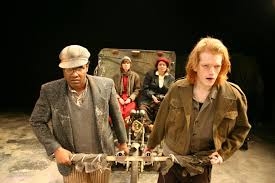
My astute movie buddy found out that Texas Women’s University was staging Bertold Brecht’s play, “Mother Courage” in nearby Denton, Texas. She bought tickets immediately, thereby providing a genuine educational experience for me.

My own experience with Brecht had never gone much further than listening to Bobby Darin’s 1960s rock song, “Mack the Knife.” But I knew he had been a communist and was a German who opposed Hitler. This play was written about the time the Nazis invaded Poland. The play doesn’t mention Hitler nor WWII, it is set in the Thirty Years’ War in Europe in the 17th century. But then,”M.A.S.H.” was set in Korea, but it was about Vietnam.

Wikipedia says, “Mother Courage is considered by some to be the greatest play of the 20th century, and perhaps also the greatest anti-war play of all time.” You should try to see it if you can, but not because you’re going to like the title character. Or not because you’re going to like anybody at all in this play. They’re not heroic nor self-sacrificing, not physically beautiful, not charming, not tremendously insightful nor clever. They are just people. In other words, this is not an American play. As far as I know, Hollywood has never shown the slightest interest in filming it.

Apparently, Bertold Brecht didn’t believe in cultivating emotional transference between his characters and the audience. He felt that nothing should get in the way of the basic art experience between audience members and the entire performance. He wanted to make his point. In this case, his point was that war is an awful thing benefiting no one, and perhaps adding that people who try to exploit war deserve help the least.

Mother Courage and her children sell food and sundries to Protestant soldiers, or sometimes to the Catholics, in the devastating religious war underway. The thing that she and others in the play dread most is the possible ending of the war. It would cut off their livelihoods. This message is more than obvious in a conversation between two Swedish soldiers in the first scene. The rest of the play enlarges the theme, like a map of battle zones, by sticking pins in it.

At a rally in Dallas on the first day of early voting, congressional candidate Colin Allred said “We have two weeks to save democracy!”
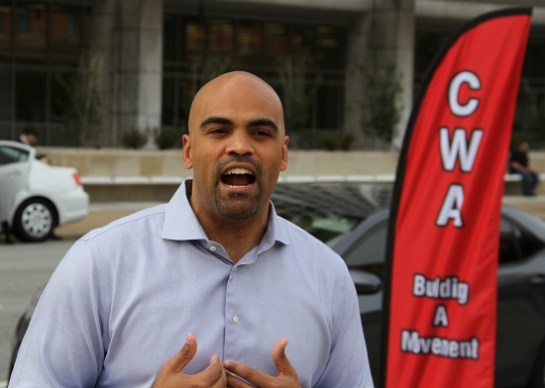
allred-cwa-earlyvote

Soon afterward, the election in Brazil sharpened world concern for democracy’s future. Jair Bolsonaro openly welcomes a return to military dictatorship. He threatens all his political opponents with using the military and government sanctions militias to carry out “a cleansing never before seen.” Women, gays, landless peasants, and the homeless are targets named in a New York Times article.

Almost immediately after the election, military units began raiding student organizations to confiscate any “anti-fascist” or “pro-democracy” materials, according to @castriotar on Twitter.

It’s not just Brazil. The Week news service says, “Right-wing populist and nationalist governments are in power in Russia, Turkey, India, Israel, Hungary, Poland, and the United States, and they share power with left-wing populists in Italy. Established right-wing parties in Britain, Canada, and Australia are busily adapting to the populist trend. Japan’s Shinzo Abe has taken his conservative Liberal Party in a notably nationalist direction. And with Angela Merkel announcing her intention not to run for re-election, and her party anxiously watching the rise of the far-right Alternative for Germany, it’s likely her conservative coalition will also begin sounding right-wing populist themes.”

What’s “Populism?”

In American history, the populists were always considered the representatives of the downtrodden, primarily farmers and sharecroppers who were being squeezed out by urbanization. Populism was associated with being pro-democracy, according to Wikipedia.

Today, newspersons and pundits use the term to mean anybody who claims to oppose the status quo. They’ve invented the term “right-wing populism” to include politicians who are virulently against democracy. Others just call them fascists.

What’s “Left,” What’s “Right?”

On the democracy scale, “left” is usually associated with more democracy while “right” is associated with less. The meaning of both terms is so thoroughly distorted as to make them generally useless. “Pro-democratic” or “anti’” is more accurate.

President Trump’s recent claim that he can overturn the American constitution’s birthright guarantee by executive order is a good example of anti-democratic activity.

What’s “Democracy?”

Historically, we associate democracy with the ancient Greeks. The idea was government by the will of the people. Through the ages, we have never seen anything close to a complete democracy. The Greeks, of course, excluded their slaves. In America, democracy has grown a lot since slavery days but has never included the people’s control over basic economic nor foreign policy.

Of especial importance is the people’s lack of control over the machinery of elections. We may get to vote, but we have never controlled the elections.

During economic or military emergencies, democracy is always diminished. Wartime presidents Abraham Lincoln and Franklin Roosevelt were often called dictators.

Socialists have held out the promise of great extensions of democracy, but have never completely delivered because of the extreme tactics of capitalist opposition. The best that socialists have been able to deliver was “wartime democracy” similar to what Lincoln and Roosevelt practiced.

Who Is “Shifting to the Right?”

Commentators are scrambling to explain the anti-democratic global changes. They ask why people have been voting away their own democratic powers. The answer is that we aren’t.

Our democracy, even American democracy, is not complete and never was. The struggle between the poor and the rich, the 1% and the 99%, the employees and the employers, the workers and the owners, is being played out in elections that are ignored by many on our side. The elections are  being manipulated by the rich and distorted by incredible rivers of dark ugly money.

As a world crisis of international competition shrinks their opportunities, the wealthy are increasingly choosing to give up all pretense of government by the people. They are throwing their considerable wealth and power behind reactionary anti-democracy politicians who are willing to carry us all down an obvious path of total destruction.

Only our side can save democracy.

-Gene Lantz

I’m on KNON radio’s “Workers Beat” program 89.3FM in Dallas at 9 AM Central Time every Saturday. They podcast it on Itunes. If you want to know what I really think, check out my personal web site

Notes:

Ny times https://www.nytimes.com/2018/10/29/world/americas/jair-bolsonaro-brazil-profile.html

Brazil Election: How Jair Bolsonaro Turned Crisis Into Opportunity

Mr. Bolsonaro’s broadsides against women, gay people, Brazilians of color and even democracy — “Let’s go straight to the dictatorship,” he once said as a congressman — made him so polarizing that he struggled to find a running mate until early August. Traditional parties and politicians considered him too extreme.

President Trump called on Sunday to congratulate him on his victory, following up with a tweet on Monday morning that said, “Had a very good conversation with the newly elected President of Brazil, Jair Bolsonaro, who won the race by a substantial margin. We agreed that Brazil and the United States will work closely together on Trade, Military and everything else!”

In 1993, he delivered a fiery speech before the lower house of Congress urging its demise, calling the emerging version of democracy in Brazil a lost cause.

“I am in favor of a dictatorship,” Mr. Bolsonaro thundered. “We will never resolve serious national problems with this irresponsible democracy.”

rc‏ @castriotar Oct 26

rc Retweeted Folha de S.Paulo

More than 20 Brazilian universities were invaded by the military police in the past 2 days. They confiscated material on the history of fascism, interrupted classes due to ‘ideological content’, removed anti-fascist banners and posters claiming that it was electoral propaganda.

@castriotar

Many other student movements and organizations reported military police forces inside classrooms, student units, academic directories, confiscating any sort of materials with ‘anti-fascist’ or ‘pro-democracy’ content.

“It will be a cleansing never before seen in Brazilian history.” [referring directly to “reds,” to Workers Party leader Lula Da Silva, and to his present electoral opponent. He said they will “rot in jail.” He directly threatens to use the armed forces and civilian militias with legal sanction against enemies such as the landless peasants movement and the homeless movement.

April article From Independent about Hungary: https://www.independent.co.uk/news/world/europe/victor-orban-hungary-migrant-refugees-george-soros-ngo-far-right-a8297441.html

Viktor Orban’s right-wing populist party has vowed to would crack down on organisations helping migrants and refugees, in an announcement made just a day after it won an overwhelming election victory.

The autocratic prime minister portrayed himself as the saviour of Hungary’s Christian culture against Muslim migration into Europe, an image which resonated with more than 2.5 million voters.”

His Fidesz party won a two-thirds super majority in the country’s parliament, which would allow it and its small ally, the Christian democrats, to push through changes to constitutional laws.

**

From Washington Post: https://www.washingtonpost.com/news/monkey-cage/wp/2018/02/27/polands-right-wing-government-is-rewriting-history-with-itself-as-hero/?noredirect=on&utm_term=.2ef44090bd99

By Mateusz Mazzini February 27

Poland is in the midst of a pitched battle over its collective memory. The ruling party has recently stirred an international controversy by passing a bill criminalizing the use of the phrase “Polish death camps.” But in many ways, those international rifts are just collateral damage. The real battle is at home and is over what counts as legitimate political authority, and who can wield it.

Poland’s government is suggesting that the present-day cosmopolitan liberals who want to acknowledge Polish collaborators in crimes against Jews are traitors, like the Communists, willing to sell the nation to the highest international bidder. And such national mythmaking has more real-world power than many understand.

From The Atlantic: https://www.theatlantic.com/international/archive/2018/06/its-the-right-wings-italy-now/562256/  June 6

“A new populist government came to power in Italy this week, and the right is calling the shots. It swept in on a wave of anxiety about immigration and the economy. On the economy, certain European rules could prevent Italy from going totally off the rails. When it comes to immigration, things could get rough—at least in rhetoric. In 88 days of coalition talks, Salvini, known for his strident attacks on immigrants as a threat to Italian safety, grew emboldened by the League’s rising popularity in the polls, and in the 11th-hour negotiations to forge a government, he appears to have outmaneuvered Luigi di Maio, the head of the anti-establishment Five-Star Movement, which won twice as many votes as the League in Italy’s March 4 elections

From The Week: https://theweek.com/articles/804453/why-are-rightwing-populists-winning-everywhere

“Right-wing populist and nationalist governments are in power in Russia, Turkey, India, Israel, Hungary, Poland, and the United States, and they share power with left-wing populists in Italy. Established right-wing parties in Britain, Canada, and Australia are busily adapting to the populist trend. Japan’s Shinzo Abe has taken his conservative Liberal Party in a notably nationalist direction. And with Angela Merkel announcing her intention not to run for re-election, and her party anxiously watching the rise of the far-right Alternative for Germany, it’s likely her conservative coalition will also begin sounding right-wing populist themes.”

“What is the commonality in contemporary conditions, around the world, that has made people in so many countries susceptible to both emotional impulses at once, and powered the global rise of the populist right?

That’s the question that liberal democrats need to answer before they are completely swept away.”


I have never been sure whether Donald J Trump was restoring a world of hatred and nationalist paranoia because it’s just what he wants to do, or if he was simply reflecting a change in world relations whose time had come.

diplomacy-cartoon

Fraternalization among nations is ending.

One could say that international fraternalization started during World War II, or after it, or during the Nixon Administration when he visited China. One could say that it began with the fall of socialism in the USSR and Eastern Europe. Or one could say it began with the formation of the European Economic Community, or with the Organization of Petroleum Exporting Countries, or with the Organization of American States, or with all of that. However it started, it’s ending now. Nations are pulling apart.

Case in point: The European Union is strongly criticizing the governments of Italy and Poland. Even bigger case in point: Donald J Trump is pulling out of environmental accords and, lately, even out of nuclear proliferation accords. Plus, he seems intent on offending almost all traditional American allies. Nations are pulling apart.

Should we ask why?

Or should we look at it the other way around and ask why nations had been seeking cooperation with one another prior to the Trump election?

The period just ending, in which America dominated and forced every other nation to cooperate, is not new in history. In the centuries of British domination, roughly 1700 to 1900, they did the same thing. They even used the same rubric: “free trade.”

As British domination fell apart, the separate nations experienced their first World War. As that war began, V.I. Lenin wrote “Imperialism.” In it, he compared the world’s national leaders to gangs of criminals who might, for short periods, cooperate, but were likely to launch a new “turf war” almost any time. The inference from the pamphlet was that the capitalists running the largest industrialized nations would never cooperate for long. For economic reasons, it’s just not in their nature.

The United States dominated the world economically from World War II to the present, but that domination is being severely tested today. Our cars aren’t the only cars, our steel industry is about gone, even our electronics industry has disappeared. If other nations decided to stop using U.S. dollars as their reserve currency, our economy would fall to pieces. And that could happen. Almost any time. Trump is pushing them in that direction, too.

What we called “globalization,” or fraternalization among nations was really a set of circumstances in which the United States was unchallenged in its world domination. Every other nation actually had to cooperate, or to seem to cooperate. That seems to be ending now. I don’t think Trump caused it in 2016, just as I don’t think Hitler caused it in 1931, or if the heir to the Austro-Hungarian empire caused it by dying in 1914. It’s part of the system we live under. It had to end.

The question really is: what are we going  to do about it?

–Gene Lantz

I’m on KNON radio’s “Workers Beat” program 89.3 FM in Dallas at 9 AM Central Time every Saturday. If you are curious about what I really think, check out my personal web site


We are living in a time of great contradiction.

contradiction-enter-only

The more we learn, the stranger is our political world.

People have never been so enlightened. Knowledge, long ago, was accessible to only a privileged few. Most human beings, lacking any real understanding, were guided by dark superstitions and easily herded about by those in power.

We’ve only had public education in America for 150 years or so. Printed words for 600 years, telegraph for maybe 200, radios for 150, movies for 120, TV for 75, and the internet for about 40. It gets harder and harder to herd people around when they are figuring things out for themselves. That’s a tremendous and growing contradiction.

People of my generation can remember when segregation ruled. We can remember that people laughed when Desi spanked Lucy on the world’s most popular TV program. We can remember poll taxes, white primaries, and English-only ballots. We remember when little children were spanked for speaking Spanish. We may have a long way to go, but we have come a long way, too!

If one thinks of human enlightenment as human progress, one sees a continuum of gains that has never completely stopped and is not likely to ever stop. Remember the apelike creatures in the movie “2001?” They huddled in the darkness while predators roamed around them. Then they began to learn. We are learning still, but at an accelerating pace.

The other side of the contradiction is that we are still being herded around by the people in power. They pretend that their arguments are “equal” or “the other side,” but they aren’t. They aren’t “alternative facts,” they are just lies.

Their rulers’ methods of superstition, divisiveness, chauvinism, and general backwardness are less and less effective. Something will have to give eventually, and it has to be them.

–Gene Lantz

I’m on KNON radio’s “Workers Beat” program on 89.3FM in Dallas at 9 AM Central Time every Saturday. If you are curious about what I really think, check our my personal web site


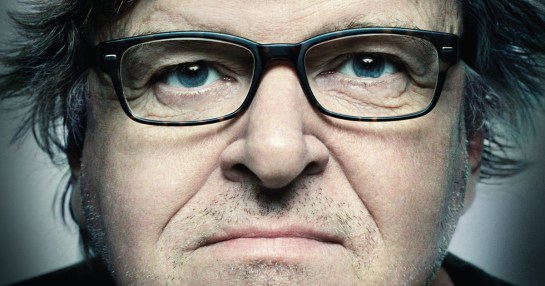
I enthusiastically recommend the content and ideas in Michael Moore’s new documentary, but I can’t actually recommend the movie.

Movie Review:

“Fahrenheit 11/9” Written and Directed by Michael Moore. 2 hours 6 minutes.

Michael Moore of Flint, Michigan, is probably the greatest satirist since Johnathan Swift. While his latest and most ambitious movie fulfills its purpose in illustrating virtually everything that’s wrong in Donald Trump’s America, it also highlights the inadequacy our response.

michael-moore

In Moore’s defense, one might say that listing today’s evils is necessarily a long and grim task. However, such length and such anger don’t fit well into a moviegoing experience. “I felt like I was getting beat up,” was my movie buddy’s summary.

Three or four, or maybe four or five, separate documentaries would have carried the message and made the point better. I wouldn’t mind a feature-length documentary on the scandal of lead poisoning in Flint, or on comparisons between Trump and Hitler, on the Florida teenagers’ response to school shootings, on the failures of our electoral system, and most certainly I wouldn’t mind a feature length documentary on the wonderful school employees of West Virginia. But trying to cover them all, and even more stuff, in one continuous documentary film?

Moore’s over-ambitious project took so much time that it squeezed out all the room that he used in his earlier films for humor. There are some great laughs in “Fahrenheit 11/9,” but only a few.

That’s not my main complaint.

Where Is the Solution?

In an interview introducing his film, Michael Moore said that its purpose was to get people to vote this November. But that isn’t clear at all in the movie. Even if it were clear, for whom would Mr. Moore have us vote? In this film, he lambastes the Democrats almost as much as the Republicans. That can only lead people to do exactly what Moore tells us not to do, stay home on November 6.

At one point, one of the characters featured tells people to join unions. But another part of the movie disparages unions.

Apparently, the outraged Michael Moore wants us to be outraged, but what does he want us to do about it? Many Americans are already outraged. Somebody needs to tell them to join unions and other progressive organizations and fight for a progressive program with a real, long-term social solution.

Otherwise, we’re just a bunch of simple-minded outraged anarchists.

–Gene Lantz

I’m on KNON radio’s “Workers Beat” program at 9 AM central time every Saturday. They podcast on Itunes. If you are curious about what I really think, check out my personal web site.