There are at least three ways that the UAW could win against their 3 large corporate opponents without a massive strike:
A rolling strike: The UAW could strike only in the plants where they are strongest, and the strikes could be limited to relatively short periods. The auto industry is interconnected and uses just-in-time inventory; consequently, one facility might shut down several others for lack of components.
A slowdown: My own local, 848 in Grand Prairie, Texas, ran a successful campaign in 1984-5 and defeated a rich and powerful corporation by “running the plant backwards” for 15 months. During that time, only 65 of us were fired and required strike pay. The first 10 months or so were very difficult and not successful, but we learned how to carry out the fight and, eventually, went on strike for only 11 hours before we reached victory. All 65 of us marched back in the plant with back pay in our pockets! I wrote an account that is available on-line.
A Hit-And-Run: Around 1960, my union local invented an entirely novel tactic. Instead of going on strike, they looked through the membership to see which departments were strongest for the union. Those departments alternated one day work stoppages. A lot of the members were entirely unaffected. Some of them did not even know that a battle was going on, but the stronger units were slowing down production.
Because of just-in-time inventory and assembly-line production, the UAW does not need an expensive full-fledged strike to win. Just a few workers can shut down an assembly line; just a small component shortage can shut down a factory.
I’m not a labor lawyer, so I do not know what tactics might run closer or further from the law. Also, I do not know if any of these suggested tactics might result in as much public support as a full fledged strike against all 3 big auto corporations would surely engender. I don’t know which tactics might result in more political support as the 2024 elections loom large. Ultimately, I believe that the key to victory is the support of the American people, and I believe that working families have that support, and will win more of it as time goes by.
I’m just pointing out that there’s more than one way to defeat a greedy corporation.
–Gene Lantz
I’m on knon.org’s “Workers Beat” talk show at 9AM Central Time every Saturday. My “Workers Beat Extra” podcasts are on knon.org and Soundcloud. Lately, my personal web site, http;//lilleskole.us, has picked up some malware, so be careful.
The answer is “yes,” but there are powerful caveats.
Why Do Unions Tend to Avoid Commercial Media?
American law protects a union’s right to communicate fully and openly with their members. Unions can even publish their candidate recommendations – but only to their members. Unions have to be much more careful when talking to any audience that may include people who are not their members. Some unions don’t talk to them at all.
For unions, there are good reasons to avoid the commercial media. The laws are stacked against us, and the “news” sources virtually all belong to giant corporations who are, after all, our worst enemies. Try Googling “Who owns America’s news?”
And you will find that it’s 15 billionaires in 6 mega corporations. Every one of them would fight to the death to keep their own employees and those of their corporate advertisers from organizing.
“Just 37 years ago, there were 50 companies in charge of most American media. Now, 90% of the media in the United States is controlled by just six corporations: AT&T, CBS, Comcast, Disney, Newscorp and Viacom”
Our “news” is most shamefully dishonest when it comes to economic and foreign policy news. They literally sing from the exact same hymnbook, and that hymnbook is written by corporations with no input from working families. One would like to exclude “public” media such as NPR or the BCC, but it would be a mistake. Compare any news item on the economy or on foreign policy over the full spectrum of what is available. Even the phrasing is practically identical!
Exceptions like the all-volunteer community radio station KNON in Dallas are so small as to be almost negligible. The hour-long talk show, “Workers Beat,” which I have proudly hosted for decades, is the only worker-friendly program on the Texas airwaves and one of only 3 or 4 in the entire South!
When labor takes actions big enough to affect the economy, we sometimes get news coverage. But the bosses’ “other side” version generally gets more.
Consider the Vietnam War
In the 1960s, tiny newspapers sprang up with the truth about the war in Vietnam. While the commercial media went on, as they always do on foreign policy questions, raving about the wonderful work that America was doing in Southeast Asia. tiny newspapers like “Space City News,” “Abraxis,” and “Mockingbird” (I worked on Mockingbird) in Houston and many cities were publishing actual accounts from soldiers’ letters.
Consider the pacifists. They carried out dramatic anti-war actions time and again, but could not get favorable news coverage anywhere except in the “underground” press. Singer Joan Baez was arrested almost daily for trying to stop young men from going overseas. Her commercial news coverage consisted of being denigrated as “Joannie Phoney” in one of the most popular comic strips.
The truth, years later, giant demonstrations and the underground press eventually eroded the truth through. After that, it wasn’t the glorified accounts of Vietnam’s battlefields that swayed the public. It was the scenes of coffins and body bags landing at American airports. Since Vietnam, America has preferred to fight its wars with machines and proxy combatants. Journalists are vetted and “embedded” by the military.
Does my condemnation mean that all commercial “news” must be disregarded as untruthful? Certainly not. Corporate bosses insist that their commercial journalists be scrupulously honest on all the smaller issues, the better to fool us on the big ones.
Public Actions Can Get Good News Coverage
Even though giant corporations monopolize virtually everything we read, hear, or see, democracy still gives us opportunities. The American people believe in democracy and think they have it, even in their news sources. The print trades that once ran the great newspapers may have been broken years ago, but journalists are now joining writers’ unions, especially The Writers Guild formed by the Communication Workers of America. The internet and social media may be spreading innumerable lies, but truth also finds it accessible – and commercial news sources are made wary. More than anything else, handy mobile phones give Americans access to friends and sources they can trust.
The larger and more public our actions are, the more likely they are to get honest coverage. The better that our news conferences and news releases are, the more likely they are to be covered accurately. The more adroitly we use quasi-democratic platforms like talk shows and letters-to-editors, the more likely we are to get our message out.
It is good to understand the corporate media with all its anti-labor proclivities, but it is even more important to take advantage of every possible avenue to reach working families with the truth. We can do that. More and more, we ARE doing it!
–Gene Lantz
I’m on KNON.org’s “Workers Beat” radio talk show every Saturday at 9AM Central time. My “Workers Beat Extra” podcasts are usually published on Wednesdays on KNON and Soundcloud. If you are curious about what I really think, check out my old personal web site.
As long as I have been around the progressive movement, well over 50 years, we have expected to see some kind of American Worker’s Party break the two-party stranglehold over politics. Working families, then, would have a real alternative at the polls, we imagined. But it didn’t happen and isn’t closer to happening today. Maybe it’s time to give up on it!
Take a quick look at the history of 3rd parties. The last successful one was the Republican Party around 1859. What a thrill it must have been for the progressives of those days, most of them abolitionists, to have a new political party that offered real hope of ending the very worst of all ingrained American practices, slavery!
Then, let’s see, there were the Populists, mostly farmers, of the 1890s. They died when they endorsed the Democratic Party candidate for president. Gene Debs and the Socialists were able to get 1 million votes while their candidate was in prison, and it was sensational but not threatening to the system. President Theodore Roosevelt tried to get his career restarted with the Bull Moose Party before WWI, but didn’t get far. In 1947, former Vice President Henry Wallace tried to save the Franklin Roosevelt “New Deal” program. I recently read that he received a paltry 2.8% of the popular vote. Billionaire Ross Perot was effective enough in getting Republican voters to make sure that Democrat Bill Clinton won the presidency. The Greens have made some small inroads on Democrat voters, but were embarrassed when people learned that they were taking money from the Republicans.
In 2016 and 2020, lots and lots of American young people thought Bernie Sanders would either take over the Democratic Party from inside or create a powerful new progressive party, but Bernie has already endorsed Biden/Harris and I don’t know what those young revolutionaries may be thinking. Today, the Democrats are worrying that the “No Label” Party, financed by mysterious dark money, will take some of their votes and throw the 2024 election to Trump. But nobody is worried that we’ll end up with three viable parties nor that one of the two “main” parties will get replaced.
Side note: There is a party in existence called the “Working Families” party. They are interesting in states where they are allowed to endorse Democrats or Republicans, but not so much when they have to run on their own.
When I first heard of it, a Workers Party made sense. The unions still had over 20% of the workforce organized and were much stronger in politics than they are today. There were labor (or labour) parties here and there in other countries that were in and out of power from time to time. It just seemed like a natural intermediate step. But there are several reasons, today, to consider giving up the idea.
For one thing, we were just wrong about labor parties. We didn’t analyze the “winner-take-all” aspect of American politics. Other nations generally have parliamentary systems that allow proportional representation in governing bodies based on their percentage of the popular vote. They might win a few seats one year, add a few the next year, and eventually rise to power.
Not us. With America, nobody cares anything about proportions. It’s winner take all! If a party wins 49.9% of every vote in America, they still get nothing. The party with 50.1% gets everything.
For another thing, the organized unions that we were expecting to move up to the next stage of political power have diminished. We had about 35% of the workforce organized in the early 1950s, and we have about 10.1% now. Even if they wanted to launch a workers party, they might not have the strength.
The Bright Side
The positive way of looking at American electoral politics is to consider that progressives may not need any kind of political party to win power. Stages may not matter. With modern technology, especially mobile phones, smart people with a good program and a winning organizational model could organize almost anything in a matter of days. That’s what happened in the “Arab Spring” countries. They had no need for an interim political stage, but went straight from powerless to empowered!
Did the Labor Party Idea Just Wear Away?
Not so many years ago, I can remember top labor leaders saying that they, too, wanted a workers party. They said that building our political strength year by year within the two-party system would eventually give us the power to move off on our own. Now, I wonder if they were serious. I also wonder if the hope for a labor party is still alive among the top union leaders. I tried to find out this morning (June 16, 2023) when they were getting ready to vote, by a big margin, to endorse the Democratic ticket earlier than ever before in history. I was watching them on a webinar, so I asked innocently in the chat box, “Does this mean we’re giving up on the workers party idea?”
I didn’t get an answer. I was kicked out of the meeting and couldn’t get back in. It might have been an error. People make errors in webinars.
–Gene Lantz
I’m on KNON’s “Workers Beat” radio talk show every Saturday at 9 AM Central Time. They post my podcasts on Soundcloud.com, usually on Wednesdays. If you are curious about what I really think, check out my old personal web site.
I am a long-time member of UAW 848 and currently serve as President of the retirees. I wrote this in hopes it might get seen by UAW members.
Our bosses know that the turnout in our national UAW election was less than 15%, with the tiniest sliver of a majority on the winning side for Shawn Fain. Fain starts his presidency with the sure backing of less than 7.5% of the members!
The whole world now knows what observant members have known for years — that UAW members are not following the union’s leadership. I don’t think that “apathy” is the correct word to describe this problem. The words we probably need are “neglect” and “distrust.” Leadership has neglected the UAW membership for decades; consequently, the members distrust them.
Corporations are sure to try to break the back of our union in the current round of negotiations. Every concerned member needs to
1) recognize the dangerous situation and
2) begin to re-organize.
Solidarity among members
I was on a call with national AFL-CIO leaders on April 10. They were proud of Michigan leadership because they got rid of “right to scab” and won a bunch of other union and civil rights victories in their legislature.
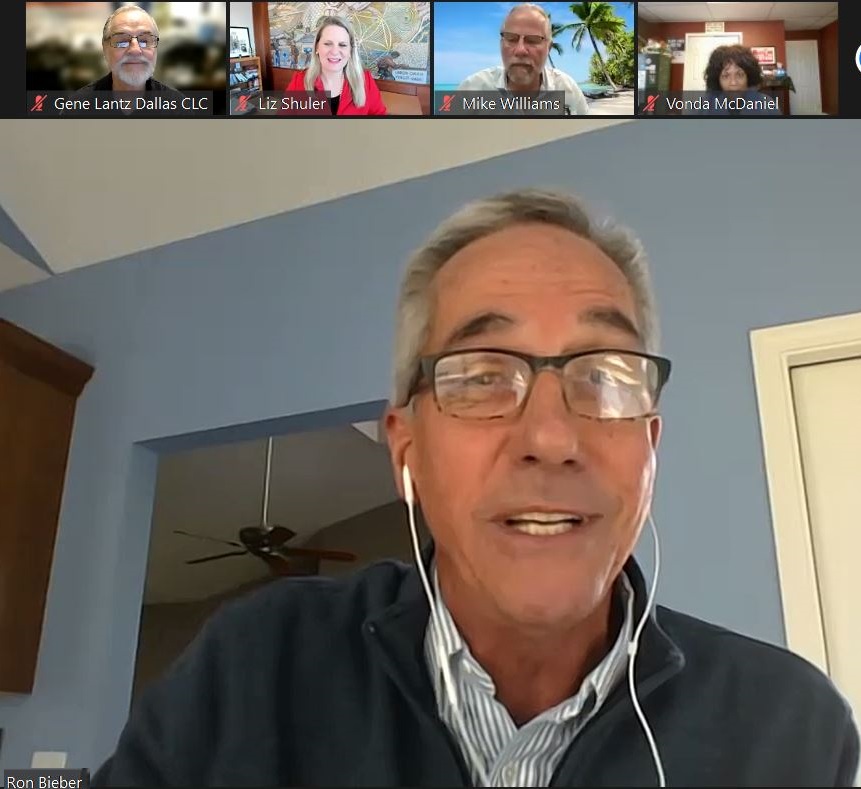
Most of those AFL-CIO guys just talk about how many phone calls they generated or how many doors they knocked on, but the Michigan guy, the most successful one of them, Ron Bieber, talked about mobilizing the membership.
Communications need improving. For decades now, workers have moved further away from their workplaces and union halls; consequently, on-line communication is a necessity.
Over the last few decades, our union has shifted from print media to digital. However, we have not fully utilized the digital capabilities. In our local 848, Region 8 has provided a very nice web site, but nobody in the local has been given a password. The web site lists officers from past times. In fact, the listed president passed away years ago. The only digital presence we have is our Facebook page. Some UAW locals don’t even have that.
Even when the pandemic was at its worst, our local, and many others, did not utilize on-line meeting programs like ZOOM. So far, attendance has not recovered.
Suggestions for improving our on-line work
1. Train officers and staff on digital platforms
2. Encourage members to get on-line
3. Utilize ZOOM or Google Meets on “hybrid” meetings with in-person and on-line attendance encouraged
Unions need more activities. Our business meetings should include updates of interest to union members. It isn’t hard to organize parties, dinners, talent shows, classes, special speakers, receptions, and discussions. They can be on-line as well as in-person.
We could do more to encourage our members to wear red on a certain day. Currently, the UAW International has chosen Wednesdays, but they might want to review that decision and look to see what day other unions chose. In my area, the Dallas AFL-CIO adopted Thursdays as the day to wear red because the CWA and AFT were doing it successfully.
Solidarity among retirees
There are significantly more retired than active UAW members. Currently, they may have less money and less commitment to their unions, but they have more time. Also, they are pound-for-pound more important in politics because they vote at much higher levels than active members. The UAW set up an excellent network for retirees in the 1960s. It has been allowed to fray in the last few years, but it is still among the best retiree networks in the nation.
Solidarity among political figures
Bosses listen to political leaders. Many political leaders listen to union members. Keeping those channels open is critical. The Labor Steering Committee that Congressman Veasey held at UAW 848/129 hall on April 5, 2023, was an excellent example of what to do.
Solidarity among potential allies
The size of the UAW has been diminishing, as has the entire American labor movement, for decades. The good news, though, is that unions have recently become more and more popular with the general public. We currently enjoy an approval rating over 70% while no other organization nor political figure can top 50%. Congress can’t get to 30%!
In my area during the last General Motors strike, there were unsolicited supporters on the picket lines every day. If our supporters had been prepared in advance and invited, we’d have had a lot more. Another way to get a lot more support is to let people know the issues and how they might be affected. We can build up contacts through social media and participation in other people’s events.
The first place to look for potential support is other unions. Our auto contracts will be expiring this summer in the same time frame as the Teamsters’ UPS contract with 340,000 members.
We need to be active with our AFL-CIO organizations and constituency groups. Special days like May 1 and Labor Day are good times to get together with other unions and union supporters. The leadership group that marched in the 2023 Dallas MLK parade set a good example.
Solidarity with organizing efforts
Every time a union tries to organize, labor moves forward. Our members should be looking for organizing opportunities and opportunities to help anybody, from any union, organize.
–Gene Lantz
I’m on KNON.org “Workers Beat” radio talk show every Saturday at 9 AM Central Time. My weekly podcast is on the web site or “Workers Beat Extra” on Soundcloud.com. If you are curious about what I really think, check out my old personal web site
Hochschild, Adam, “American Midnight. The Great War, a Violent Peace, and America’s Great Crisis.” Mariner Books, 2022
I found a free Kindle copy through the Dallas public library’s “Libby” service. Now I wish I had a hard copy because of the facts in this history of America from 1917 to around 1924. You could call it the Red Scare. You could call it the most shameful period after the Civil War. Or you could call it a warning about today and tomorrow.
This book changed my view of the period. Previously, I thought that government had simply allowed vigilantes to run amok — arresting, assaulting, and lynching just about anybody they chose. That was bad enough. Having reach Hochschild, I now realize that government was not just standing aside, they were actually fomenting, cooperating, and leading the nastiest gangs of racists they could find. Nearly all the spying was done by government hires. The worst of the mass acts of repression came directly from government agencies.
One might think that the Justice Department would have stood for justice, but they were probably the worst perpetrators. A lot of the worst assaults were called the Palmer raids, after Attorney General Palmer. After them came, probably, the armed forces; but many government offices were in on it, including the post office! J. Edgar Hoover, notorious race baiter, union hater, and all around sociopath, made his chops in the period. We were stuck with him for another 50 years!
Near the end of the book, Hochschild tries to tote up the numbers of people killed, horsewhipped, imprisoned, deported or otherwise deprived of life and liberty, but it’s a hopeless task. Besides, he’s basically talking only of federal cases. All the nasty things that happened at state and local levels would probably have doubled or tripled the size of the book. Then there’s the non-government participation of anti-union bosses and ideologically-driven racists and nativists to consider!
The rationale for the horrors began when Woodrow “He Kept Us Out of War” Wilson was re-elected in 1916. A lot of Americans, including the growing Socialist Party and some of the members of the Industrial Workers of the World, strongly opposed the war. The repression was originally released against anybody who did not want to join the bloodfest. But why, anyone might ask, did it continue after the end of the war and well into the 1920s? The excuse used most was Bolshevism, but the targets were American working people.
There are a couple of things I would have liked to have found in this account. The Greencorn Rebellion in Southeastern Oklahoma was an early expression of anti-war feelings among sharecroppers, including whites, Blacks, and Natives. I would also have appreciated an attempt to go beyond tallying assaults, deportations, imprisonments, and murders just to find out how many workers lost their jobs during this awful period. Of all the terrible things that government and employers do to workers, the most widely applied, and thus the most effective, is to deprive us of the ability to earn a living.
Hochschild clearly condemns certain government officials. He leaves the final judgement of President Wilson open to debate. He gives some credit to “good guys” such as Emma Goldman, Kate Richards O’Hare and of course Eugene Victor Debs. He mentions Frank Little, one of the first anti-war spokespersons lynched. William Z. Foster, who worked through the whole period to try to bring the labor movement together and develop its fighting potential, remains hidden in our histories.
I have always found it interesting to speculate what might have happened in America if different leaders had headed the Socialist Party, the IWW, or the AFofL. Worldwide, the many socialists capitulated early and supported their governments in World War I. There were only two that didn’t. The other one was Russia.
–Gene Lantz
I’m on KNON.org’s “Workers Beat” radio talk show every Saturday at 9AM Central Time. I have about 150 podcasts under the name “Workers Beat Extra” there, too. If you are curious about what I really think, check out my personal web site
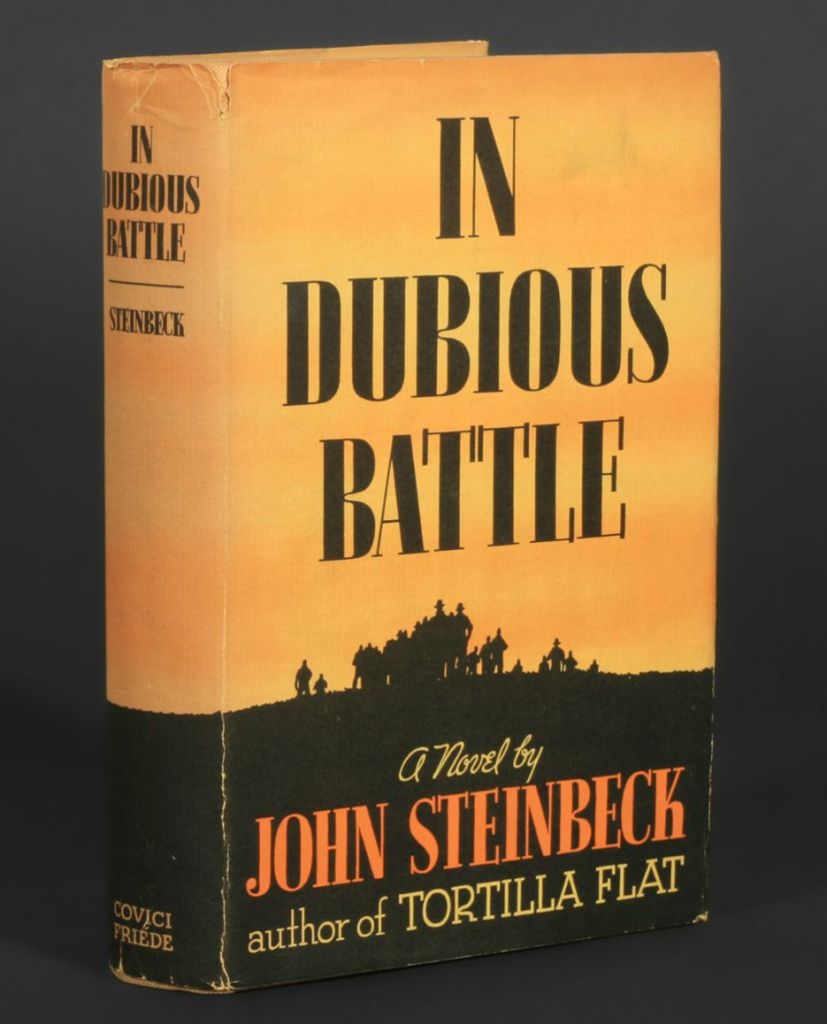
Film Review: “In Dubious Battle,” Directed by James Franco, 1917
Movie Review
“In Dubious Battle,” directed by James Franco, 1917
Prime video still has “In Dubious Battle” for a few more days. It’s an interesting and progressive film with a strong pro-worker attitude.
Jim and Mac are farm worker organizers of the Industrial Workers of the World in 1933. Even though the fighting Wobblies were largely crushed in most industries by the red scare during and after World War I, their Agricultural Department outlasted all their other fine efforts. Pulitzer winner John Steinbeck wrote the book around 1937 based on strikes and labor battles in California. It isn’t as well known as his “Of Mice and Men,” nor “Grapes of Wrath,” but it’s about the same people: itinerant farm workers of the Great Depression.
Mac is the old hand. He’s rather cynical as he teaches the neophyte Jim how to focus on agitating a battle to the exclusion of any other considerations. They take jobs as apple pickers in order to encourage the downtrodden workers to rise up and fight their exploiting bosses. In that regard, the film is quite inspirational and really sounds close to what really happened.
Actually, I kind of hope it isn’t what really happened, because the bosses and their hired terrorists seem to get and keep the upper hand. I watched the film with a genuine union organizer with real experience, and she had severe criticisms of the way the strike was begun and handled.
As art, though, the film is pretty good. I don’t know how the producers were able to do it, but they assembled quite an assortment of headliners in the main speaking parts. We spotted Selena Gomez, Vincent D’Onofrio, Robert Duvall, Sam Shepard, Ed Harris and Bryan Cranston. James Franco directed himself in the main role.
The result is a film that is fine for inspiration, but not for learning organizing tactics. If there were real people like Mac and Jim, they should have learned this: it is not sufficient to fight. It is also necessary to win!
–Gene Lantz
I’m on KNON.org’s “Workers Beat” radio talk show every Saturday at 9 Central Time. If you are curious about what I really think, check out my personal web site
Pearson, Chad E., “Capital’s Terrorists. Klansmen, Lawmen and Employers in the Long Nineteenth Century.” University of North Carolina Press, 2022
Pearson brings us a new understanding of America’s terrorists. From April 9, 1865 to January 6, 2022, our terrorists were not primarily motivated by race hatred or stupidity, as we are usually told. Instead, they were instruments organized, and often physically led, by America’s employer class. Big capital used the most shameful events in all of American history to one end: keeping working families down.
Pearson starts with the Ku Klux Klan. They weren’t just random racists. They were deliberately organized and carefully led to force former slaves to work for little or nothing. They still are. Later organizations may have been called “Law and Order Leagues,” or “Citizens’ Alliances,” but they continued to use vigilantes when it suited them. Their purpose was exactly the same: making sure that working families could not successfully organize.
Even though employers could usually county on judges, local police, national guards and even the U.S. Army to side with them, they also found it expedient to organize illegal terrorist activities. That’s what the book is about.
Pearson organizes his explanation with biographical information on the main ideologues for employer terrorism. One of the worst was a newspaper owner; another was a best-selling author of fiction. Both were expert propagandists justifying all legal and extralegal means available to keep workers down.
For us in Dallas, there are some local angles to the story. Martin Irons was a great union man who was ruined and martyred by the terrorists. He called the 1885 Southwest Railroad Strike during a convention in nearby Sherman. His grave is in Bruceville, halfway to Austin, where he died in poverty.
Except for some very good analysis of the January 6 attack on the nation’s capitol, the book limits itself to the 19th century. If it were brought a few years closer to today, it might have talked about Henry Ford’s “Service Department” of goons and criminals that maimed and murdered union supporters on behalf of the company.
Perry and a handful of other gangsters were fired from Ford’s East Dallas assembly plant on suspicion of theft. They complained to the newly-formed National Labor Relations Board, where a young attorney named Nat Wells wrote down their testimony. They told Wells about kidnapping, tar and feathering, and whipping suspected union organizers on behalf of Ford. They indicated that they had plenty of help from local police and the Dallas Morning News. Wells wrote it all down and it became part of the United Auto Workers’ legal action against Ford Motor Company – and that played a big role in the UAW’s successful organizing drive in 1941, four years after their triumph at General Motors. Thanks to Joe Wells and Dr George Green for keeping this story in our histories.
Dr Chad Pearson teaches history at University of North Texas in Denton. I intend to interview him for my podcast as soon as I can get his contact information.
–Gene Lantz
I’m on KNON.ORG’s “Workers Beat” talk show at 9AM Central Time every Saturday. If you are curious about what I really think, you might look at my personal web site
Taylor, Clarence “Reds at the Blackboard. Communism, Civil Rights, and the New York City Teachers Union,” Columbia University Press, 2013.
There once existed a powerful teacher organization that fought for every progressive aspect of education in New York City. The American Federation of Teachers today, which has advanced in social unionism far beyond the bad old days of President Albert Shankar, is still miles behind the Teachers Union of New York of 1935-1964.
They represented teachers with grievances, they fought for better pay and working conditions as unions do, but they also challenged the basic racism and corruption of education in their times. They fought hard, for example, to expose the explicit and implicit racism in textbooks. They did everything they could think of to improve school materials. They fought for integration of students and faculty. They fought just as hard for gender equality.
Their greatest accomplishment may have been to make the schools part of the communities they served. These were not nominal PTA’s holding fund drives, but honest hard-working community organizations working for community improvement — especially among the most downtrodden constituencies.
One important aspect of school racism was new to me. After Brown V Topeka in 1954, the main physical change in education was to shut down all the segregated Black schools and lay off their teachers! Most of those teachers stayed laid-off because they couldn’t get jobs in the so-called “integrated” schools. The Teachers Union of New York fought hard to get jobs for Black teachers! If anybody else did, I hadn’t heard of it.
While they were bringing social unionism to its heights, the Teachers Union had to fight off management’s attempts to undermine it. Male chauvinism and anti-semitism were useful tools for the bosses, but their big cudgel was anti-communism. Social unionism was the Communist Party’s program and a some of the Teachers Union leaders were reds.
Management, like bosses everywhere after 1947, were able to get a lot of people fired and a lot of careers destroyed. The American Federation of Labor kicked the Teachers Union out over anti-communism. They joined the Congress of Industrial Organizations and continued to thrive as social unionists. However, after 1947, the CIO joined the anti-communist wave and kicked the Teachers Union out again. The Board of Education managed to have the Teachers Union decertified as representatives of their members, so they could no longer settle grievances nor negotiate for job improvements.
Even then, they didn’t quit. The Teachers Union survived as an important voice for social unionism, especially for civil rights and community cooperation, until 1964. They need to be remembered.
**
I broadcast on “Workers Beat” on KNON.org at 9AM CT every Saturday. If you are curious as to what I really think, check out my personal web site
Dark money from the U.S. is supporting truck riots in Canada. Can you see why?
Can you see why Republicans block legislation that would benefit their districts? Some Republicans even try to take credit for beneficial legislation that they voted and campaigned AGAINST! Why? Why did the Republican National Convention condone the January 6 insurrectionists? Why are Republican think tanks supplying scripts for crazies who disrupt school board meetings? Why are apparently sane Republicans who get vaccinated arguing that other people shouldn’t? Why take the side of disease over good health? Why underwrite chaos?
The reason that normal Americans can’t understand today’s political events is that nothing like this has ever happened in our country before. It is outside our experience. The only historical precedents are from other countries like, say, Brazil, Argentina, Indonesia, Spain, and Germany. In those countries, chaos was used to help bring down participatory government to benefit autocrats. Possibly the best example for us, because a number of us are old enough to remember it, and because we know more about it, is Chile in 1973.
If you think about it, you might see that, for certain politicians, chaos is a good thing. It worked for the CIA and General Augusto Pinochet in Chile in 1973. Truckers were involved then, too, as some of them are now. Google “Trucks AND Chile.” Read the New York Times article from August 18, 1973, “Chile Calls Truck Strike ‘Catastrophic.'”
It says that a 23-day trucker’s strike has had “catastrophic’ repercussions on Chile’s already ailing economy.
“This is a political strike aimed at overthrowing the Government, with the help of imperialism,” said Gonzalo Martner, Minister of National Planning and one of the chief policy makers for President Salvador Allende Gossens’s socialist government.
I’m not sure how reliable the Times’ account is, because they were probably in on it. But it is well known now that the chaos in Chile was designed and abetted by the CIA, United States of America! For would-be dictators, chaos has its uses, then and now!
–Gene Lantz
I’m on KNON’s “Workers Beat” talk show at 9AM Central Time every Saturday. My podcast, “Workers Beat Extra” is posted on Soundcloud.com every Wednesday. If you are curious about what I really think, check out my personal web site


 genelantz