Archive

strategy

The outlook for working families is far worse than usually noted.

inequality-europe-US

The graph above is one of those used in the best selling, world-shaking economics book “Capital in the 21st Century” by Thomas Piketty.

Like many graphs in the book, this one shows that income inequality dropped during the middle part of the 20th century. Then it began to rise again and continues to rise toward conditions that Monsieur Piketty and others describe as “intolerable.”

Popular economics books of today such as “Runaway Inequality,” a book broadly used in the American labor movement, only look at the later half of the graph – from 1945 to present. Most of the economic analysis used by the AFL-CIO is based on a “return to normal” which they define as 1945-1973. Most of us grew up in that period and consequently it is natural that we would think of it as “normal.”

In 1973, the United States and the world dropped the gold standard and began floating their currencies. After those great economic changes of the Nixon Administration, and even more so under the trickle-down “Reaganomics” of 1980, we say that really bad people distorted American economics to the detriment of working families. Since the bad people took power, inequality has continually grown much worse.

The world owes its gratitude to the Occupy Movement for having focused our attention on rising inequality. They saw that the 1% was growing in wealth and power to the detriment of the 99%, and they forced the rest of us to see it. The unfortunate inadequacy of their solution grew from the shortcomings of their analysis. They didn’t look deeply enough into the data.

Bernie Sanders took this growing consciousness much further. His analysis included the nuts and bolts of inequality, the ways that the 1% keeps the flow of wealth moving upward toward them. Sanders’ prescriptions for new nuts and bolts were much more useful than what the Occupy Movement had offered. Sanders and his followers are converging with the American labor movement today, and both are being strengthened. For that, too, the world must be grateful. I am grateful.

At the same time, during the fiery height of the Bernie Sanders campaign in 2016, even while I was campaigning for him, I often said, “Bernie Sanders will never live to see his program implemented. They would kill him first.”

The solution being put forward by almost everyone in the labor movement and by progressives at large, Bernie Sanders included, is to stop electing bad people and start electing good people who will return to the good policies that reduced inequality during 1914-1973. It’s a simple and seductive solution.

It Won’t Work

I would truly like to think that elections, elections in general and specifically the ones we’re about to have, will elect those good people, with those good solutions, and we will return to the policies that lowered instead of raising inequality in the United States and in the world. But they won’t.

I want to tell you why, even though I supported the Occupy Movement, and even though I support the Bernie Sanders socialists, and even though I am completely devoted to the AFL-CIO and the American labor movement, I want to tell you why I think their analysis is incomplete. Not only is their analysis incomplete, but their prescription, what to do about our situation, is inadequate. One cannot arrive at successful tactics without first understanding the present situation.

Look at the Whole Graph

The popular analysis, and the prescriptions that come from it, are wrong. Look at the whole graph. In fact, look at the entire history of capitalism. Piketty and his associates have accumulated data and anecdotal records going back to the early days of capitalism. Those data show incontrovertibly that increasing inequality is fundamental to capitalism. The 60-year drop in inequality, roughly from World War I until 1973, a small part of capitalism’s history, was never normal. It was completely abnormal and, in fact, antithetical to normal capitalism. What we had before 1914, and what we have now, rising inequality, is “normal.”

Didn’t Work in 2008, Won’t Work in 2018

If one realizes that we are now living in a “normal” period, then one should be able to see that there is no single simple solution. Even if we have great election victories in 2018, as we did in 2008 by the way, inequality is not going to diminish. We’re going to have to work a lot harder than that.

What we are living in now, and what we lived in before World War I, is normal. In an article titled “Who Will Be the Winners of the Crisis?”, Piketty himself explains: “Left to itself, capitalism, because it is profoundly unstable and inegalitarian, leads naturally to catastrophes.” “Inegalitarian” means what you think it does.

So the period of my youth was abnormal. What we are suffering under today is normal.

Why Did Inequality Diminish in the Abnormal Period?

Monsieur Piketty points out that the crises of the 20th century did not cause inequality to go down. As he says in the article I just quoted, “The historical data… shows unambiguously that that financial crises, as such, have no lasting effect on inequality; it all depends on the political response to them.”

So the political responses to the two world wars and to the great depression were what lowered inequality. It was the progressive taxation that lowered inequality. But why did these progressive policies get selected? Why not let the rich continue getting richer and the poor get poorer? Piketty says that the system received “shocks” with two world wars and a great depression.

Look At the Graph Again

Piketty is wrong about the “why” of diminished inequality 1914-1973. It wasn’t “shocks.” It was the success of the working class. We may not know much about the 23 countries that Piketty studied, but we do know what happened in the United States in the middle of the 20th century.

Workers Power Grew

In 1914, when Piketty says inequality began to get lower, the Socialist Party was riding high in America. Even out here, in Texas and in Oklahoma, many people were openly socialists. They voted socialist. There were socialists elected here and there and everywhere. There were socialists in Congress! The Industrial Workers of the World was terrifying employers from the textile mills of New England to the timber forests of Oregon. In 1917, socialists took power in the Russian empire! In 1919, Eugene Debs got a million votes for President while he was in prison!

The great depression hit hard in the capitalist countries, but the socialists were able to point to the Soviet Union and say “They aren’t having a depression!” Socialism, and the workers movement, was growing in popularity while inequality was falling. During World War II, it was the socialists who led the resistance movements. Many of them were so popular that they took power when the Germans and Japanese were finally defeated. Look at Marshall Tito in Yugoslavia, Enver Hoxha in Albania. Look at Mao Tse Tung in China and Ho Chi Minh in Vietnam!

In 1935 in America, the Committee for Industrial Organization took over where the Industrial Workers of the World left off. The progressive movement grew like crazy. By 1947, they had gone from a small part of the labor movement to approximately 1/3 of the American workforce! The actual numbers of people in unions continued to rise until the mid-1950s. Then it started to drop off. In that same period, socialists were red-baited into virtual obscurity.  The Soviet Union was probably at the height of its world popularity when it sent up Sputnik in 1957, but its popularity sagged after that. By the time Reagan declared war against the progressive movement, the steam had gone out of the workers’ movement, both internationally and here.

I saw one book, sold by the AFL-CIO, that says the American labor movement died in 1972 because they failed to support McGovern for President. We didn’t actually die, but we lost a lot of blood.

However one may analyze it, no matter what statistics one uses, one still has to conclude that the workers’ movement does not have the power that it enjoyed in the middle of the century, when inequality was at its lowest.

After 1980, the power of American employers waxed while ours waned. Inequality grew. Inequality is still growing.

While Employers Rule, Workers Can Make No Permanent Gains

The greatest person I ever knew personally was named George Meyers. He had been a leader of the CIO before he joined the army in World War II. George used to say, ‘There are no permanent gains for workers under capitalism.” No matter what you win, you will always have to fight for the same things again.

I had a personal experience with that. My union carried out an incredible fight in 1984-5, and we emerged with the best contract in the aerospace industry. Better than Boeing’s contract, and we were just little LTV in Grand Prairie, Texas. But nobody hangs on to those gains. You have to win them over again, the same things, win them over and over and over, every contract.

With Understanding, We Can Prescribe Solutions

The solution to the rising inequality caused today by normal capitalism is to fight with everything we can find. We have to fight to win these elections, of course, and we really need to win. But that’s not all. We need economic struggle as well as political struggle. We need boycotts, we need petitioning campaigns, we need militant contract fights, and above all we need to organize. We need to bring the entire progressive movement together and focus it on fighting the employers, the 1%.

It’s easy to say these things but not so easy to do. Contract fights are rare today, because the legalities have become so rigorous against us and our leaders have lost their edge while our members are confused. Even a simple idea like organizing is really really hard. Most union staffers and officers are far too busy to organize. There’s very little money for organizing, and there are very few unpaid volunteers in today’s labor movement.

But There’s Good News

We are in the biggest and most general progressive upsurge in American history. It isn’t focused, it isn’t united, but it’s big and it’s enthusiastic. The most exciting news of the 21st century came from the teachers of West Virginia and a few other states this year. They carried out victorious political strikes. Political strikes are common in Europe, but almost unheard of in America. That kind of planning, that kind of volunteering, and that kind of militancy is what we have to have.

I won’t say it’s easy to do what has to be done, but I will say that it has to be done. There is no other way.

–Gene Lantz

I’m on KNON radio 89.3FM in Dallas at 9 AM Central time every Saturday. They podcast it on Itunes. If you are curious about what I really think, see my personal web site. I intend to present the ideas in this article at 6:30PM Central Time on September 1 at Romo’s Restaurant, 7033 Greenville Av in Dallas. Come down and discuss it!

In my lifetime (1940-so far, so good) the biggest historical question has always been, “Why didn’t the German people stop fascism?”

nazis-people2

Book Review: Erik Larson, “In the Garden of Beasts,” Crown, New York, 2011

When we meet people from Germany, we start looking for the right opportunity to, politely, ask them. When we read the histories, it’s what we want to know. “In the Garden of Beasts” relates the personal histories of the four family members of Professor William E Dodd, Ambassador to Germany 1933-37.

Worldwide attitudes toward the Nazis ranged from admiration to revulsion when Dodd moved to Berlin. Like most people, his family fell somewhere in between. Dodd felt that his role was to be an intermediary without strong bias. That changed over time and the course of this book.

Probably the most detailed account comes from vivacious daughter Martha Dodd. That may be because she wrote the most and lived the longest. It may also have been because she was more involved with more people and with people of more disparate political views. One of her lovers was a communist who worked in the Soviet Embassy; another headed the Gestapo, and there were several in-between.

Hitler had already been elected to high office before the Dodd’s arrived, and his popularity was already rising to fanatic levels. But he didn’t really consolidate all his power until the period that the Dodd’s experienced up close and personally. While they were there, he murdered some of his rivals and outlasted General Hindenberg, the only single person who could have stopped him.

Interestingly, Dodd had his detractors within the State Department all along. Especially after he began to condemn the Nazis, powerful Americans wanted him removed and finally had their way. His successor was still apologizing for Hitler at the end of the book. According to this author’s account, President Roosevelt supported Dodd’s view, but was forced to acquiesce in getting rid of him.

After Dodd returned to the United States, he toured the country to warn about fascism. Martha, too, worked against the fascists, but, like many others, she had to seek exile during the post-war witch hunt.

So, why didn’t the Germans stop Hitler? The best answer I got by asking came from a World War II veteran (their side, not ours) living in Dallas. He said, “The Nazis got people jobs.” Hitler came to power during the great worldwide depression. German unemployment was 25%. That’s why it was so easy for the relatively wealthy National Socialist Party to recruit young men into their Stormtroopers. After they took power, the Nazis started their great military building, which eventually overcame the worst of their unemployment problem. That’s a partial answer to the question, but not a fully satisfying one.

The real answer may never be found by asking individual Germans or reading history books. The real answer has to do with comfort zones, lack of understanding, lack of organization, miseducation, and lack of will. The reasons the German people didn’t stop fascism, even though they could see it, are the same reasons that the people of the United States have not yet stopped the trend toward fascism here. Let’s start asking about that!

–Gene Lantz

I am on KNON radio’s “Workers Beat” program every Saturday at 9 AM Central Time. Podcasts are on Itunes. If you want to know what I really think, check out my personal web site


A proposal for Volunteer Organizing Committees in Central Labor Councils.

When unemployment is low and discontent is high, it’s time to organize. The most natural place for effective organizing committees is within Central Labor Councils. Let’s form one here!

org_disorg

Why?

Single-purpose ad hoc committees can win immediate goals. A great example is labor’s effort in turning back the Missouri “Right to Scab” law on August 7, 2018. See President Trumka’s message at:

https://www.facebook.com/TexasAFLCIO/videos/10156423158446153/

But the only way to keep winning is to have a long-term plan, and that means strengthening our progressive organizations, especially our unions, through organizing.

org_organize2

How?

Methods of organizing are on the Dallas AFL-CIO web site. Unfortunately, the site has been changed around so that the page is almost impossible to find without the actual address:

https://www.texasaflcio.org/dallas/get-organized/labor-will-help-you-organize

Where?

The nerve center of labor is the Central Labor Council, and that is where face-to-face meetings need to happen. At the same time, most information is exchanged over the internet today; consequently fewer physical meetings are necessary. Using the internet, it is possible to conveniently share information across long distances.

When?

ASAP

Who?

Unions are no longer constrained to single employers or workplaces. Many unions have associate membership available. The AFL-CIO has a program to allow people to share our political program by joining on-line. More and more, working people’s goals are being accomplished through coalitions with community groups, churches, civil rights organizations, and environmentalists. Our committees can think beyond traditional union organizing drives.

The goal of organizing is not limited to signing up new union members. We can also sign up members for our allies. Furthermore, signing a card is only the beginning of a process of organizing. Signed-up members need to be drawn toward higher levels of participation.

What?

A Central Labor Council Volunteer Organizing Committee can promote the progressive movement. We can gather organizing leads. We can educate and motivate unions and other organizations. Nothing can stop us from organizing. If we organize, nothing can stop us at all!

–Gene Lantz

I am on KNON radio’s “Workers Beat” program every Saturday at 9 AM Central Time. If you want to know what I really think, check out my personal web site

Book review:

Piketty, Thomas: Capital in the 21st Century, Belknap Press of Harvard University Press, Cambridge, Massachusetts, London, England, 2014. 332-041 P636C in Dallas Public Library

The library had to renew this book twice before I could finish its 577 pages. Like other books about economics, it is full of Greek symbols, formulas, graphs, and statistics.

inequality

Piketty claims to have accumulated more economic data than any work before him. His facts and numbers go back into the 18th century. His best data is from his home country, France, but he has a lot from U.S., Britain, Germany, Italy. A little data from other countries and a little data from other times going back to the Romans. This book shook the world. His information base is far more comprehensive than anything else I’ve seen or heard of.

It is difficult to argue against someone who has the data, so I won’t argue over facts. But I will argue against his interpretation of the data, and I will argue even more strongly against his suggestions for future action. First, a bit about what he says:

It was very gratifying to see that he doesn’t think that economics can stand as an independent science. It has to be combined with other disciplines, especially politics, to be of any use.

Piketty’s graphs show that the period from roughly 1914 to 1973 was very different from before or after. Inequality was rampant before, it’s rampant now, but it wasn’t so dire during 1914-1973. I’ll call that the abnormal period. Capitalism is now “normal,” that is, it is creating devastating inequality. Piketty asserts strongly that the best solution is a global tax on wealth, not for revenue, but to redistribute wealth and lessen inequality.

During the abnormal period, the author says, there were two world wars and a depression. Governments established strong central banks to deal with the world depression. To pay for their wars, they implemented progressive taxation, especially of income and inheritance. As for the cause of these developments and the subsequent lessening of inequality, Piketty just calls the wars and depression “shocks.”

Were “Shocks” the Cause?

That’s not how I interpret the abnormal period that Piketty revealed. Something else happened 1914-1973 besides a depression and two world wars.

I note that 1914 marked the upsurge of the workers movement worldwide, not just in Russia. In America, for example, socialists were being elected to office, including to the U.S. Congress. I also note that 1973 marked the Sino-Soviet split (Nixon’s trip to China) the beginning of the downturn for the USSR in particular and the worldwide workers’ movement in general. One book I read said that the American labor movement died during Nixon’s campaign for a second term (they didn’t support McGovern). At any rate, the American labor movement’s weakening was certainly visible by 1973.

Inequality was indeed lessened by progressive taxation during the abnormal period, but it wasn’t because of “shocks.” It was because the workers’ movement was waxing strong. During World War I, the Bolsheviks took power and inspired the world movement. During the depression, communists argued that the Soviet Union was the only untouched major economy in the world. After World War II, communists were politically strong because they had led the resistance movements in occupied territories such as France, China and Vietnam; not to mention that the USSR defeated Hitler.

Of course the big capitalist nations raised taxes and granted health care and retirement to workers during the abnormal period! In the face of the threatening workers’ movement, what else could they have done?

But by 1973, the workers’ movement was on the wane in the U.S. and elsewhere. At that point, capitalist nations began to take back what they had allowed, to further undermine the workers, and to drive the Soviets into insolvency.

What drives history?

To put it bluntly: the motor force of history is the class struggle, not various “shocks.”

Now, as for Piketty’s remedy for runaway inequality and eventual disaster: He knows, and says so several times, that his worldwide tax on wealth is not feasible. It would take far more transparency than capitalists will allow to even know who to tax and how much. To think that democracy can impose itself on the capitalist class is to assume that the workers’ democracy movement is strengthening and the capitalist power is diminishing, when Piketty knows the opposite is true.

As inequality increases, and it is increasing greatly, probably far more than Piketty could have predicted when he wrote this great book in 2014, then the power of the wealthy increases as well. They are not just piling up wealth; they are also piling up power. As long as they are in power, they will never allow Piketty’s pipe dream to come true. He knows that.

Disaster Lies Ahead

But Piketty’s assertion that inequality will continue to rise and will become intolerable is irresistible. He must be right. When this certainty becomes clear to everyone, that the rich are getting almost everything and the rest of us are moving close to starvation, the situation will indeed be intolerable. Only three outcomes are possible: devastating world war, fascism or revolution.

–Gene Lantz

I’m on KNON radio 89.3 in Dallas every Saturday at 9 AM Central Time. Podcasts are available through the “events” tab. What I really think is on my personal site.

NOTES:

Uses several Latin and French terms:

A priori – “from before” used to mean that no proof is necessary

“Cadastral” (of a map or survey) showing the extent, value, and ownership of land, especially for taxation.

“Belle Epoque” – Period ending 1914

“a fortiore” used to express a conclusion for which there is stronger evidence than for a previously accepted one.

Pg1 (bottom) He says we need to regain control over capitalism. He’s going to tell us how by the end of this book.

13 Kuznet’s curve says that capitalist growth will even out inequality without any need for anybody to do anything. The market and invisible hand will care for us.

50 Beta = capital/annual income. Usually 6

52 (top) Economics cannot stand alone. Must be combined with politics and other kinds of studies before it yields useful knowledge

52 First law of capitalism Theta = rate of growth times (Capital/annual income)

Theta is capital’s share of national income

r is rate of return on capital

52 Karl Marx quite wrong. My question: Not all capital is invested

Pg86: “They decided to work less” – He ignores class struggle altogether!

87 on consumption. Does he realize that older societies produced and consumed agreat deal that never reached a market? They made their own clothes, for example.

Pg166: Beta = s/g =The 2nd law of capitalism

203 Corporations invented circa 1850

222 Steady rise in Beta and Theta

250: Middle “class” – he means income

270: Measurement is “never neutral.”

275 War & rent control mentioned but not USSR

279 “Income from labor.” I think he is including CEO pay. It’s interesting that he doesn’t seem to know that CEO pay is skyrocketing because CEO’s command the corporate boards that set CEO pay. In other words, CEO pay isn’t “labor,” it’s income from capital.

332 (bottom) CEO Pay

355 Fiscal Competition – nothing so far on class struggle, but I think it explains the first half of 20th century even though he attributes it to “shock.”?

358 Inequality causes political reaction

409 (middle) In the 1970s, people thought that inequality was defeated

423 “rent is not an imperfection”

439 tax on capital

471 “…it was the wars of the twentieth century that, to a large extent, wiped away the past and transformed the structure of inequality.”

why not the class struggle?

471 war, disaster, or Piketty’s global tax on wealth?

473 “The crisis of 2008 was the first crisis of the globalized patrimonial capitalism of the twenty-first century. It is unlikely to be the last.”

474 New instruments needed

475 graph of social spending (class struggle again)

484 Social mobility lower in U.S.

488 Privatizing Social Security?

497 Taxes growing more regressive. Tax competition mentioned over and over. Too bad he wrote this before the Republican tax giveaway of 2017!

500 Bolsheviks. Progressive taxes

509 International competition

514 “No hypocrisy is too great”

518 Capital tax not for revenue but for wealth redistribution

519 Top centile’s growth goes on indefinitely.

Transparency needed

521 How could this be done without a world government? It couldn’t and he knows it

529 Italian was voted out for having invented a wealth tax

534 He is against protectionism and says it creates no value. All this before Trump!

539 “Temptations of defensive nationalism and identity politics…” sounds like he was anticipating Trumpism

541 Public debt solutions: taxes on capital, inflation, austerity

Pg 558 his solution to European public debt is for all the EU to pool their debts and make a common solution. Utopian!

Pg 560 “…the Eurozone cannot do without a genuine parliamentary chamber…” more utopia

560: “Tax competition” used throughout the book. Described here as the various nations lowering their corporate taxes in order to compete with one another. I’ve been calling this “inter-imperialist competition” for years.

His solutions throughout the book are worldwide inter-nation solutions, when he knows that won’t happen. Also, he wrote this before the Brexit vote began a chasm in the EU. He’s assuming more cooperation between nations, not less as we are already seeing.

562: “…without such a European political union, it is highly likely that tax competition will continue to wreak havoc. The race to the bottom continues in regard to corporate taxes…”

566: He agrees with me about bond elections: “…debt often becomes a backhanded form of redistribution of wealth from the poor to the rich…” The wealthy should be taxed instead of allowed to loan money and collect interest.

567 “…debt must be reduced as quickly as possible, ideally by means of a progressive one-time tax on private capital or, failing that, by inflation….”

569: his solution: Economic transparency and democratic control of capital. Neither one of which currently exists.

572: The right solution

574: “Political economy” is the term he prefers

577 (last page) “…economic and political changes are inextricably intertwined and must be studied together.” He prefers “political economy” to “scientific economics.”

The last line of the book: “Refusing to deal with numbers rarely serves the interests of the least well-off.”

OTHER REVIEWS:

Synopsis: https://www.newyorker.com/news/john-cassidy/pikettys-inequality-story-in-six-charts

Piketty’s Inequality Story in Six Charts

By John Cassidy

March 26, 2014

https://www.economist.com/the-economist-explains/2014/05/04/thomas-pikettys-capital-summarised-in-four-paragraphs

The Economist explains Thomas Piketty’s “Capital”, summarized in four paragraphs.

A very brief summary of “Capital in the Twenty-First Century”

http://www.nybooks.com/articles/2014/05/08/thomas-piketty-new-gilded-age/

Why We’re in a New Gilded Age

Paul Krugman

MAY 8, 2014 ISSUE

http://bostonreview.net/class-inequality/marshall-steinbaum-why-are-economists-giving-piketty-cold-shoulder

Boston Review: Why Are Economists Giving Piketty the Cold Shoulder?

MARSHALL STEINBAUM

May 12, 2017

“his work on inequality is an agenda-setting and generation-marking intellectual achievement, potentially as explosive (albeit with a longer fuse) in academia as it has been outside of it.”

Book Review:

Thomas Hartman, The Crash of 2016. Twelve, the Hachette Book Group, New York,  2013

us-economic-collpase

If there really had been a crash in 2016, Hartman would have been considered a great genius. As there wasn’t, he ends up with some egg on his face. Further unfortunately for Hartman, some of the problems he points out were already reversed by the Trump administration, specifically tariffs and China-bashing. So his argument for the crash of 2016 is further undermined.

However, a ‘great crash’ within the present time frame would nevertheless redeem him and people would only say that he missed it a few years. The book is a good, exciting, read, but I would have to put it into the category of well-written alarmist narrative rather than serious economic study. Like all of the books written before Piketty (2015 in English) that I have read, they consider 1945-1979 “normal” and everything subsequent as “abnormal.’ I consider this wrong, and so does Piketty. The abnormal period was 1945-1979. Before and after that short “American century,” what happened and is happening is just capitalism.

Hartman puts most of the fault for the disastrous 1979-to-present period on mental states and subjective attitudes rather than historical and economic developments. FDR was a good guy, the “economic royalists” were bad guys with questionable sanity. In fact he calls them psychopaths. The rest of us are guilty of mental lapses, too, as new generations go through a “great forgetting” that causes us to repeat previous economic errors.

As Hartman doesn’t understand the cause of the present economic problems, he doesn’t have a very good handle on solutions, either. Some of his hopes are presently being carried out by Donald J. Trump and are not likely to bring long-term economic benefit to the populace.  He also proposes things that aren’t likely to happen given current trends. After the “crash of 2016” that he predicts, he wants us to reinvigorate democracy through election reform. He wants the labor movement to be encouraged by government. Most of all, he seems to want worker cooperatives to replace the giant corporations as the main economic engines.

How any of that could happen, Hartman doesn’t say.

some notes:

Pg15: Good quote from Grover Cleveland in 1888: “The gulf between employers and the employed is constantly widening, and classes are rapidly forming, one comprising the very rich and powerful, while in another are found the toiling poor. As we view the achievements of aggregate capital, we discover the existence of trusts, combinations, and monopolies, while the citizen is struggling far in the rear or is trampled to death beneath an iron heel. Corporations, which should be the carefully restrained creatures of the law and the servants of the people, are fast becoming the people’s masters.”

20: The Business plot: General Smedley Butler blew the whistle on a plot to bring an army of 500,000 men into DC to oust FDR. The front man for the businessmen and banksters was Gerald MacGuire.

26: Moyers quote on plutocracy on 2011: “Our democracy is dysfunctional…. We no longer have a government of, by, and for the people– representative democracy. We have government by plutocracy– the rule of the rich for the rich by the rich…. Plutocracy has one purpose, which is to protect wealth.”

Pg34: Powell memo outlined how Republicans could take over. Lewis F Powell Jr in 1971 went to Nixon. Nixon made him Supreme Court Justice. His memo, written to the United States Chamber of Commerce just before his nomination, recommended a militant political action program ranging from the courts to the campuses. He wanted to undo the New Deal.  Powell called on corporate leaders to launch an economic and ideological assault on college and high school campuses, the media, the courts, and Capitol Hill. The objective was simple: the revival of the Royalist-controlled so-called ‘free market’ system. (page 37)

pg40 Roger Ailes prepared the way for Fox news misrepresentation

pg43: lobbying mushroomed. ALEC formed

44: CATO and Heritage foundation come out of Koch Brothers

48: Supreme Court decisions such as Citizens United

52: “Trickle down” economist Milton Friedman advises the fascists in Chile. Terrible economic results

71: He credits FDR and “good “ politics for 1945-1979 good times. Unlike Piketty, who says it was the “shocks” of two world wars.

88: He is pro-tariffs. This is before Trump imposed them

93: Psychopaths. He says that banksters and other filthy rich are basically psychopaths. In fact, a lot of Hartman’s analysis has to do with mental states. He thinks that generations go through a “great forgetting,” for example, that causes us to repeat previous economic errors.

95: Getting sillier. He thinks madness is part of evolution.

96-7: Oligopoly

101: On China, he seems to be agreeing with Trump again. Lots of China bashing here

122: Tillman Act under Theodore Roosevelt stopped corporate electioneering

151: Corporations, especially Railroad Corporations, made many efforts to get legalization in Supreme Court decisions. They always lost until “Citizens United.”

207: He gives recommendations for after the crash of 2016. It’s all reformism of capitalism. He espouses value of co-operatives.

273: Author is described as a talk show host with several important books before this one.

–Gene Lantz

I’m on the “Workers Beat” talk show on radio KNON in Dallas at 9 AM Central Time every Saturday. Podcasts are available under the “events” tab. If you are curious about what I really think, check out my personal web site.
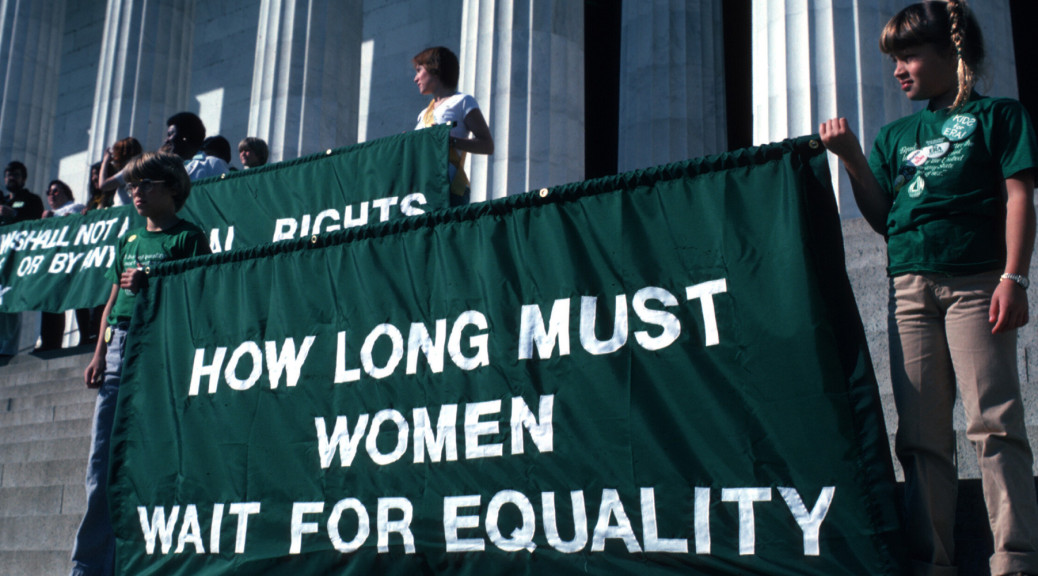
I organized a musical event for July 14 at the CWA Local 6215 hall in Dallas. We celebrated Bastille Day and Woody Guthrie’s birthday. As far as I know, it was the first of
its kind in Dallas history. It came out very well. About 50-55 people, including 6 performers, had a great time. There was a lot of good will. I’m not sure how much money we
raised for KNON radio’s “Workers Beat” program, but we raised $534.25 that I know of for Dallas AFL-CIO.

But why did I do it?

I’ve organized cultural events before. In general, I’m motivated by a desire to restore the kind of cultural traditions that helped build the American labor movement during
its great upsurge, 1935-1947. I also like to try to combine the labor movement with other progressive elements, in fact that’s what I’m usually trying to do — build unity. As
for fund raising, I’m always raising money for my program on KNON. But I had a special reason for making this one a fund raiser for the Dallas AFL-CIO.

It is my opinion that the labor movement is being bled to death by Donald J Trump and the Republican party. The recent Supreme Court, Janus Vs AFSCME, will deplete labor’s
finances by millions of dollars. Trump’s executive orders driving federal unions out of their workplace offices will cost a lot. The concerted effort of such savage anti-
worker organizations as the National Right to Work Committee and many others is designed to discourage workers and stop dues payments. Many state legislatures are trying to
stop or hinder dues collections.

I don’t know any numbers, and the labor movement is not likely to start advertising its weaknesses, but I think it’s fair to assume that they really need money. I knew I
could’t raise a lot of money with a simple singalong on July 14, but I also knew that we have to start changing people’s attitudes about financing the labor movement. That was
my motivation. I’m pleased with the result.

Here’s What Happened

If you missed the event, you might want to read what was said and watch videos of what was sung. Here are my notes.

Host’s introductions and comments:

Introduce Dallas AFL-CIO principal officer Mark York. He will include greetings from Texas AFL-CIO President Rick Levy as follows:

“I can’t think of a better quote about labor songs and culture than from the man himself [Woody Guthrie]:

‘I hate a song that makes you think that you are not any good. I hate a song that makes you think that you are just born to lose. Bound to lose. No good to nobody. No good for
nothing. Because you are too old or too young or too fat or too slim or too ugly or too this or too that. Songs that run you down or poke fun at you on account of your bad
luck or hard travelling. I am out to fight those songs to my very last breath of air and my last drop of blood. I am out to sing songs that will prove to you that this is your
world and that if it has hit you pretty hard and knocked you for a dozen loops, no matter what color, what size you are, how you are built, I am out to sing the songs that
make you take pride in yourself and in your work. And the songs that I sing are made up for the most part by all sorts of folks just about like you. I could hire out to the
other side, the big money side, and get several dollars every week just to quit singing my own kind of songs and to sing the kind that knock you down still farther and the
ones that poke fun at you even more and the ones that make you think that you’ve not got any sense at all. But I decided a long time ago that I’d starve to death before I’d
sing any such songs as that. The radio waves and your movies and your jukeboxes and your songbooks are already loaded down and running over with such no good songs as that
anyhow.’

‘We have to make our own songs and our own culture and remember who we are and what we are fighting for. Thanks to you and the folks putting this together for reminding us to
always be true to our best nature and be proud of who we are.” –Rick Levy

Host (me): Thank you for being here to help us revive labor’s cultural heritage. It’s a singalong. You should have a song sheet with the words to the chorus of some great
songs.

When you leave today, I’d like to have your contact information on the back of the song sheets so you can learn about future events.

Why do we say that Woody Guthrie is America’s greatest songwriter? He began his singing career in the 1930s and was taken from public view by 1950, so hardly anybody in this
room has any direct memories of him. Some of you know the name of his son, Arlo Guthrie, and some of you may know some of the songs that he wrote, but he wrote hundreds and
had a profound effect on the progressive movement in America. That’s why we’re celebrating him today.

Woody put working people first. Almost all of his songs are about working families, and many of them are about organizing. One of the most famous is “Union Maid,” brought to
you here by Linda Coleman. She’ll sing the verses, but she wants you to help her sing the chorus

Union Maid and some introductory video: https://youtu.be/rkq8dK0GP6o

Woody Guthrie popularized the “Talking blues.” You’ve heard this style from Nobel-prize-winner Bob Dylan. But you may never have asked where Dylan got his style. Let’s have a
couple of talking blues from Brother Kenneth Williams:

Talking Union
Mean Talking Blues: https://youtu.be/oxMKDrDGZ0g

Woody sang for unions, for people on strike, and for organizing drives. Here is Kenny Winfree with Woody’s song: “You Gotta Go Down”
You Gotta Go Down and Join the Union: https://youtu.be/ynQqbpRM_bw

Almost any book of folk songs will have more Woody Guthrie tunes than those from any other writer. He wrote songs about everything. Pete Seeger tells the story of the
blacklist time when the FBI was arresting, deporting, or intimidating every progressive artist in America. The FBI actually visited Woody and Pete, and Pete said it really was
intimidating. But he said Woody laughed about it and immediately wrote a new song: Would I point a gun for my country.

All folk music is very close to gospel music. When Woody was just a little boy in Okemah, Oklahoma, his mother sang gospel and folk music to him. James Kille brings you some
of Woody’s original lyrics:
Jesus Christ: https://youtu.be/OdsBZHJ6ePY

In the tradition of original folk music, we bring you this satire by our own Dallas group: The Billionaires
Billionaire song (in previous video I think)

Fund Pitch:
All his life, Woody Guthrie was committed to the progressive movement, and so are we. We’d like to have your help in keeping two pillars of progressivism going strong: KNON
radio and the Dallas AFL-CIO. KNON allows the “Workers Beat” every Saturday at 9 AM. We advertise as many progressive events as we can find out, and we explain why people need
to join the movement. The very center of the movement in Dallas is the AFL-CIO Central Labor Council. The labor movement has put its old isolation behind it and is a
fundamental part of progressivism today. It takes money to run these things, and they’re always short. As Woody used to say when they asked him if he was a communist: “Well, I
might be, I’ve been in the red all my life.”

Please fill out the pledge form in your brochures. You can get all the paperwork done with Bonnie Mathis, who has her computer warmed up and waiting for you. When you get
finished, how about some free lunch and a beer? We’ll start the music up as soon as the artists all eat.
Fund Pitch

Noon: Lunch break

Ashaken Farewell
Shenandoah (Included with “Philadelphia lawyer” below)

Introduce the performers? At least Jon Gentry on violin. Ben Willett recording us.

Woody loved to write about cowboys, and he had fun with everything he did. Next James Kille, Linda Coleman, and I will bring you one of Woody’s ballads.
Philadelphia Lawyer: https://youtu.be/sewKC7EVysw

Today, the treatment of immigrants is an international scandal. Woody was sensitive to the problem when he wrote this song, presented to you by Anthony Esparza.
Deportee: https://youtu.be/iYGiR-TN3LQ

All of us are pretty much amateurs except for Kenny Winfree. I asked him to do a couple of extra numbers before we get back to Woody Guthrie
Kenny Winfree extra songs: https://youtu.be/dSKUtCbKv2o

Back around 1990, My wife and I visited Okemah, Oklahoma, where Woody was born in 1912. We asked people about Woody and they said “We don’t talk about him here.” Within a few
years, they changed their tune and now the Woody Guthrie annual festival is an important national event. It’s a sign of the times: As the government gets crazier, the people
are getting more sane.

Oklahoma may not have loved Woody all the time during his lifetime, but Woody sure loved Oklahoma! Join me in the chorus please!
Oklahoma Hills: https://youtu.be/AsHSSSw9UmI

In Woody’s time, the biggest issue became the fascist takeover of Europe. Woody fought it every way he could. Some people would say that we need a fight like that now!
All You Fascists Bound to Lose: https://youtu.be/-X5wHfLfKhc

Americans come together around Woody’s songs. Let’s join in on the chorus for this one.
This Land is Your Land: https://youtu.be/oL8RNiIi3qI

THANKS FOR COMING!

I liked a great deal of what I saw at the Texas Democratic Party convention in Ft Worth on June 22, but not everything.

conv-laborcaucuscrowd

The first thing we attended was the Labor Caucus. Texas AFL-CIO President Rick Levy presided over a completely packed meeting with people standing three deep along the back and sides. I caught Levy’s opening remarks on “Facebook Live” where you can see them at https://www.facebook.com/gene.lantz.7.

Just about every critical candidate in Texas was there seeking union help. Levy could only recognize most of them briefly due to time constraints. The ones that he introduced to the podium were the most critical statewide candidates such as Lupe Valdez for Governor.

candidate-lupevaldez

I noticed at least two unions had bought ads in the Democrats’ brochure: CWA and UAW. The Texas AFL-CIO booth in the Exhibit Hall was abuzz with activity. They took polaroids of people posing in front of their big slogan, “I’m union, I fight, I vote!’ It has a “big fist” image, to show power and commitment.

Labor’s big impact on the Democrats was evident everywhere. It doesn’t mean that labor is in their pocket, it actually means the opposite. Texas Democratic Party Chair Gilberto Hinojosa likes to say that Labor and the Democrats are “joined at the hip,” but in truth labor’s activities are very much our own. In this photo, you can see Texas AFL-CIO President Rick Levy thinking carefully while Hinojosa speaks to the Labor Caucus.

conv-levy-gilbertohinojosa

The deep polarization in America is causing working families to support Democrats. Recent news reports show Republicans trying to implement $6 trillion in cuts that would affect working people, less than a year after their big tax giveaway of more than a $trillion$ to the wealthy. The Texas Republican Party’s platform, just finished June 18, is a kick in the face to working families, and especially to our children.

On the downside

In their exuberance, the first dozen or so speakers at the Democrats’ convention emphasized two main themes: immigration and gun violence. These are hot-button issues today, to be sure, but they are issues that the Democrats already own. The Republicans have generously donated those issues and those voters to the Democrats.

But what about fighting the corporate takeover? What about America’s three ongoing wars and attempts to coerce and undermine other nations? What about America’s disgraceful top-of-the-world prison population? What about taking concrete steps to end the health care hodgepodge and support Medicare for All? What about saving the state’s environment in the face of rampant oil well fracking and nuclear waste dumping? I didn’t hear those issues, except for some vague emotional appeals here and there.

The inescapable conclusion is that the Democrats are not ready to forego big corporate campaign donations any more than the Republicans are.

What will you do?

I realize that many of America’s best activists have adopted the age-old goal of trying to take over the Democratic Party. I hope they do, but history tells us that it isn’t likely.

Supporting working families, not candidates nor parties, is the way to go. It may be true that nearly all of labor’s candidates in 2018 will be democrats, and it may be true that an individual activist can be more effective short-term working directly for candidates than he/she might be while working for the AFL-CIO, but that would be a major long-term mistake.

The electoral arena is only one of many, and we must choose labor in every one!

If the goal is to make serious change, activists must recognize that only workers can do that. They are the only ones who can stand up to capitalists. A few years ago, one could not have been blamed for feeling that the AFL-CIO and unions in general were not rightfully the leaders of the working class, but that is no longer true and has not been true since 1995. The AFL-CIO today truly works for the entire class and strives to organize everybody.

That’s the team we should join!

–Gene Lantz

I’m still on KNON radio 89.3FM in Dallas at 9 AM Central Time every Saturday. The “events” tab on the web site leads to recent podcasts. If you want to know what I really think, check out my personal web site.


President Trump is the champion of fair trade for American workers. Or is he destroying the hopes of all workers for a peaceful and beneficial world? Or does he even know what he’s doing?

me-nonafta

A lot of working families were won over by Trump’s promise to renegotiate so-called “trade” agreements and restore American jobs. People, including a lot of union people, are still hoping he will. Yesterday, he poked his finger into the eyes of several world leaders at the G7 meeting in Canada. He said he was representing American workers.

What’s “Fair,” What’s “Free?”

For decades, since the Clinton Administration at least, American unions have been campaigning on the slogan “Fair trade, not free trade.” We always say “We’re not against trade — we just want it fair.” But it’s been very hard for union leaders to resist xenophobia and isolationism, because those “isms,” — right along with nationalism and racism — are also against the trade deals that America negotiated since Clinton.

The people that knew what they were talking about presented the argument that the so-called “free trade” deals were only “free” for big transnational corporations — not for the working families in America or any other country. Big corporations received “freedom” to pay low wages and pollute, nobody else got anything. That’s why we opposed NAFTA and all the others leading up to the “Trans Pacific Partnership” that was still an issue in the 2016 presidential campaign.

The people that knew what they were talking about actually favored trade deals if they included wage and environmental protection. But not everybody is so sophisticated. They hate the trade deals anyway. That’s why so many of them voted for Trump.

There’s a History to “Free Trade”

I recently read a complete history of Britain and found an interesting reference. When Britain “ruled the waves” and ruled the world, their slogan was “free trade.” From the time they defeated Napolean until World War I, the English favored what they called “free trade.” They didn’t , at least not immediately, necessarily open their own markets, but they wanted everybody else, especially their many colonies in Asia and Africa, to open theirs.

In other words, “free trade” meant, then and now, the “freedom” of one country’s corporate rulers to exploit everybody else. Another word for it is modern imperialism.

After World War I, and especially after World War II, when the United States took over world trade, corporations wanted “free trade” for the exact same reasons. But the “freedom” was always for the exploiters and never for the exploited, then and now.

Everything Ends

There are different ways to look at the Trump program on trade issues. Economists and pundits are arguing that he’s destroying the world and setting us back centuries. Trump and his supporters say he is restoring fairness. Xenophobes and racists are rooting for him, as they have all along.

But there’s another, more interesting way to look at Trump’s trade wars. American economic domination is coming to an end. It actually ended in the 1970s, according to some. Since then, international leaders have simply agreed to keep the system in place even though the United States is living on credit and has been for decades. The post-war system put in place by the United States after WWII has actually fallen apart. Donald Trump is just an opportunist trying to turn the situation to his own benefit.

A Real Solution to the Trade Wars

Modern nations were created by capitalism. Each nation is run by and for the bosses. Their economic and political decisions are made for the benefit of the dominant class — the capitalist class. That includes much more than trade deals and treaties. It also includes global pollution, war and genocide.

It is theoretically possible that the various governments, as presently constituted, could cooperate on trade in a way that would benefit the inhabitants of the various nations. But that’s only in theory. It has never worked that way because the inhabitants, us, were never in charge. We still aren’t, and there will be no solution until we are.

–Gene Lantz

I’m still on KNON radio 89.3FM in Dallas at 9 AM Central Time every Saturday. The “events” tab on the web site leads to recent podcasts. If you want to know what I really think, check out my personal web site.


Last night I listened to an outstanding report from a participant of the 1960s-70s American student anti-war movement. The reporter really knew his stuff, and his analysis was superb.

communist-dead

At the end, though, I disagreed. It wasn’t that I don’t concede that the guy knows twice as much about the student movement as I do. It isn’t that I don’t agree that the student movement shook the world, refashioned people’s thinking, and contributed greatly to ending the Vietnam War. He’s absolutely right on that.

What I disagreed with was the emphasis. The progressive movement that we are experimenting with right now is the biggest, most important, and most potentially effective people’s movement since the American Civil War. Maybe even better than that. The student movement was nearly all college students, and mostly white draft-age males at that. Even the civil rights movement of 1954-1968 was limited to a relatively small sector of the population. The labor upsurge of 1935-1947 was great, but the union movement was split between the AFL and CIO then. The Industrial Workers of the World exceeds everything in pure romanticism, but I don’t think there were ever more than 100,000 actual members. The populist movement of the late 19th century was limited to farmers and, for the most part, didn’t even include landless farm workers. Outside Texas, the populists were infamous for their racism.

No, now is better.

Communists and Fascists Today

We had communists and fascists in the old days. We have them now.  People understand them both better now than they did when they were just “hot button” emotional topics. It is true that fascism is inching forward in America, but it is also true that people know what to do about it. More importantly, the fascists can’t use anti-communism as effectively as they did before. Anti-communism is dying out among America’s youth.

Just Look At Us!

I looked around the room while my friend was talking about our student movement. The crowd was mostly young, but not all young. In gender and race, it was diverse. When my friend talked about making leaflets for anti-war demonstrations, I realized that the people at the meeting had, in their purses and pockets, more thinking and communicating power than we ever dreamed of as students. They could make leaflets in minutes if they wanted to, but they don’t even need leaflets. They are experts at communicating. This small group could have easily reached thousands of co-thinkers before they left the room!

Labor Is Getting Past Its Isolation

Speaking of the room, it was the auditorium of the local school employees’ union, American Federation of Teachers. The president of the local union walked through and said hello to a few of us. Could you imagine, in your wildest dreams, that the student anti-war movement could have met in an AFT union hall? Albert Shanker was President of that union in those days, and he was, next to the president of the American Federation of Labor, the most fanatical supporter of the war in Vietnam.

Labor isolated itself from the progressive movement in most instances between 1947 and 1995, then they made a gigantic change toward standing for all workers.

Today’s progressive movement is warmly accepted in union halls. The Dallas AFL-CIO welcomes radical Bernie-Sanders-socialists several times a month! The AFL-CIO banner regularly appears at anti-war, civil rights, gay rights, environmentalist, and immigrants’ rights rallies. If anything, the national and state leaderships of the labor federation are even more integrated into the general progressive movement than Dallas unions.

I like studying the history of other progressive movements. There are many good things to learn, and we learned some of them last night. But don’t get carried away with the past. Now is better.

All We Have Is Now

I welcome discourse when I publish. Disagreements are welcome. But bear in mind that today’s situation is the only one we have. Romanticizing earlier situations may be fun or interesting, but all our efforts can’t go into “then.” They have to go into now! On that, last night’s reporter, and everyone else, agrees!

–Gene Lantz

I’m still on KNON radio 89.3FM in Dallas at 9 Central Time every Saturday. Podcasts can be found under the “events” tab. If you are curious about what I really think, check out my personal web site.