Archive

democracy

Every serious progressive I know is gearing up for election work. There are basically two ways to go about it, and I would like to contrast them here. I’ll call them “what we normally do” and “what we oughta do.”

ballot

Voting

Normally

In almost every election, progressives work for certain candidates or we work for a political party. Analysis leads us toward choosing candidates and races where we can win. America’s elections, unlike those in more civilized countries, are “winner take all.” You either win a race or you lose it; consequently, activists check the demographics and opinion polls before they deploy their resources.

One of the important things that people look at before designating a certain candidate as “viable” is “how much money have they raised?” It is my understanding that 85% of all American elections could be predicted if we knew which candidate had the most money.

According to today’s newspaper, Texas Democratic governor candidate Mark White just became more “viable” than Lupe Valdez because he raised more than twice as much money in their first reporting period.

It’s ironic that White now has $100,000 in campaign money, while the incumbent Republican he wants to run against has $40,000,000 and rising. So White may be more “viable” than Valdez by this standard, but he’s 400 times less “viable” than Governor Abbott!

Nevertheless, Democrats will work for the more “viable” candidate and their fund-raising ability will be an important determinant.

At the end of the campaign, the chosen candidates will either win or lose. The people and organizations that put their time and treasure into those campaigns will think they either have a “friend” or an “enemy” in the given political position, but that’s about all they will have. Those “friend” and “enemy” designations aren’t very concrete. Our “friends” often betray us because they weren’t sincere to begin with. Nearly all politicians are opportunists who look out for themselves first and always.

Next elections, the progressive activists will go through it all again. They will start more or less empty handed, and they will end up more or less the same way. The one concrete thing that they will gain is a sense of self-sanctification that allows them to gripe about everybody else right up to the next election: “Why didn’t those so-and-sos vote!”

A Better Approach to Elections

Progressives should develop the ability to see past candidates, political parties, and elections. They should examine their own goals and realize that what they really want is fundamental improvement in our society — a lot more improvement than was ever intended by Democrats or Republicans!

To get that kind of change, progressives need to build our own progressive organizations. There are a lot of progressive organizations worth building, but my personal favorite is the American labor movement.

Instead of pursuing candidates or parties during elections, we can and should be examining our organizations and looking for ways to strengthen them. One of the best explanations I’ve ever seen came from some West Coast labor people who developed a “labor neighbor” campaign.

“Labor neighbor,” in essence, is a process of locating and strengthening the individual activists within a progressive organization. A union might, for example, identify one of their members who really wants to work for change. They then provide information and support for that member. Instead of canvassing door-to-door where some candidate wants them, they would canvass in that particular member’s neighborhood. His or her electoral strength would improve for that election, but also beyond the election to the next election or to the next political opportunity.

Then they pick another good activist and help him/her the same way. Labor/neighbor!

I’ve been working on a similar approach within the Texas Alliance for Retired Americans. Our Dallas Chapter identified one member, Mary, who was willing to improve her political strength in her own precinct. We were able to get two big lists of her neighbors. We telephoned a bunch of them and invited them over to Mary’s for coffee and donuts.

Mary ended up with a lot of information that can help her in whatever political opportunities, including the current elections, present themselves. I thought it was a pretty good program and I’d like to see it extended.

But I realize that a lot of political-minded progressives aren’t going to prioritize this kind of work. They are going to chase after some candidate or some political party in 2018 just as they always have done. There are two different philosophies here: one believes that election work is an end unto itself; the other believes that building a progressive movement is the priority.

One is purely reformist, the other has revolutionary potential.

Elections Matter, But They Aren’t Everything

Some radical activists don’t believe in elections at all, but I’m not one of them. I believe that every arena of political struggle should be utilized to bring about desired progressive changes in society. In my “labor neighbor” model above, the designated activist who was strengthened in his electoral work is also strengthened in other matters.

He/she, for example, might be able to bring some neighbors to a march or a picket line that had nothing to do with electoral politics but had everything to do with building progressive people’s power. As he/she applies their newfound ability and strength, they will develop more of each. The progressive movement will consequently grow toward being able to make some real improvement.

It’s not just a game.

–Gene Lantz

I’m on KNON.org radio 89.3FM every Saturday at 9 Central Time. If you want to know what I really think, try http://lilleskole.us


I feel that I should explain, especially to those people who avoid me. It’s true that I’m incapable of cordial conversation. In no time, I turn almost every conversation into an “ask” for this or that. Sometimes I’m after contributions to the retiree cause, sometimes I want people to come to something, sometimes I ask them to “make a few calls.”

me-sanantonio

Here’s my excuse: I have an urgent sense of history unfolding.

We Think We’re in Normal Times

In normal times, things go on pretty much as they have. There are no sharp changes in normal times. We think it’s “just the way things are,” and the inference is that they have always been that way.

But there are no normal times. Nothing is static, everything is constantly changing. When little, barely noticeable, changes start to accumulate, then giant, sudden changes occur. I saw one of those little changes in my e-mail today. It said that Republicans are proposing another $492 million cut in the Social Security Administration’s budget. It’s just one of many relatively “little” changes that undermine the American standard of living. It’s been going on since 1980.

I also saw, today, that the latest Texas Voter Suppression law is going into effect. I saw that President Trump is saber-rattling, again, against North Korea. He added Iran this past week.

These little changes undermining our standard of living and taking away our democracy so that we can’t fight back, are likely to add up to a big change. It’s impossible to predict when, but it’s foolish to ignore the truth that the big change is looming more likely.

Two Big Changes Ahead

If the coalition of big-money funders and ignorant reactionary pawns continues to get its way, America is going fascist. Who would deny that incipient fascism is already upon us? Who would fail to admit the direction they are taking us? Who would fail to notice that fascism, the total extinction of democracy with working people completely under the thumbs of corporate masters, is exactly what they intend?

The other big change that might occur is a defeat of the big money funders and ignorant reactionary pawns. An enlightened and activated populace may yet join together into an irresistible progressive force that will regain the upper hand for democracy and begin a new path to peace and progress.

Pick One

Those with an urgent sense of history know that one of those big changes is coming. You can have one or the other but you can’t have neither. You can’t have “normal times.”

That’s why I ask people to study and to get active in the most meaningful way. That’s why I’m such a pain in the butt.

–Gene Lantz

I’m still on KNON radio 89.3 FM in Dallas every Saturday at 9 Central Time. If you want to know what I really think, check out http://lilleskole.org


2018 stretches before us like a blank canvas. Economists and Republican politicians are painting a gorgeous festival on it. Democrats are using only one color: black.

fat-famine

Predictions Take the Safe Road

Nearly all predictions are just linear projections of trends currently underway. For example, American production has been rising slightly so the prediction is that it will rise even more. Unemployment has been low, so the prediction is that it will stay low. I saw one prediction saying that wages will go up in 2018, even though they have been going down since the 1970s.

For A Few, Everything Looks Great!

The disastrous “Tax and Jobs Bill” that just passed the Congress shows what is intended. It is a gigantic giveaway to the rich at the long-term expense of the poor.  This is not a new trend. It has been going on clearly since American domination of the world began to diminish in the late 1970s. It is reasonable safe, therefore, to predict that the rich will continue to get much richer and the poor much poorer in 2018. Inequality will worsen.

Using the same linear projection approach, one would have to conclude that democracy will continue to ebb and the environment will get even less hospitable.

Politics May Get Messy

The last poll before the Republicans passed their big giveaway, conducted by NBC News, said that only 24% of the American people supported the legislation. Republicans say that people will start liking it as soon as they see tiny improvements in their paychecks beginning in January. Democrats say that support for “trickle down” will fall even further as people see what was actually in the bill.

As 2018 begins, Republicans and their only legislative accomplishment are extremely unpopular. President Trump has the lowest ratings in history. Does that mean that they are going to take a mighty hit in the November elections? Are the Democrats going to take charge and bring back the rosy Obama days?

We should be skeptical. Republicans are backed by an awful lot of money, and money wins elections. Also, they hold state power. Who is to say how they might use their money and their power before November?

They might, for example, start another war. They’ve been talking up war with North Korea for months and they have the ability to start such a war just at the time when they consider it most propitious for their election prospects. It worked for both Bush Presidents, who had low ratings before invading Iraq and high ratings afterward. Sure, lots of people would die, but Republicans might well benefit at the polls!

Before deciding that the Democrats will surely make a comeback in November, remember that they have problems of their own. They robbed Bernie Sanders of the 2016 presidential nomination and, by now, everybody knows it. Deputy Democratic Party  Chairman Keith Ellison is touring America right now to try to bring all the Bernies back into the fold, but it’s safe to say that some of them won’t come. The Democrats would have to be really sloppy to not make some gains in 2018, but will they actually turn things around?

In summary, the safe set of expectations for 2018 is that it will be great for the great, but not for us.

What to Hope For

A lot of really good  things could happen in 2018. Low unemployment and high consciousness are requisites for an organizing boom. If unions and the other types of organizations presently underway aggressively take advantage of the situation, we could see some real organizational strength develop for working people. Then (and only then) we might expect to see a reversal in the steady decline in our American wages, benefits, and living standards.

There must be half a dozen organizations expecting to take over the Democratic Party, end all corruption, end its dedication to capitalism, and make it a workers’ party. There are others who believe they can create a workers party — perhaps from the Greens or from the Working Families Party — or from scratch. Conditions for a workers party have never been better because of the high educational levels and consciousness of the American people.

The progressive movement is a giant in America. The Women’s March on the day after Trump took power put more people on the streets than ever before in American history. They are planning another one in January 2018.

Even though very few Americans even know what a political strike is, they are becoming common in other parts of the world. With modern communications and the high level of consciousness among people, especially among young people, we may see major changes in America that come from outside the electoral system.

Expect the worst. Hope for and work for the best!

–Gene Lantz

I’m still on KNON radio, 89.3FM in Dallas, at 9 AM Central Time every Saturday. If you want to know what I really think, check out http://lilleskole.us



Book Review:

Schrecker, Ellen: Many Are the Crimes. McCarthyism in America. Little Brown and Company, Boston, 1998.

whitebread

I remember the 1950s like white bread: bland, not nourishing, and an important part of every meal. Books, movies, and all things cultural talked about “the American way” as if it were the best of all worlds and the best ever created or imagined. Socialism was never mentioned, except in a pejorative way in movies like “I Married a Communist” or “I Was a Communist for the FBI!” We did not smoke dope in Muscogee, or anywhere else as far as I knew. We kept our hair short and our minds shorter.

It has taken many years for me to realize that the wasteland of the 1950s was created deliberately. Too bad I didn’t have Ellen Schrecker’s book in 1953! It would have saved me a lot of personal anguish.

communist-dead

Schrecker details important aspects of the anti-communist crusade from World War I to modern times. Except for a brief period during World War II, when the United States and the Soviet Union were wary allies, the crusade was relentless.

Schrecker is an academic, so don’t expect her to take sides. She’s just reporting what happened. Academics are afraid to take sides. However, the sheer immensity of the government-run effort to destroy civil rights, civil liberties, and any kind of resistance speaks for itself.

The author reminds us often that she doesn’t sympathize with the communists. She stands on the high ground of impartiality, and, in a way, that makes the facts about the  FBI and the other zealots even stronger.

Schrecker doesn’t shrink from pointing out that a great many of the tactics implemented by the FBI and taken up by other government entities were illegal. A great deal of the testimony against communists and liberal thinkers consisted of FBI-solicited lies. J. Edgar Hoover is hardly the only guilty party. Schrecker doesn’t spare the intellectuals and liberals who all-too-easily jumped on the anti-communist bandwagon. She also doesn’t spare the right-wing union officials who cashed in when, with government help, they drove the militants out of the American union movement.

I’m particularly interested in what happened to the American unions after 1947, when the anti-communist and anti-union Taft-Hartley law was passed. Unions resisted it at first, but here’s what Schrecker says on page 380: “…by the early 1950s, most of the nation’s unions had adjusted to the law and abandoned their struggle against it. It was a serious mistake. Taft-Hartley created an unfavorable legal environment that forced the entire labor movement onto the defensive. Unable to employ the aggressive organizing tactics that had been successful in the 1930s, unions found it difficult to expand. As a result, by the 1970s, when the postwar boom began to falter and the well-paid blue-collar jobs of the members began to disappear, labor was unable to mobilize either the political or the economic clout to protect its earlier gains. It’s numbers dropped… Instead of reaching beyond its traditional white male constituency in the heavy industry and skilled trades of the Northeast, Midwest, and West, the labor movement turned inward and raided its own left wing.”

On page 382: “Its rupture with the left hastened its transformation from a movement to a bureaucracy…. Once the left-wingers were gone, organized labor lost its dynamism….”

The saddest of the tragedies throughout this long, detailed book comes on the last page when the author considers “Can it happen again?” “…the process through which McCarthyism came to dominate American politics is infinitely replicable.” In less academic language: Yes, it can happen again.

–Gene Lantz

I’m still on KNON radio at 9 AM Central Time every Saturday. If you’re interested in what I really think, look at http://lilleskole.us.


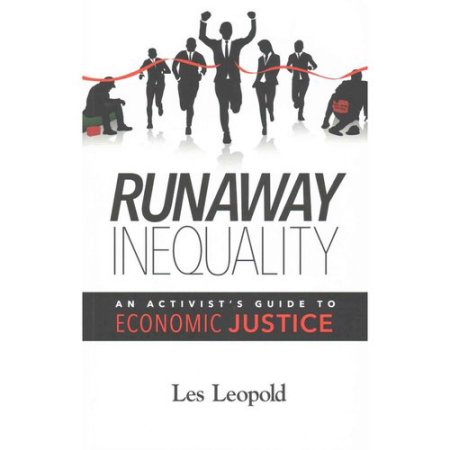
It is absolutely wonderful that the Communications Workers of America are buying books and teaching classes on “Runaway Inequality” by Les Leopold. It stirs a lot of thinking.

runawayinequalitybook

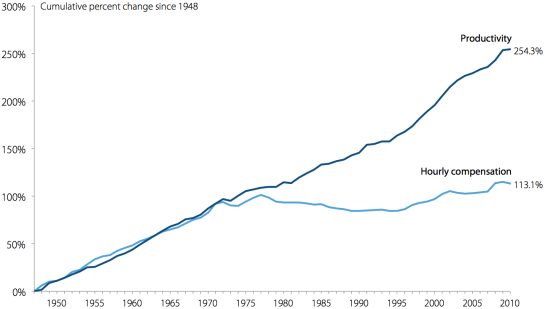
The core argument is that something has been seriously wrong in America since the mid 1970s, when wages stopped rising at a rate similar to the increasing productivity. Productivity is the amount of wealth that one average worker creates in one average working hour.

productivity-wages

As the graph shows clearly, wages and productivity seemed to rise together from the late 1940s to the mid-1970s, then productivity continued rising with the same upward slope, but wages flattened out. Profits rose, but wages didn’t. The change, Les Leopold says, came about because of deliberate policy changes. The book is full of other graphs showing the policies that changed, the resulting inequality, and the amazing effects of this incredible rise in inequality. Leopold then concludes by saying that ordinary Americans must band together and change those policies. In other words, wage-earners have to do what the bosses have been doing. It’s a “must read” book, and the classes (I’ve taken them twice) are inspiring!

There are further questions

  1. Is the period 1947-2016 a representative period of history, or is it unusual?
  2. Is the problem local or systemic?;
  3. Given the situation described in the book, is there really a solution for wage-earners?

What period of economic history is “normal?”

The entire book and all its conclusions come from the hypothesis that something went wrong in the 1970s. I have my doubts. The unusual period in American history was not 1974-2016, as Leopold suggests, but 1947-1974, the first part of the graph. In other words, there is nothing unusual about wages being suppressed in a capitalist economy. The unusual period was 1947-1974.

Take a quick look at how unusual was the post-war world:

  • Europe and Asian were bombed flat. American had virtually no competitors in the capitalist world
  • American unions were far stronger than in any time in history
  • The United States set the terms for all economic transactions in the capitalist world
  • The United States had almost all of the world’s gold

Then look at how things changed: By 1974, German and Japanese automobiles were flooding the world. President Nixon had given up America’s control over gold. Unionism had peaked around 1957 and was clearly slipping. The Chinese were having tea with Nixon and had broken up their alliance with the Soviet Union. Economic competition between nations was getting back to “normal.” What every nation had to do, to compete, was lower their costs. Their costs are our wages and benefits.

Is the problem local or systemic?

Our problems derive from the system we live in. American working families are having pretty much the same problems that other capitalist nations are facing. We have probably lost more than the families in other nations since the mid 1970s, but we had more to lose. The lords of American industry and finance have been able to hold on to their hegemony in the world only by sacrificing our wages and benefits.

Even worse, the long-term process of robbing working families entails destroying our democracy. The end of World War II was a triumph of democracy, and nowhere was democracy stronger than here, in the land of the winners. Several of Les Leopold’s graphs show how democracy is diminished. A very striking one is the graph showing that the United States has more people incarcerated than any nation of any size in the world! Today, many people are saying that we live under a plutocracy and that democracy is dead and gone.

It isn’t true. The absence of democracy is fascism, and we don’t have fascism in America. Even in 1947, our democracy was not complete. It was partial. Since the mid-1970s, our democracy has faded, but not disappeared. If the process continues as it is going now, it would be fair to say that fascism is the logical outcome. But it hasn’t happened yet.

Is there a solution?

Given the system we live in as described in “Runaway Inequality,” are we likely to be able to reverse the policies that have brought disaster for working families since the mid 1970s? No. What happened since 1974 is not unusual, it’s part of the ordinary process of world capitalist economics.

If there is a solution for American working families. it will come from a different system.

Gene Lantz

I’m still on KNON radio, 89.3FM, every Saturday at 9AM Central Time. If you’re interested in what I really think, check out http://lilleskole.us


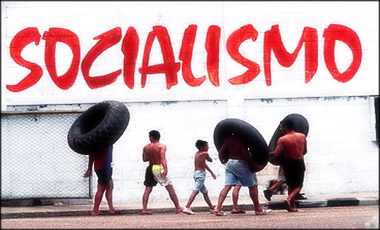
Socialism has become a popular topic for liberal discussion. Thousands of young people are joining moderate socialist organizations such as SP, DSA, or one of the Bernie-ite electoral groups.

socialismo

It is wonderful to see so many people committing to a better world, but I’m not sure how serious they are. It would be good to take a look backward to see how this discussion was conducted over the ages.

Socialism was a suitable subject for tea parties and Utopian literature for a couple of centuries before the 20th. There were even some harmless experiments, including one here in North Texas in the 1850s. The draft law of the Confederacy ended the Texas experiments with guns and terror.

The hippies of the 1960s recapitulated that early period and did some more harmless experimenting with communal living, counter-cultural institutions and what they called the “land trip.” Almost all of them either gave it up or moved to Costa Rica or both.

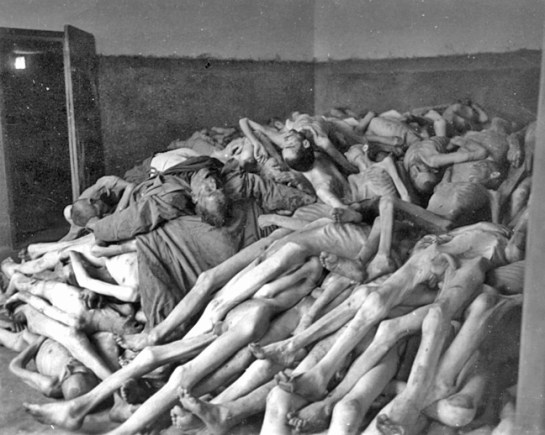
In 1917, though, the talk got serious. Since then, serious advocates of socialism have realized that an opposition exists and it’s not just arguing politely. Millions died in the civil war after that first socialist economy was established.

deadpeople2

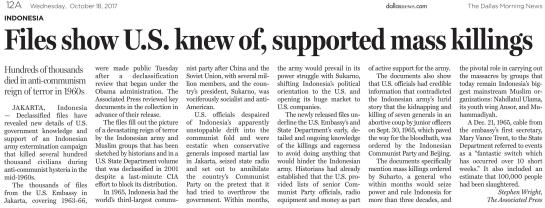
The “arguments” of the opposition then took the form of fascism. In Italy, Germany, and Spain, the socialists were put down with guns and terror.  No sooner had the Nazis been defeated than the “arguments” of the opposition began killing millions in Korea, Vietnam, Guatemala, Iran, Chile, South Africa, Angola, and Indonesia. Sorry if I left some out.

clipping

Here in the United States, only a few of the advocates of socialism actually died and a few, not a whole lot, were imprisoned. But an awful lot of them lost their jobs and suffered blacklisting. Many Americans are still terrified of socialism because the terror that began in 1947 worked rather well for the anti-socialists. If it hadn’t, they would have gone much further, as they did in other nations.

Socialism is serious business. It’s not enough to discuss and advocate it. We need a plan.

–Gene Lantz

I’m on http://knon.org/workers-beat at 9 AM Central Time every Saturday. If you’re interested in what I really think, look at http://lilleskole.us


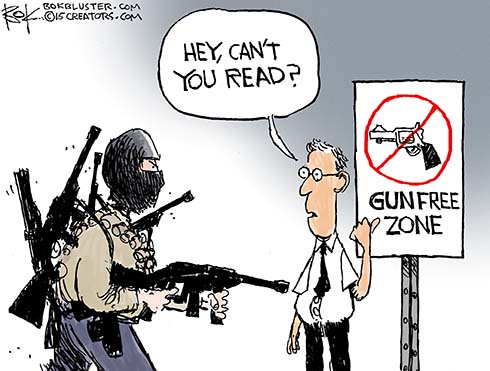
Mass shootings are regular events in America. In today’s newspaper, I just read that Americans have ten times as many guns as anybody else, and that’s the fundamental reason for all the killing.

guncontrol

My own view may surprise you. When it’s all said and done, I am not for taking guns away from the citizenry.

Are Criminals and Terrorists the Issue?

The popular logic is that taking away a lot of people’s guns will also take a lot of guns away from screwballs, criminals, and terrorists. The NRA and the gun-nuts argue that the people who shouldn’t have guns will find a way to get them anyway, and the rest of us will be defenseless after we’ve given up our own. There’s a lot of heat in that argument, on both sides, but neither one deals with the essence of the question.

Let’s Start From Another Angle

If the citizenry gives up our weapons, then only the police will have weapons. That’s what worries me. I don’t know what percentage of the umpteen gun-caused maimings and deaths in America came out of police gun barrels, but I know that there are too many of them. Police shootings are treated as a separate controversy, but they actually go right to the heart of the matter.

The question of the proliferation of guns and the proliferation of police shootings are related. One can’t be solved without the other.

Community Organization is the Answer to Both Problems

If we had effective community organization, we’d have less crime, less need for protection, and a lot fewer police. Neighborhood watches, consisting of the neighbors themselves, could watch out for and report crimes. We would still need professional investigators similar to the ones we see on British BBC television, but we would no longer need armed and dangerous policemen on patrol. In the BBC murder mysteries, the investigators can call out armed units when necessary, and our militias should be able to do the same.

What is the Obstacle?

I can imagine people laughing as they read the preceding paragraph. They’re right, The police in America are not going to be disarmed. Our employers aren’t going to get us organized for self-protection either. But that’s not because it wouldn’t be a good idea. It’s because they don’t work for us. The police, and for that matter the military forces, all work for the plutocrats that run America. They are the armed agents of the people who rule us.

Our our problem is not the NRA, not the gun-nuts, not the terrorists, not the criminals. It’s the bosses.

–Gene Lantz

I’m on http://knon.org/workers-beat every Saturday at 9 Central Time .if you want to know what I really think, check out http://lilleskole.us


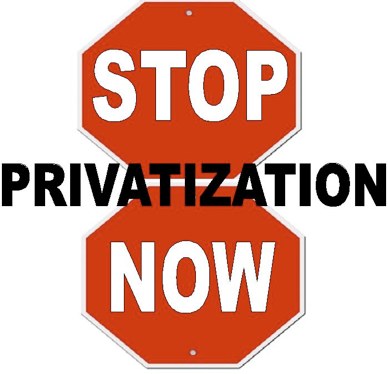
On the “Workers Beat” radio show this morning, I interviewed advocates for Dallas County Schools, a public service that provides transportation and safety for children going to North Texas schools. We are experiencing a propaganda blitz calling for us to vote “against” them in the November 7, 2017, election. How we came to this little historical intersection is an interesting story, and it illustrates a much larger problem for our world under capitalism.

privatization-stop

Today’s radio program was the third time I’ve had advocates for Dallas County Schools. The first ones were bus drivers organized by an independent union. They complained that somebody was out to smear their driving records but, when one considers that they log 106,000 miles per day, their driving record was pretty good. Co-Host Bonnie Mathias and I smelled a rat even then. We decided, without any explanation or prompting, that somebody was out to privatize Dallas County Schools.

When I interviewed the interim superintendent and the organizer for National Education Association later on, I was convinced that privatization was indeed the issue. They said that Texas Senator Don Huffines had originated the entire process with legislation calling for the vote. Although the “remedy” he proposed was complicated, it was skewed toward privatization, said my interviewees.

A Board member who hasn’t been on my radio show had contacted the Dallas AFL-CIO for help a few weeks ago. I sat in on the meeting. Later on, she and I corresponded as I tried to get to the bottom of what was going on.

Today I talked with a Board member and another union official. They went over the charges listed on the three expensive 4-color mailings I have received. They refuted them one by one. Mistakes had been made in the past, they said, but the superintendent and most of the Board had been replaced since then and rectification was under way. Further, the charges against them were overstated or even out right lies!

Nobody mentioned it on the radio, but they said there have been at least 5 robo-calls urging the voters to vote against them. Who paid for five robo calls and 3 big mailings? They said that the mysterious “Protect Dallas Kids” organization that opposed them had filed the required legal reports. They received money from the Dallas Citizens’ Alliance and one of the biggest corporation in North Texas, AT&T. A great deal more had been spent than had been reported, they said.

The Dallas Citizens Committee’s involvement was no surprise. Their main front is the Dallas Morning News, which has editorialized against the Dallas County Schools.

Other than Senator Huffines, I could only find one name associated with the propaganda blitz. The Treasurer, which is required to be listed on political propaganda, is also the Treasurer of the Dallas Republican Party. The address given is right outside Dallas County, but is in Huffines’ Senate District.

As I wrote in the Dallas AFL-CIO newsletter, the anti-worker credentials of Senator Don Huffines, the Dallas Morning News, and the Dallas Republican Party are well established. We stand with the workers!

There’s a Much Larger Lesson

In general, capitalists want to privatize everything. They have already privatized many of the prisons, much of the space program, and a great deal of America’s war machine. They argue that business can do everything cheaper and more efficiently than government, even though even the most shallow thinker can see why they can’t — to every expense they have to add profits.

Almost any form of economic activity can be used to generate profits. That’s why they keep trying to privatize everything. It’s a major issue in so-called trade negotiations as the big transnational corporations try to crate more profit centers all over the world.

The Speaker of the House, Paul Ryan, has been trying to privatize Medicare for years. So far, the Senate has stopped him, but that doesn’t mean he won’t keep trying. They also want to provide everything having to do with veterans’ care.

Unions generally oppose privatizing. We argue that it leads to fewer services and more costs.  On the other side, the bosses look for any kind of problem that a public service may have, then they use that to argue for destroying the public entity and substituting themselves. That’s what’s going on with the Dallas County Schools, and it’s going on all over the world.

When we have a public service, there is always a possibility of corruption; but when we privatize, corruption is guaranteed!

–Gene Lantz

I’m on http://knon.org/workers-beat/ every Saturday at 9 Central Time. If you’re interested in what I really think, try http://lilleskole.us


Three hours after we went into the theater, we emerged dazed and questioning.

Movie Review: “Blade Runner 2049,” Directed by Denis Villeneuve, 163 minutes

bladerunner

The last hour, or so it seemed, was the credits. The more the graphics arts in a movie, the longer the movie credits. My movie buddy always sits through to the final frame, because she wants to know if it was union-made or not. This one had three union logos at the end: Sag-Aftra, Teamsters, and IATSE.

Frankly, I loved every minute of it and would still be sitting there if it had gone on, but I suspect that this movie, like the 1982 Blade Runner, will undergo some cutting and re-cutting before they’re done. The original was one of the greatest accomplishments in movie sci-fi of all time. That’s not because of the incredible graphics. I suppose the incredible graphics award will go to one of those Transformer movies. It’s the way that all the elements of the movie, including music, backgrounds, special effects, acting, stunts — all of it — come together to produce a moody symphony.

Like the first movie, this one is basically a hard-boiled detective story set in a horrible future world dominated by corporations whose greed has left the planet barely inhabitable. Near-human android slaves (replicants) have all the jobs. There is no happiness in either group. There’s no sunshine anywhere at all. It’s as grim as if the Trump Administration had lasted until 2049.

I may have to see the film again, because I caught a number of tributes to other movies and other art forms, and there were probably a lot that I didn’t catch. And like all good sci-fi, there were some really great philosophical and moral questions raised by the replicant-killing Blade Runner, the not-so-bad replicants that he didn’t kill, the evil replicants that he did, and the even-more-evil corporation at the root of it all.

—Gene Lantz

I’m on KNON radio every Saturay at 9 AM Central Time. If you want to know what I really think, click here.