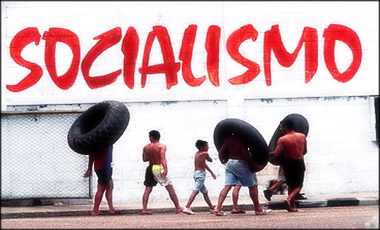
Socialism has become a popular topic for liberal discussion. Thousands of young people are joining moderate socialist organizations such as SP, DSA, or one of the Bernie-ite electoral groups.

socialismo

It is wonderful to see so many people committing to a better world, but I’m not sure how serious they are. It would be good to take a look backward to see how this discussion was conducted over the ages.

Socialism was a suitable subject for tea parties and Utopian literature for a couple of centuries before the 20th. There were even some harmless experiments, including one here in North Texas in the 1850s. The draft law of the Confederacy ended the Texas experiments with guns and terror.

The hippies of the 1960s recapitulated that early period and did some more harmless experimenting with communal living, counter-cultural institutions and what they called the “land trip.” Almost all of them either gave it up or moved to Costa Rica or both.

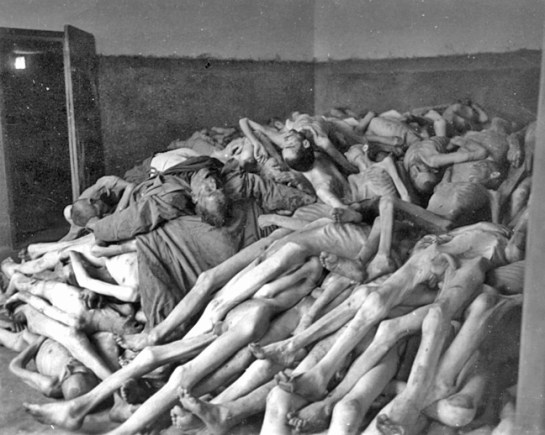
In 1917, though, the talk got serious. Since then, serious advocates of socialism have realized that an opposition exists and it’s not just arguing politely. Millions died in the civil war after that first socialist economy was established.

deadpeople2

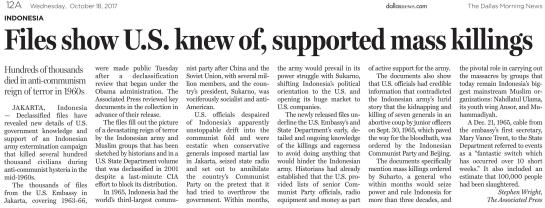
The “arguments” of the opposition then took the form of fascism. In Italy, Germany, and Spain, the socialists were put down with guns and terror.  No sooner had the Nazis been defeated than the “arguments” of the opposition began killing millions in Korea, Vietnam, Guatemala, Iran, Chile, South Africa, Angola, and Indonesia. Sorry if I left some out.

clipping

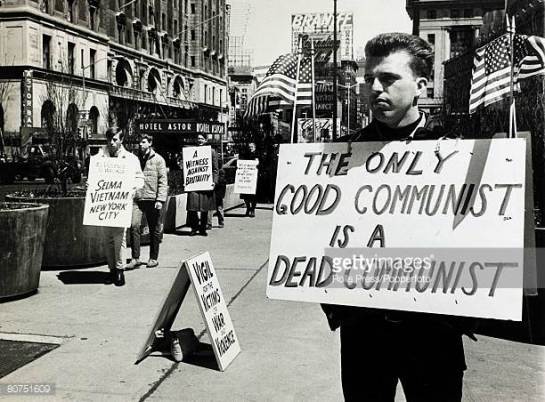
Here in the United States, only a few of the advocates of socialism actually died and a few, not a whole lot, were imprisoned. But an awful lot of them lost their jobs and suffered blacklisting. Many Americans are still terrified of socialism because the terror that began in 1947 worked rather well for the anti-socialists. If it hadn’t, they would have gone much further, as they did in other nations.

Socialism is serious business. It’s not enough to discuss and advocate it. We need a plan.

–Gene Lantz

I’m on http://knon.org/workers-beat at 9 AM Central Time every Saturday. If you’re interested in what I really think, look at http://lilleskole.us


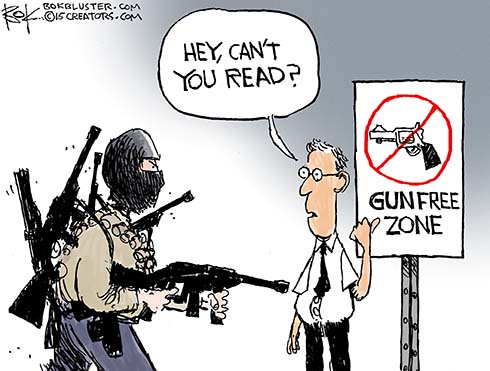
Mass shootings are regular events in America. In today’s newspaper, I just read that Americans have ten times as many guns as anybody else, and that’s the fundamental reason for all the killing.

guncontrol

My own view may surprise you. When it’s all said and done, I am not for taking guns away from the citizenry.

Are Criminals and Terrorists the Issue?

The popular logic is that taking away a lot of people’s guns will also take a lot of guns away from screwballs, criminals, and terrorists. The NRA and the gun-nuts argue that the people who shouldn’t have guns will find a way to get them anyway, and the rest of us will be defenseless after we’ve given up our own. There’s a lot of heat in that argument, on both sides, but neither one deals with the essence of the question.

Let’s Start From Another Angle

If the citizenry gives up our weapons, then only the police will have weapons. That’s what worries me. I don’t know what percentage of the umpteen gun-caused maimings and deaths in America came out of police gun barrels, but I know that there are too many of them. Police shootings are treated as a separate controversy, but they actually go right to the heart of the matter.

The question of the proliferation of guns and the proliferation of police shootings are related. One can’t be solved without the other.

Community Organization is the Answer to Both Problems

If we had effective community organization, we’d have less crime, less need for protection, and a lot fewer police. Neighborhood watches, consisting of the neighbors themselves, could watch out for and report crimes. We would still need professional investigators similar to the ones we see on British BBC television, but we would no longer need armed and dangerous policemen on patrol. In the BBC murder mysteries, the investigators can call out armed units when necessary, and our militias should be able to do the same.

What is the Obstacle?

I can imagine people laughing as they read the preceding paragraph. They’re right, The police in America are not going to be disarmed. Our employers aren’t going to get us organized for self-protection either. But that’s not because it wouldn’t be a good idea. It’s because they don’t work for us. The police, and for that matter the military forces, all work for the plutocrats that run America. They are the armed agents of the people who rule us.

Our our problem is not the NRA, not the gun-nuts, not the terrorists, not the criminals. It’s the bosses.

–Gene Lantz

I’m on http://knon.org/workers-beat every Saturday at 9 Central Time .if you want to know what I really think, check out http://lilleskole.us


Movie Review: “Suburbicon,” Directed by George Clooney, 105 minutes

It's a lot of movies

Matt Damon and Juliana Moore star in a movie that could have been named “Hunter for a Raisin in Pleasantville”


Kudos for the team who made “Suburbicon” for having four, count ’em, four union logos after the credits: Producers Guild, Sag-Aftra, Teamsters, and IATSE. That’s just one of the film’s many good features. We liked this movie.

In the next-to-last scene, I realized that it was a comedy. If I had known that all along, I’d have enjoyed it more because it’s really a pretty good comedy. The problem, and the probable reason that it is setting records for tickets not sold, is that the film makers also weren’t sure it was a comedy. It might have been a murder mystery, a civil rights drama, or a horror story. “Suburbicon” has elements that could be compared to some really great movies such as “Night of the Hunter,” “Raisin in the Sun,’ and “Pleasantville,” If you saw those movies and liked them, you’ll also like parts of “Suburbicon” — but you probably won’t enjoy the entirety as much unless you follow my advice: “Think of it as a comedy.”

The original script was from Joel and Ethan Coen. But the film’s credits show two other writers jumped in and added their alien ideas. That was unfortunate, because the Coen brothers have an unbroken string of smash hit comedies. I wanted to see this movie because I love George Clooney and admire the way he trades in his matinee-idol image for self-sacrificing humor. I also admire leading man Matt Damon for playing super hero secret agents one day, then sappy zoo-buying dads the next. He takes it even further this time. I also wanted to see the movie because I firmly believe that no one, no matter how hard they try, can poke enough fun at the 1950s in America. Even if it did nothing else, “Suburbicon” moves to the top of anti- sterile, racist, anti-communist, cold-war hysterical, 1950s movies!

The plot: Two pre-adolescent boys, one anglo and one Black, play a little baseball together in a perfect little all-white suburb in the late 1950s. Then there are mobs and murders right and left. Some of it fits right into whatever you may think of as the plot line, and some of them don’t. You’ll enjoy the movie as we did if you keep in mind “It’s a comedy!”

–Gene Lantz

I’m on http://knon.org/workers-beat every Saturday at 9AM Central Time. If you’re interested in what I really think, see http://lilleskole.us

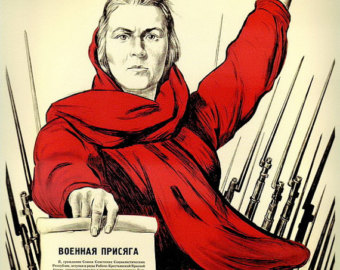
In the long view of history, the most important event of the 20th century was the Bolshevik revolution that occurred 100 years ago on November 7, 1917.

russianwoman

There will be small groups, and some large groups, of people singing  “The International” in their own languages all over the world. It’s probably the most popular song ever sung, but is almost completely unknown here in America. The song is now associated with Russia, but it was originally French. The lyrics came from the Paris Commune (1872?) . One of the English versions is at https://youtu.be/VUw_aaBjCpE.

Over here, people know almost nothing about the event. They think it was some kind of a putsch, or sneaky takeover — or that the bosses actually handed their power over, as they did with Hitler in Germany.

What actually happened was that the works of Karl Marx and Frederich Engels began to be translated into Russian sometime around the 1880s. Before that, there were young revolutionaries, but they didn’t know what they were doing and tended toward terrorism. One of them, executed by the tsarist government, had a little brother named Ulyanov. That little brother decided that he would study up before trying anything revolutionary. As he became more knowledgeable and took on leadership, he adopted the name pen name Lenin.

I think it was in 1903, at a party congress of the Russian Social Democratic Labor Party, that Lenin argued for a scientific Marxist revolutionary approach. He won a majority in the voting. The Russian word for “majority” is “bolshevik.”

In 1905 Russia was shaken by their losing role in a war with Japan. Among other important developments, the anti-war movement and other progressives formed giant committees that vied with the tsarist government for power. The Russian word for “committee” is “soviet.” The main committee was in Petrograd and was run by another revolutionary who had taken the name Trotsky. They lost that struggle, but the idea of these committees was familiar to the progressives after that.

What followed was years and years of hard work. Lenin was exiled, but he managed to argue for his policies through underground newspapers. By early 1917, the Russian empire was in another crisis. This time, they were getting whipped by Germany in World War I.

Progressives overthrew the Tsar, but the government they formed was basically capitalist. The new leaders wanted to continue the war and the war economy. The Bolsheviks argued for “bread, land, and peace” and “All Power to the Soviets!”

New Committees were formed. Some of them were called “workers, peasants, and soldiers soviets.” This time, Lenin and his Bolsheviks were the main force in the progressive movement. By mid 1917, the Petrograd Soviet was virtually equal to the “official” government. Power was up for grabs, and the soldiers were streaming into the soviets.

I’ve been told that only a handful of people actually died on November 7, 1917. Apparently, only one battalion of soldiers still supported the government, and they couldn’t effectively protect it. People from the soviet stormed the Winter Palace and took charge.

The United States and several other countries already had soldiers on Russian soil, and they didn’t leave. Instead, they joined in a civil war to overthrow the Bolsheviks. In the rest of the world, progressives began to split apart. The American Socialist Party split is dramatized in the movie “Reds.” Essentially, the Socialists kicked the supporters of Lenin out, and they had to form their own party.

Since then, they’ve been trying to explain what happened.

–Gene Lantz

I’m on http://knon.org/workers-beat every Saturday at 9 central time. If you want to know what I really think, look at http://lilleskole.us

On the “Workers Beat” radio show this morning, I interviewed advocates for Dallas County Schools, a public service that provides transportation and safety for children going to North Texas schools. We are experiencing a propaganda blitz calling for us to vote “against” them in the November 7, 2017, election. How we came to this little historical intersection is an interesting story, and it illustrates a much larger problem for our world under capitalism.

privatization-stop

Today’s radio program was the third time I’ve had advocates for Dallas County Schools. The first ones were bus drivers organized by an independent union. They complained that somebody was out to smear their driving records but, when one considers that they log 106,000 miles per day, their driving record was pretty good. Co-Host Bonnie Mathias and I smelled a rat even then. We decided, without any explanation or prompting, that somebody was out to privatize Dallas County Schools.

When I interviewed the interim superintendent and the organizer for National Education Association later on, I was convinced that privatization was indeed the issue. They said that Texas Senator Don Huffines had originated the entire process with legislation calling for the vote. Although the “remedy” he proposed was complicated, it was skewed toward privatization, said my interviewees.

A Board member who hasn’t been on my radio show had contacted the Dallas AFL-CIO for help a few weeks ago. I sat in on the meeting. Later on, she and I corresponded as I tried to get to the bottom of what was going on.

Today I talked with a Board member and another union official. They went over the charges listed on the three expensive 4-color mailings I have received. They refuted them one by one. Mistakes had been made in the past, they said, but the superintendent and most of the Board had been replaced since then and rectification was under way. Further, the charges against them were overstated or even out right lies!

Nobody mentioned it on the radio, but they said there have been at least 5 robo-calls urging the voters to vote against them. Who paid for five robo calls and 3 big mailings? They said that the mysterious “Protect Dallas Kids” organization that opposed them had filed the required legal reports. They received money from the Dallas Citizens’ Alliance and one of the biggest corporation in North Texas, AT&T. A great deal more had been spent than had been reported, they said.

The Dallas Citizens Committee’s involvement was no surprise. Their main front is the Dallas Morning News, which has editorialized against the Dallas County Schools.

Other than Senator Huffines, I could only find one name associated with the propaganda blitz. The Treasurer, which is required to be listed on political propaganda, is also the Treasurer of the Dallas Republican Party. The address given is right outside Dallas County, but is in Huffines’ Senate District.

As I wrote in the Dallas AFL-CIO newsletter, the anti-worker credentials of Senator Don Huffines, the Dallas Morning News, and the Dallas Republican Party are well established. We stand with the workers!

There’s a Much Larger Lesson

In general, capitalists want to privatize everything. They have already privatized many of the prisons, much of the space program, and a great deal of America’s war machine. They argue that business can do everything cheaper and more efficiently than government, even though even the most shallow thinker can see why they can’t — to every expense they have to add profits.

Almost any form of economic activity can be used to generate profits. That’s why they keep trying to privatize everything. It’s a major issue in so-called trade negotiations as the big transnational corporations try to crate more profit centers all over the world.

The Speaker of the House, Paul Ryan, has been trying to privatize Medicare for years. So far, the Senate has stopped him, but that doesn’t mean he won’t keep trying. They also want to provide everything having to do with veterans’ care.

Unions generally oppose privatizing. We argue that it leads to fewer services and more costs.  On the other side, the bosses look for any kind of problem that a public service may have, then they use that to argue for destroying the public entity and substituting themselves. That’s what’s going on with the Dallas County Schools, and it’s going on all over the world.

When we have a public service, there is always a possibility of corruption; but when we privatize, corruption is guaranteed!

–Gene Lantz

I’m on http://knon.org/workers-beat/ every Saturday at 9 Central Time. If you’re interested in what I really think, try http://lilleskole.us


The new documentary film “Dolores” has opened. Its subject, Dolores Huerta of the United Farm Workers, is promoting it. She appeared in Dallas on October 11. The audience was knocked out of their socks!

Dolores_Ecard_Dallas1_v1

The biopic begins her life story when she was only 25 and had only 7 children. She and Cesar Chavez, both longtime community organizers, focused together on organizing workers in the California fields. It carries on through all the battles, all the innovative tactics, all the disappointments, and the victories of their dramatic organizing history.

After the film, a standing ovation greeted the 87-year old mother of 11 who has made and is making this American history. She answered every question with the same even-handed practicality that characterized her approach all through the movie.

One of our most popular labor movement children, primary school student Lucia Montemayor, daughter of our Dallas AFL-CIO Political Director, asked, “When can I start organizing?”

Huerta replied sweetly, “What are you waiting for?”

Police violence was a topic for two big reasons 1) all the violence that the farmworkers faced in the film and, 2) Huerta’s personal hospitalization after being attacked by San Francisco policemen. Without any rancor, Huerta said that everyone should oppose injustice whenever and wherever it arises. She went out of her way to say that Jerry Jones, millionaire owner of the Dallas  Cowboys football team, should be encouraging his  players to oppose injustice instead of  threatening to fire them.

Someone asked how Huerta juggled motherhood  and  career. This is a question she has dealt with often. Throughout her adult life, she has been criticized for not remaining at home “in a woman’s place.” In fact, it is common for many parents to hide behind their children and claim, “I can’t fight injustice because I put my children first” – thereby condemning the next generation to live in a world no better or even worse than the one the lazy parents live in. Huerta said that parents have to work for a better world because it has to be done. One of her sons was with her. He testified, “We had to share our mother with the world – but she shared the world with us!”

Several questions had to do with the discouragement that organizers often feel. Of course Huerta’s smiling responses were essentially that people must keep on trying. From Dolores Huerta, these weren’t just words. She has backed them with a lifetime of commitment!

–Gene Lantz

I’m on knon.org every Saturday at 9AM Central Time. If you want to know what I really think, look at http://lilleskole.us

Book Review: Kersten, Andrew E, and Lang, Clarence, Editors: “Reframing Randolph. Labor, Black Freedom, and the Legacies of A. Philip Randolph.” New York University Press, 2015.

randolph-quote

I got this book from Oak Cliff Branch of Dallas Public Library.

Asa Philip Randolph is glorified and criticized in the essays collected here. Whether they appreciated him or not, all the writers agreed that he had a profound effect on American civil rights.

I started a sort of timeline:

  • 1898: born
  • 1920s: Street corner orator and co-editor of “The Messenger”
  • 1925: Newly organized Pullman Porters ask him to take over as President. Black Sleeping Car Porters and Maids formed
  • 1935 or so: finally gets a contract from Pullman. Drops “and maids” and joins the American Federation of Labor (AFL) Within it, he argues for anti-discrimination policies until the end of his career
  • 1941: With threat of March on Washington Movement (MOWM), gets Executive Order 8088 (? Forgot the number) outlawing racial discrimination in war industries. Not nearly as much as was demanded, but Randolph calls off the march and is covered with glory for having “forced” the President of the United States to acknowledge the federal government’s role in overcoming racial discrimination. Federal Employment Practices Commission (FEPC) is formed and the MOWM people try to enforce it with marches and pickets throughout the war.
  • 1936: Formation of National Negro Congress. He serves 1 term as president and then resigns as he feels the organization is communist dominated
  • 1960 or so: He is President of the National African Labor Congress NALC
  • 1963: he and Bayard Rustin organize the March on Washington for Jobs and Freedom. They cooperated with MLK on it. Of course, MLK stole the show.
  • 1965: he is honored with formation of A. Philip Randolph Institute (APRI). Chapters are formed in every Central Labor Council and endure today
  • 1968 Ocean Hill-Brownsville conflict between community oriented school board and the United Federation of Teachers. Randolph sided with labor leader Al Shanker and took heat for it
  • 1972: Coalition of Black Trade Unionists (CBTU) formed as NALC fades away
  • 1974: African American women from Randolph movements start the Coalition of Labor Union Women (CLUW)

I was left with the impression that Randolph successfully, eventually, got the AFL to be less racist. The CIO, of course, probably had a bigger effect. Randolph got the federal government on the right track. I think he was a consistent social – democrat, even though the various writers seem to think he wavered this way and that. I think any wavering he did came from trying to fit the civil rights movement into the AFL. Like the social-democrats of today, Randolph looked at the working class. He analyzed it and pushed for its success. Like the social-democrats of today, he did not analyze the obstructionist class and devise ways of overcoming them once and for all.

On the downside, the book accuses him of outright sexism in dealing with women’s politics. They also criticize his rabid anti-communism as unnecessarily divisive. If he read the book today and were asked to comment, I’m sure he would say that those who cannot compromise aren’t going to get anything done in contemporary politics.

–Gene Lantz

I’m on KNON radio every Saturday at 9 AM Central Time. Click here if you want to know what I really think!

Three hours after we went into the theater, we emerged dazed and questioning.

Movie Review: “Blade Runner 2049,” Directed by Denis Villeneuve, 163 minutes

bladerunner

The last hour, or so it seemed, was the credits. The more the graphics arts in a movie, the longer the movie credits. My movie buddy always sits through to the final frame, because she wants to know if it was union-made or not. This one had three union logos at the end: Sag-Aftra, Teamsters, and IATSE.

Frankly, I loved every minute of it and would still be sitting there if it had gone on, but I suspect that this movie, like the 1982 Blade Runner, will undergo some cutting and re-cutting before they’re done. The original was one of the greatest accomplishments in movie sci-fi of all time. That’s not because of the incredible graphics. I suppose the incredible graphics award will go to one of those Transformer movies. It’s the way that all the elements of the movie, including music, backgrounds, special effects, acting, stunts — all of it — come together to produce a moody symphony.

Like the first movie, this one is basically a hard-boiled detective story set in a horrible future world dominated by corporations whose greed has left the planet barely inhabitable. Near-human android slaves (replicants) have all the jobs. There is no happiness in either group. There’s no sunshine anywhere at all. It’s as grim as if the Trump Administration had lasted until 2049.

I may have to see the film again, because I caught a number of tributes to other movies and other art forms, and there were probably a lot that I didn’t catch. And like all good sci-fi, there were some really great philosophical and moral questions raised by the replicant-killing Blade Runner, the not-so-bad replicants that he didn’t kill, the evil replicants that he did, and the even-more-evil corporation at the root of it all.

—Gene Lantz

I’m on KNON radio every Saturay at 9 AM Central Time. If you want to know what I really think, click here.

Movie Review, “Viceroy’s House,” Directed by Gurinder Chadha, 106 minutes.

Like most useful political movies, “Viceroy’s House” is showing in a very limited run. In Dallas, it’s at the Inwood, but showing only twice each day and sure to disappear on Friday.

nehru-quote

Critics compare the movie to “Upstairs Downstairs” or “Downton Abbey,” partly because it stars Hugh Bonneville, who was the Earl for years on “Downton Abbey.” Actually, it compares much more with “Doctor Zhivago” or “The Year of Living Dangerously,” because it’s an epic historical movie with a tangentially related movie-type love story in the foreground, while great events are going on behind.

Lord Mountbatten, a British war hero, arrives to take over as the last viceroy in imperial India. The weakened empire wants to free its millions of subjects and, for most of the movie, the problems seem fairly realistic. The Lord and his very able wife and daughter try to deal with them as well as possible. But there’s dirty business afoot and tens of thousands of Hindus and Muslims will kill each other before the film ends. In Kashmir and other parts of India today, they are still at it.

I don’t want to give away who the real dirty s.o.b. villain is, but his initials are Sir Winston Churchill, about whom I have already delivered some opinions.

As you know, the British didn’t just turn India over to Nehru and his democratic government. Instead, they partitioned it along religious lines as they had earlier with Palestine and Ireland — two other places where a lot of people have died. The entire scheme of partitioning at the end of World War II merits some scrutiny. Why, for example, did we end up with East and West Berlin, North and South Korea, Iraq/Iran/Kurdistan, and one of our old favorites, North and South Indo-China (Vietnam).,

Come to think of it, we might look through a lot of histories and consider what governments really intended when they partitioned geographic areas. I live in Texas, for example, which was partitioned away from Mexico along with California and the entire Southwestern United States.

The movie’s director is no novice She has put together a very satisfying movie with some real political and historical significance. Her own family members were among the victims of the period. The acting is superb at every level, from Lord Mountbatten to his least servants. There are hundreds of extras in wide-lens shots that must have cost a fortune. BTW, Mountbatten’s daughter served as a consultant on the film.

Don’t miss it!

Gene Lantz

Catch me on KNON radio 89.3 FM Saturdays 9-10 AM CST