Movie Review: “On the Basis of Sex,” Directed by Mimi Leder, 2 hours

My movie buddy and I enjoyed the biopic about Supreme Court Ruth Bader Ginsberg’s early days in the fight for gender equality, even though it was formulaic and predictable from the beginning to the powerful ending where the real Ginsberg mounted the Supreme Court steps.

The movie is very timely as it hit theaters just as Ginsberg was missing her very first sessions while battling lung cancer. The last report I saw said that she had beaten cancer once more and was back on the job. The documentary, “RBG,” about her had just closed a week or so before this dramatization was available. Another reason that the movie is so timely is that the Supreme Court has been making headlines for years as it cleared legalities out of the way for the ongoing power-grab of the plutocracy.

Only Ginsberg’s early legal efforts, and especially her first big trial before the Supreme Court, are covered. But the inference is that she went on to win more and more gains for women. We were pleased that the movie didn’t try to give all the credit to the legal system, but made the point that people change things before laws recognize it.

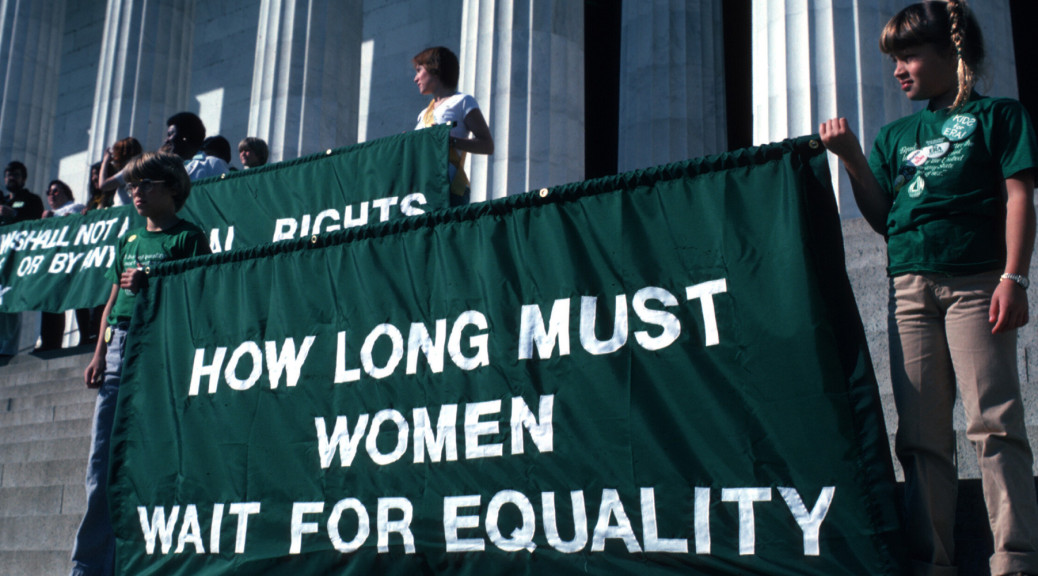
In discussions after the movie, we talked about the Equal Rights Amendment, which both of us fought for in the 1970s. It passed in Congress but, like any constitutional amendment, it had to be ratified in the states. We came close but we didn’t win, or rather we haven’t won yet.

The ERA would have overturned all the many statutes and case precedents justifying gender discrimination in America. Ginsberg’s approach, in the movie, was to tackle them one-by-one, and that’s what she and others have been doing. The movie implies that we’ve been winning all this time and will continue winning until gender equality is fully achieved.

But, so far, it hasn’t happened.

Why Not?

Women live longer and consequently outnumber men in America and on the planet. If they could get together, even vote together on women’s issues, they would win. But the truth is that they don’t.

Texas has had two outstanding women candidates for governor in the last two elections. Both were outstanding for their stands on women’s equality. Neither one of them won, and neither one of them got all of the women votes. I think that both of them, like Ruth Bader Ginsberg and maybe even like Hillary Clinton, made some progress; but so far no victory cigar!

Frederick Engels, in the 19th century, wrote that women were the first oppressed class, mostly because their oppression coincided with the birth of written history. Both written history and women’s oppression came about because surplus wealth was beginning to be produced. Men took that wealth and developed writing to account for it. They developed women’s oppression in order to make sure that their heirs were biologically theirs.

Engels said that women’s oppression would end in future society because women would be in the workforce and fully as productive as men. I think that’s been the case so far. The laws didn’t change first. What happened first was that women established their power and their rights in the workforce.

Union Women Are Far Ahead

Most American workers aren’t organized into unions, but the ones that are practice women’s equality rather thoroughly. As our working people attain more power, women’s equality will at long last attain its final goal.

Meantime, let’s keep marching!

–Gene Lantz

I’m on KNON’s Workers Beat program 89.3 FM in Dallas at 9 AM Central Time every Saturday. They podcast it on Itunes. If you are curious about what I really think, check out my personal web site

Working people in other nations must be simply amazed that the Americans would let 800,000 workers get locked out while everybody else goes to work as if nothing was happening. After all, if we so much as shut down one airport, one railroad, one highway, or one city for half a day, we’d get whatever we wanted.

Call Congress. Then what?

Without making any excuses, one can look back in American labor history for some of the reasons that nobody has walked out in solidarity. The biggest one is that everybody waits for the unions to do it and, as the saying goes, it ain’t going to happen!

Unions have power, and because they have power, they have tremendous government supervision. Most union contracts have a “no strike” provision. Management would love to see a union violate their contract, because they would then be free to do almost anything they wanted, and the government would happily assist.

In the old days, unions got what they wanted primarily by striking. The Industrial Workers of the World had hardly any other tactics. At the same time, their legal status was about the same as bank robbers. Some of the most powerful unions, mostly in transportation, gained some legal status with the passage of the Railway Labor Act in the 1920s. In the 1930s, the Roosevelt Administration gave us the National Labor Relations Act. It set up the supposedly neutral National Labor Relations Board to referee disputes between management and labor. Legal at last, the unions went on the biggest organizing drive in history.

But there was a price. With government arbitration came a lot of government supervision. In 1947, Republicans came down hard on labor laws. That’s when the vicious “right to scab” laws were legalized in the infamous Taft-Hartley bill. Texas led the way. Republicans have made sure that labor laws worsened.

It may sound innocent to say that “secondary boycotts are outlawed,” but what it means is that unions cannot stop work in solidarity with other unions. Our fundamental principle, “An injury to one is the concern of all” is quoted a lot more than it is used, and it can’t legally be used at for major work stoppage.

Unions are calling for an all-out lobbying effort. A few unions, including one in Dallas, are hitting the streets, and that is a big step forward. But it’s not likely that they will go further.

Why doesn’t someone else do it?

Why is everybody waiting for unions to call walkouts? It’s because our solidarity with the rest of the working class is still fairly weak. From 1947’s Taft-Hartley Act to 1995, America’s unions did very little to promote their relations with churches, community groups, civil rights people, and protest organizations. They accepted their isolation.

With the AFL-CIO elections of 1995, unions began to get back on track. But it’s a long road from a national labor convention to a grass roots coalition at the local level. I’m very proud that my own AFL-CIO Council in Dallas has made giant strides, but not every council has and, even in Dallas, these coalitions are still quite young.

Most of the individuals with enough personal following to call a major action are politicians. If they called a walkout, or even spoke in favor of walkouts, their campaign funds would rupture. So don’t expect any of them, not even Bernie Sanders, to call for walkouts.

Maybe a rock star will.

Some impossible things happen

If Mr Trump really tries to keep the government shutdown going for an extended period, as he says he will, there will be work stoppages. They will succeed, too.

There is such a thing as “historical imperative.” It says that some things will happen, not because they are likely or even possible, but because they have to happen. Maybe Americans don’t understand our own labor history, and maybe we’re easily divided. Maybe we’re ignorant, but we’re not stupid.

–Gene Lantz

I’m on KNON radio’s “Workers Beat” program at 9 AM Central Time every Saturday. They podcast it on Itunes. If you are curious about what I really think, look at my personal web site

Movie Review: “Shoplifters,” Directed by Hirokazu Kore-eda, 121 minutes

A family that steals together,
feels together

This isn’t a Hollywood movie with a given gimmick, heroes, villains, and a romantic ending. It is a delicate, multi- layered garment that must be pulled back gently to reveal its true design. It earns its honors and awards without any trumpets nor fanfare.

It’s not really about theft, even though the impoverished Japanese family gets a lot of its basic necessities that way. It’s not about poverty, slums, or sex either. That’s just the setting for a story about universal themes of love, commitment, and, above all, family.

My movie buddy and I found the subtitled movie slow for the first hour and a half, even though we kept picking up nuances that intrigued us just enough to keep us in our seats. The last half hour explains everything and pushes every tiny circumstance into hard questions that challenge everything we have thought and felt about the little group of shoplifters and thieves.

I guess that’s art.

–Gene Lantz

I’m on KNON radio’s “Workers Beat” program 89.3 FM in Dallas at 9 AM Central Time every Saturday. They podcast on Itunes. If you are curious about what I really think, check out my personal web site

Today I posted a prologue and Chapter One of “Commissioner Torres and the New Government” on http://lilleskole.us, my personal web site. It’s actually my 4th book-length effort. One of them is autobiographical and covers just about everything I’ve learned so far.

What would your revolution look like?

The other three are speculative fiction about a guy named Leo Torres who gets involved with revolutionaries just when the old order of things has fallen apart. Leo gets in on the revolution from the ground floor.

Why?

You may wonder why I write and post these things. Obviously, I’m not going to make any money. They aren’t even copyrighted. It’s not because of the silly old shibboleth “Writers write because they have to.”

I’m one of many people who would like to see a better world, but I’m one of the very few who have tried to describe it. For decades I’ve dodged the question the same way almost every activist does by saying, “I don’t know what the world I’m fighting for would look like, because it’s up to those people living in that world to decide for themselves.” It may be true, but it’s still a dodge.

If we’re fighting for a better world, we ought to be able to describe it. Or at least we ought to try.

I decided on speculative fiction as my way of initiating a discussion on what might happen and what we might do about it. After all, does anybody think that we’ll just wake up one day in a better world?

Nearly all of our sci-fi is dystopian. Just about the only exception is the Star Trek series. They didn’t even have a revolution to get into their wonderful world. They just listened to the Vulcans. In one episode, Mister Spock hints that the Vulcans had to go through some very trying times before they became so civil, but he doesn’t tell us much about it. So we actually have no pattern to follow.

For a long time, American activists tried to copy the Russian revolution. When it imploded, a lot of them were disgusted and demoralized. Some others have tried to follow Chairman Mao. Some followed Nkrumah, Ho Chi Minh, and some followed Castro. I think we could learn from all of them, but we couldn’t learn enough. We have to do a lot of our own thinking.

So, we speculate.

The World I Made

Looking toward the future, especially in the Donald Trump era, one can see disaster ahead. It’s not a matter of whether or not the planet will become inhabitable and wealth inequality will make economic life impossible. It’s only a matter of when.

But I have great faith in myself and other people. Sooner or later we will give up on the people who are destroying the economy and the ecology. We will embrace new leaders and new ways of running things. In the world I create in my sci-fi novels, people have just recently done that. Following the advice of revolutionaries, civilized people have disbanded their armies and their police. They formed local militias to keep order while respected and capable leaders are elected to make economic and social decisions.

The revolutionaries at the center help coordinate activities and continue to advise the localities. As you might imagine, there is very little continuity between one locality and another. There are a tremendous number of problems to be resolved. What will people eat? How will they get it? How will trade continue? How will people get from one place to the next?

Because the air and water are almost undrinkable and unbreathable, something drastic has to be done about the burning of fossil fuels. Because all systems are down, there is no electricity. Without electricity and transportation, there is no long-distance communication. Without transportation, people will not be able to get the goods and services they need to stay alive. What would you do about those things?

The first two novels take the easy way out. They only deal with some of the smaller questions.

My first novel deals with whether or not revolution is possible and worthwhile. It’s common to hear it said that humanity isn’t worth saving, that people will never learn to live without war, that people are essentially greedy and incapable of cooperation, and that every revolution has failed because people are basically just no damned good!

My second novel is more specific. It tries to deal with the fact that certain sectors of the population will not cooperate in building a better world. Hardened drug addicts, for example, are unlikely to cooperate in civil society. What would you do with them?

The third novel is by far the most ambitious. It recognizes that government is necessary and begins to discuss the ins and outs of setting up and running such a government. Is democracy the answer? If so, what would be the machinery of democracy? Here’s a really thorny question, “How could a society avoid the tyranny of the majority?”

I don’t know if you can answer these questions, but I know that I can’t. But I’m inviting you to join me in trying to find out.

–Gene Lantz

I’m on KNON radio’s “Workers Beat” talk show 89.3 FM in Dallas at 9 AM every Saturday. Call in 972-647-1893 with your ideas. They podcast it on Itunes. If you are curious about what I really think, check out my personal web site at http://lilleskole.us

Texans are forever taking their children to see the Alamo, and a lot of them go to the San Jacinto Battlefield. But if they really care about Texas history, they should make a pilgrimage to Crystal City, where ordinary working people made a lot of history.

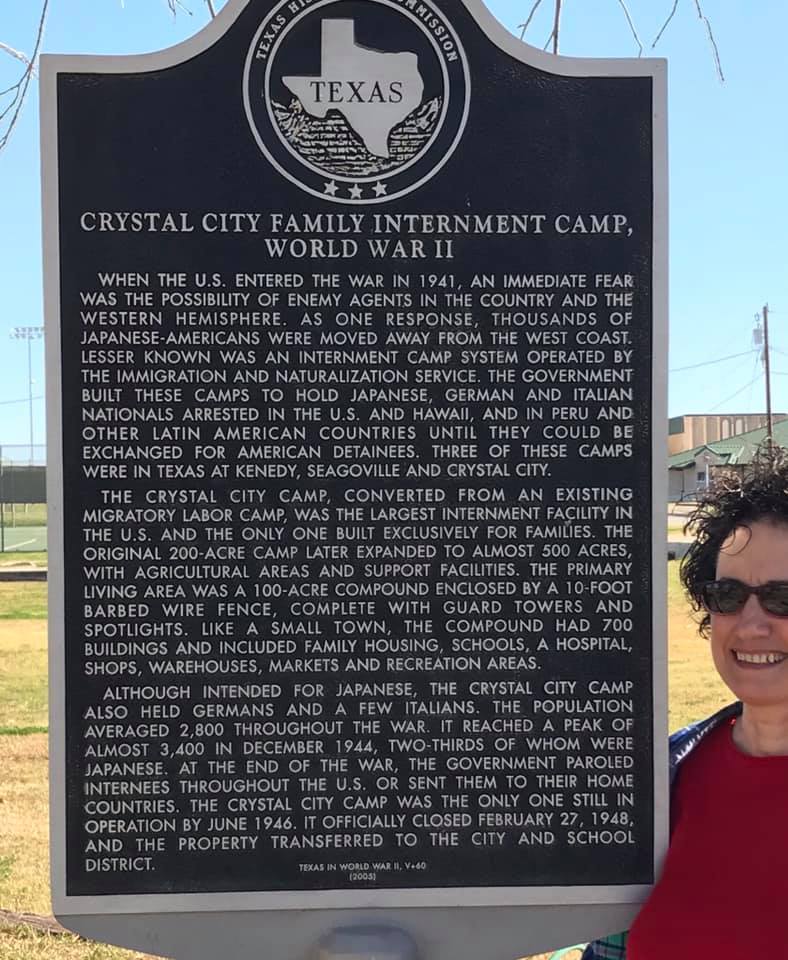
Crystal City was the site of the biggest concentration camp of World War II. Japanese families were there from 1943 through the end of the war. A few Italians and Germans were also sent there from other parts of the U.S. and Latin America. The United States traded them for our own prisoners of war.

Crystal is also a great civil rights site. The Chicano movement that terrified Anglos in the 1970s began in Crystal City. The struggles of some of the most desperate working families in America took place in Crystal City. For a while there, they won!

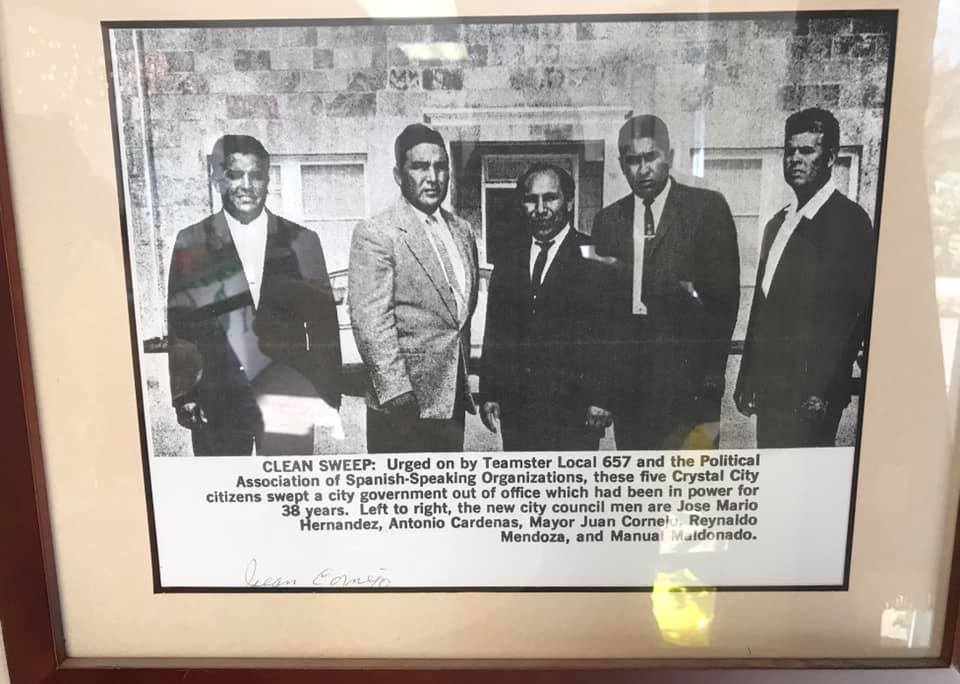
I think it was in 1963 that five very courageous Latinos took city government power from the dominant Anglos. With only 10% of the population, Anglos had always dominated everything. Then in 1969, Juan Campeon and Jose Angel Gutierrez convened La Raza Unida Party at Salon Campestre just outside the city limits and on the banks of the Nueces River.

La Raza Unida soon took over government in all of Zavala County and in surrounding counties. Inspired by La Raza, other Chicanos throughout America began to form their own fighting civil rights organizations.

Today, only the cement steps of the old Salon Campestre remain. There are no historical markers for La Raza Unida. They hold no government offices, but Mexican American Democrats and other organizations owe their initial inspiration to the courageous workers of Crystal City. There’s a great play about it. It’s named “Crystal.”

About 8,000 people, nearly all Mexican Americans, live in Crystal. A branch of the historic Nueces river runs (when there is enough water) just outside the city limits. There are no unions in existence, even though the CIO tried in the 1940s and the Teamsters tried in the 1960s to organize the cannery workers.

There are no museums in Crystal City. The library is closed. There are several statues of Popeye the Sailor Man and some claims to be the Spinach Capital of the World, but the great contributions and sacrifices of working families are noted only in the minds of certain Chicanos and a handful of amateur historians like us, who care about real history.

–Gene Lantz

I’m on KNON’s “Workers Beat” talk show 89.3 FM in Dallas every Saturday at 9 AM Central Time. If you are curious about what I really think, check out my personal web site

Movie Review: “Vice,” Directed by Adam McKay, 2 hours 12 minutes.

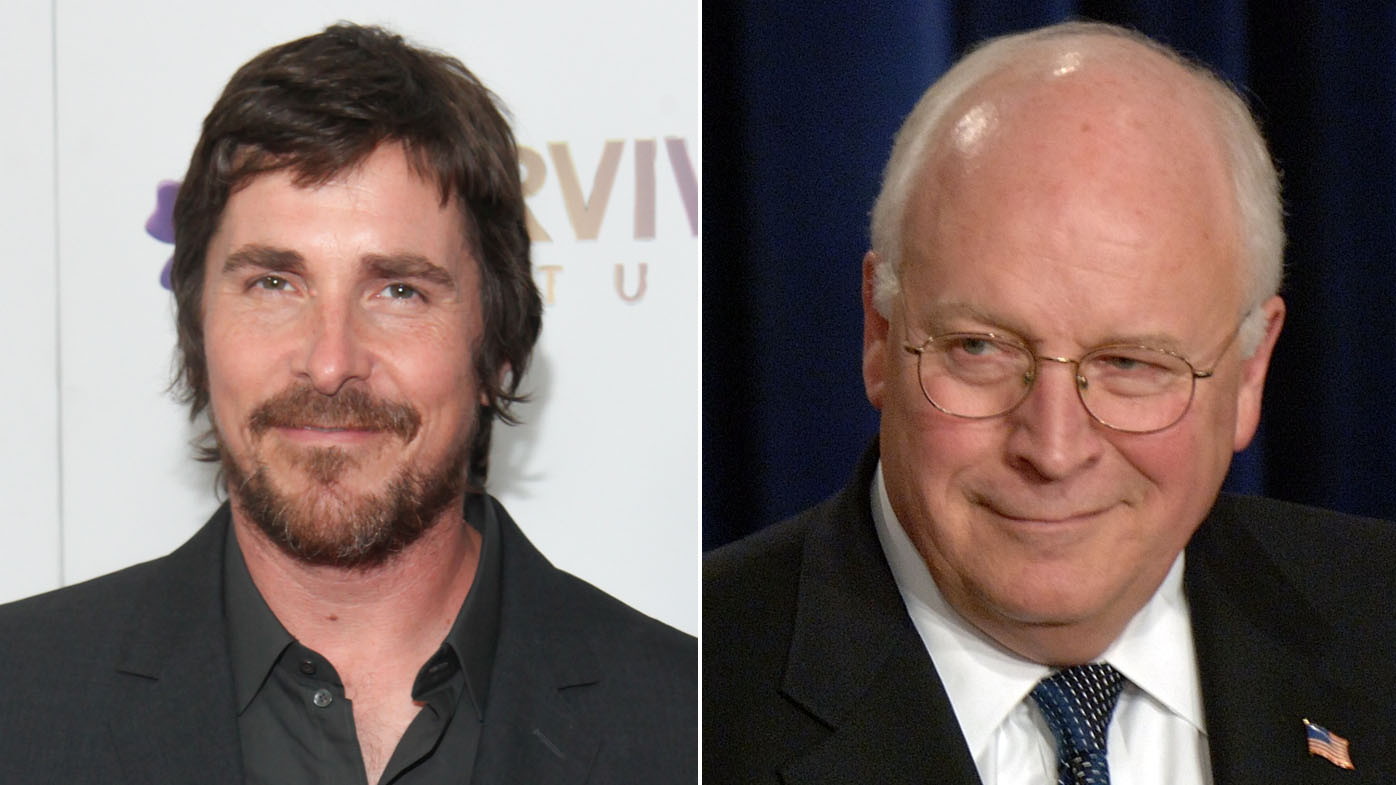
As the young Dick Cheney and the old, Christian Bale was heavy
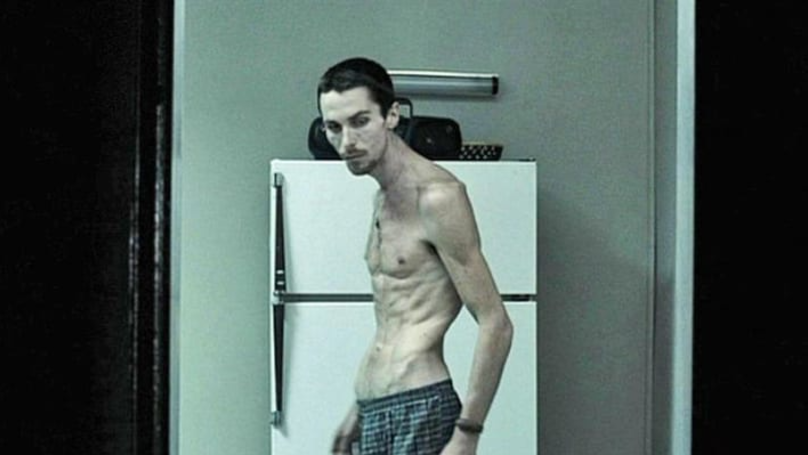
Christian Bale was skinny in “The Machinist”

Even if you lived through the Bush-Cheney years and don’t think you need a refresher course, you will benefit from seeing “Vice.” It concretizes our understanding of the many things that are wrong today. Dick Cheney was not the first nor the last Republican to warp our laws in the service of dark money, but he is certainly in the running for the worst.

The movie credits him with paving the way for dishonest network television, tax giveaways, fraudulent wars, distortion of justice, and torture, among other things.

So many are the chronicles of Cheney’s crimes that the movie, despite its length, has little time for drama. It is almost a documentary. The time-saving method of using a narrator to hurry us through events has to be employed. Even within that hurried framework, though, the actors are magnificent. Christian Bale again shows his dedication and ability by being both the wastrel Young Dick and the overweight criminal old Dick. Amy Adams, as Dick’s Lady MacBeth, is outstanding. Several headliners take minor roles, or even cameos, to get the historical drama on the screen.

It was not completely amazing to see that Brad Pitt headed a list of film producers, especially if one also went across the movieplex to see the outstanding civil rights film, “It Happened on Beale Street,” where Pitt is again the lead producer. Pitt apparently is committed to progressive filming.

There are a lot of surreal moments in the film. They’re extremely humorous in a macabre sort of way. Some of the critics have blasted McKay for taking short breaks from serious treatment, but I think he did it the way it had to be done. When listing the crimes of Cheney, we have to laugh to keep from screaming.

–Gene Lantz

I’m on KNON radio’s “Workers Beat” program 89.3 FM in Dallas at 9 AM every Saturday Central time. If you are curious about what I really think, check out my personal web site

I need somebody to explain the machinery of democracy to me, because I’m writing a sci-fi novel about a better world.

A lot of people are now claiming to be revolutionaries. An even larger number would at least say that they want a better world than the one we live in. I think they’d agree that we want to maximize democracy.

What do you want?
How would you get it?

But does anybody know how?

Even if all the present election reformers got their way, even if the current House Resolution # 1 should pass on January 3rd, we would still an imperfect democracy, because we have no way to overcome the “tyranny of the majority.” No matter what Utopian election machinery we may advocate, minorities would still be at the mercy of the majority of voters.

In a better democracy, one’s vote should be directly proportional to their personal consequences from that vote. If a proposal affects you more than somebody else, why should your votes have equal weight? I didn’t think this up, I got it from Ivan Illich in 1972. He said everyone’s vote should be proportional to the effect that it would have on them. He didn’t explain how that could be done.

Obviously, one way is to have a bunch of small local governments. They could regulate things at the local level. A larger government, however, would have to have larger control over what they do, because whatever people do in society will have at least some effect on others.

What About This?

Here’s the best I’ve come up with so far:

  1. Legislative proposals are encouraged from the lowest levels. Proposals should not only substantiate what they intend to do, but should also designate the relative weights of different voters.
  2. The proposal would have to be passed by majority vote, but it wouldn’t be implemented at that point.
  3. If the legislation passed the majority vote, then the majority would also have agreed to the relative weight of different voters.
  4. Thus, before implementation, the vote would have to be re-weighed with some voters getting more weight than others. That result would be the one implemented.

Here’s an example. Suppose somebody proposed that free abortion on demand become the law everywhere. The original proposal might allocate extra votes for women, as women would be affected more than men. If everybody thought that was fair, then the proposal would pass by majority vote. Then the votes would be recounted on the second round, with extra weight for each female vote. If the proposal still passed, it would become law.

Another example: Suppose we had a proposal to provide funding for medical care for coal miners suffering from silicosis (lots of them are). Coal miners would obviously get a bigger percentage of the total potential vote.

Give Me Criticisms & Suggestions

There are very few examples of a better future in American sci-fi. Nearly every speculation is dystopian. The exception is Star Trek, where humanity does indeed achieve a better, more fair, world. But Star Trek never explains how it happened or how it works. All we know is that they learned it from the Vulcans.

–Gene Lantz

I’m on KNON Radio’s “Workers Beat” program, 89.3 FM in Dallas, at 9 AM Central Time every Saturday. If you are curious about what I really think, check out my personal web site

Movie Review: “Roma,” Written, directed, and filmed by Alfonso Cuarón. 135 minutes

“When I was little, we had this wonderful servant…”

Nearly all movies are about rich people. The women wear low-cut gowns and the men spiffy tuxedos. Every now and then, somebody walks on stage to bring them tea or take their hat. Every now and again, the servant gets one line which is often a wisecrack. They’re only props in the movie.

“Roma” begins with a servant. As soon as I saw her, I hoped the movie was going to be about her and not about the affluent people who command her every thought and motion. For once, my hope was realized!

Her peers call her “Manita,” but the employers call her “Cleo.” She has to overcome difficulties that are just as bad, probably worse, than theirs. She depends on them completely. My favorite line in the movie was “Are you going to fire me?”

When I was young, I once sat in a booth at the Hamburger King with four high school girls. They were dissing a girlfriend whose family servant had yelled at them for some bad behavior. “I’ll never forget her name,” said one of the girls that I didn’t know very well. Then she spat the name with disgust: “Evelyn!”

The one girl I did know well, who knew me, and was looking directly at me, said, “Good thing it wasn’t Gladys, wasn’t it Gene?” My mother was a scrub woman who had worked for that family. Nobody ever made a movie about her.

But, thank goodness, somebody made a movie about Cleo and it’s getting rave reviews everywhere. The few criticisms note that the story isn’t really told from Cleo’s point of view, but from that of one of the children she served. She doesn’t get to say a lot, and she doesn’t really explain anything. She endures. From the bosses’ perspective, that’s what servants do.

We loved the movie. I’m especially grateful for it. Oddly, subscribers to Netflix can watch it at home even while it’s sweeping up awards in theaters.

–Gene Lantz

I’m on KNON’s “Workers Beat” radio program 89.3 FM every Saturday at 9 AM Central Time. They podcast on Itunes. If you are curious about what I really think, check out my personal web site

It’s not about religion, nor about lack of religion

The Netflix Cowboy Epic, “Godless,” is spectacularly awful. The spectacular part is the truly wonderful scenes of horses and raw nature. The costumes are excellent. The blood and gore is spectacular. There may be more dead bodies created on-screen than in any movie I’ve seen. There are at least 100 murders and maybe another 50 combat deaths, all committed with gleeful abandon. 

The awful part is the stereotyped characters. Believe it or not they actually present a whore with a heart of gold and a gunfighter of great repute who wants to hang up his pistols. There’s a straight-shooting widow woman, there’s a charming child (who, believe it or not, idolizes the gunman), a sheriff trying to overcome a reputation for cowardice, a Bible-spouting unscrupulous villain, an amoral newspaperman, a native sidekick — just about every stereotype I’ve ever seen in decades of watching Westerns. Just to make sure you know that they will stoop to everything, they sprinkle it with unrelated nudity.

After the ultimately predictable carnage near the end of the series, I began to get even more uneasy with the plot. “Please God,” I remember saying, ‘Don’t let him ride off into the sunset!”

The advertisements give the impression that there’s going to be at least a nod toward feminism. After all, it’s supposed to take place in a town without men. No such luck! It’s a male-dominated shoot-em-up, just like all the others. It’s a spectacular one, though!

–Gene Lantz

I’m on KNON’s Workers Beat program 89.3 FM in Dallas at 9 AM Central Time every Saturday. They podcat it on Itunes. If you are curious about what I really think, check out my personal web site