Archive

Uncategorized

At 7PM on September 16, I will get to open an on-line discussion about fascism. Even though these aren’t the times to sit around and study scholarly stuff, I couldn’t pass this one up. Fascism is upon us in America and people need to know what they are fighting. I’ve started circulating some questions and, bit by bit, some of the information I’ve gathered. Hopefully, people will get in touch about the link for the class.

Some questions to think about

When one considers the history of fascism in various nations, trying to define fascism is like nailing jelly to a wall. True? False?

Fascism is best described as “the open terrorist dictatorship of the most reactionary, most chauvinistic and most imperialist elements of finance capital.” True? False?

“Fascism is capitalism in its death throes.” True? False?

A ruling class can opt for fascism at one time, then later opt for some other form of administering their state. True? False?

The United States is already fascist and has been for some time. True? False?

The Trump Administration has revealed itself to aspire to fascism. True? False?

The threat of fascism will be erased if Democrats win the 2026 mid term elections.  True? False?

Fascism comes when the capitalist class is at its strongest.  True? False?

Fascism comes when the capitalist class is at its weakest.  True? False?

When the capitalists’ economic situation is desperate, and when the progressive movement is threatening them, capitalists are likely to opt for autocracy and fascism.  True? False?

When the capitalists’ economic situation is desperate, and when the progressive movement is threatening them, socialists have a great opportunity.  True? False?

When confronted with the possibility of fascism, the united front is the way forward. True? False?

In America, the purpose of the united front is to elect anybody who opposes the Trump program.  True? False?

The united front is a broad coalition of all anti-fascist organizations and individuals. True? False?

In the broadest sense, the workers’ interest is always primarily in the form of government. Dictatorship versus democracy. True? False?
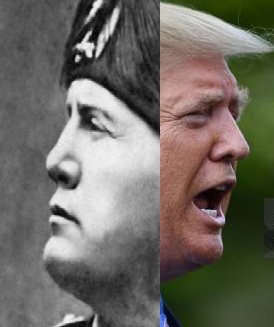
“Mango Mussolini”

I’m creating a Power Point presentation to deal with the questions. But first, here’s what I have learned:

Why Study Up?

We study fascism today because we must stop it. Let us dispense with the academic side in as few words as possible, so that we can move on to the all-important prescriptions for how to overcome the fascist threat in America today.

WHAT YOU ALREADY KNOW

The previous class on “Origin of the Family, Private Property and the State gave us a clear idea on what constitutes a class and a state. That clarity is essential for understanding anything else.

In the present study of fascism, bear in mind that it is a form of government chosen deliberately by a capitalist class as a way of administering their state. Historically, capitalists chose limited democracy because it works best with their economy; but sometimes they choose fascism. This is one of those times.

ACADEMIC AND HISTORICAL DEFINITIONS

Fascism is best described as “the open terrorist dictatorship of the most reactionary, most chauvinistic and most imperialist elements of finance capital.” According to Georgi Dmitrov, in a collection of his reports in 1935 and 1936, “Against Fascism and War,” fascism is “the power of finance capital itself. It is the organization of terrorist vengeance against the working class and the revolutionary section of the peasantry and intelligentsia. In foreign policy, fascism is jingoism in its most brutal form, fomenting bestial hatred of other nations.”

Mussolini called it “corporatism.”

Google definition:

Fascism is a far-right, ultranationalist, and authoritarian political ideology that prioritizes the nation and its leader above all else, emphasizing national unity, military strength, and the elimination of perceived threats through violence and propaganda. It is characterized by a cult of personality, a rejection of individual rights and democratic processes, and a focus on national decline and rebirth. Fascism advocates for a totalitarian state with centralized economic control, often resulting in the suppression of dissent and the persecution of minority groups.”

IS FASCISM FATAL? IS IT PERMANENT?

We nearly always study fascism by looking at Italy and Germany in the 1930s and World War II, when fascism rose, was defined, and was crushed by the capitalist countries still operating under limited democracy.

But fascism has occurred at other times in other countries. These countries used limited democracy before they became fascist and were using limited democracy afterward as well. As these countries and situations are more recent, they may be more relevant for our present study. Why did their capitalist class choose fascism and why, later, did they let it go?

“WHAT” IS LESS IMPORTANT THAN “WHY”

As you learned in “Origin of the Family, Private Property and the State,” historical developments have an economic basis. A nation’s capitalist class chooses fascism as their way to deal with their economic problems. Authoritarian fascism is less efficient than partial democracy; consequently, fascists intervene in their capitalist economy. Hitler directed the corporations involved in war production and Donald Trump is today using state power to force business decisions and buy shares in key corporations. The need for higher profit rates call for another extreme government tool, and that tool is war.

The other, perhaps more pertinent, way to explain why capitalists choose fascism is that they need it to overcome their own domestic opposition. The German capitalists allied with the Social Democrats in order to stop the growing Communist opposition. After World War II, the Indonesian capitalists murdered a million Communist voters. The Vietnamese, Chileans, Brazilians, Argentinians and others, allied with U.S. imperialism, used “the Jakarta method” to violently overcome opposition in their countries. In later periods, when socialist opposition was less of a threat, they allowed partial democracy to return as their form of government. It’s more efficient.

WHAT MARX DIDN’T TELL US

Marx correctly predicted that capitalism will fall of its own weight. For example, the worldwide depression of the 1930s convinced many progressives that capitalism was finished. What Marx didn’t predict and what he never saw, was that capitalists can conduct world wars that destroy commodities, people, and factories. Then, afterward, the survivors effectively get to leave all our dead behind and start anew!

A SHORT HISTORY OF AMERICAN FASCISM

Early American fascism evaporated almost immediately after Pearl Harbor, December 7, 1941. In the 1960s, as a response to a growing civil rights and anti-war movement internally and the beginnings of a slip in American economic domination of the planet, the John Birch Society began to take the main role in promoting American fascism. When the Republican Party under Reagan embraced white nationalism, fascism bloomed. Careful and deliberate legal, electoral, and cultural schemes, underwritten deliberately by some of the richest Americans, paid off for them in 2024 when they consolidated their hold over one of the two major capitalist political parties. They are, at present, using every apparatus, including state power, to dismantle the former method of class rule and implement autocracy and fascism.

IS THIS CRISIS A DISASTER OR AN OPPORTUNITY?

American capitalists are losing their economic hegemony over the world and their political hold on the people. Opting for fascism is a sign of their weakness and desperation. Would any set of rational and strong people choose an unstable spokesperson like Donald Trump if they were comfortable with their choices?

Fascism is not an inevitable extension of capitalism. It can be stopped and, in fact, the weakness of the capitalist class gives progressive forces their best possible opportunity.

THE UNTED FRONT IS OUR STRATEGY

A united front is a broad coalition of working class and allied forces who agree to stop fascism. It is built by a serious of concerted working class activities that draw our class forces together. Concerted activities include strikes, boycotts, organizing drives, contract fights, and more general activities for progress such as civil rights and civil liberties fights. Unions, as the strongest, most democratic, and most popular institutions in America are of special importance. Activists deliberately initiate and/or support activities in order to build the necessary national coalition. Our goal is a socialist system where everyone’s human needs come before the desires of the tiny capitalist class.

From Dmitrov: “CONTENT AND FORMS OF THE UNITED FRONT”

“We must tirelessly prepare the working class for a rapid change in forms and methods of struggle when there is a change in the situation. As the movement grows and the unity of the working class strengthens, we must go further, and prepare the transition from the defensive to the offensive against capital, steering towards the organization of a mass political strike. It must be an absolute condition of such a strike to draw into it the main trade unions of the countries concerned.”

SUMMARY

American capitalists are opting for fascism because 1) they are losing their economic hegemony over the world and 2) they are losing political control over the people. Left unchecked, they will commit greater and greater atrocities, up to and including world war. The working class and its allies, working in a united front, can stop them. Further, we can break their rule and allow the people to move up to a better system.

FURTHER STUDY FOR SCHOLARS

Recent article from Sept 9, 2025: https://peoplesworld.org/article/defining-fascism-think-unpaid-labor-slavery/

CPUSA Video: https://cpusa.org/party_voices/good-morning-revolution-fascism-what-it-is-and-how-to-fight-it/

Book Review: “The Jakarta Method” https://genelantz.org/2020/08/17/american-mass-murders/

Podcast: “Where’s our Offensive Team?” https://spotifycreators-web.app.link/e/XHtTZgkAlWb

Podcast: Building successful coalitions https://spotifycreators-web.app.link/e/z01GBekAlWb

Georgi Dimitrov: Against War & Fascism [1935]
George Meyers was my mentor, my friend, and the person I will always wish I was. It was wonderful to hear that Tim Wheeler had completed George’s biography. I bought two copies immediately and plowed into it with glee.

Book Review:

Tim Wheeler, “No Power Greater. The Life and Times of George A Meyers.” International Publishers, New York, 2024.

To the rest of the world, George was a union organizer, the very first President of the Maryland Congress of Industrial Organizations (CIO), an American soldier, and one of the leading Communists thrown in prison during the 1950’s witch hunt. But to me, he was an inspiration.

When George was working as the head of the Trade Union Commission of the Communist Party, he spent most of his time visiting union leaders and union activists around the country. I was lucky enough to fit into his itinerary a number of times during his last years. He died in 1999.

Although I have never quite lived up to it, I tried and am trying hard to live up to George’s advice on how to conduct oneself within the unions. “Disagree without being disagreeable,” he would say. I’ve lost my temper and alienated people a lot, but it would have been even worse if I hadn’t known that George was right. On our side of the class struggle, we don’t need big egos and avoidable divisions. Save your anger for the bosses.

Even more important was George’s explanation why he had graduated from being a devoted union leader to being barely-paid-at-all as a Communist. His analogy was about union contracts. “No matter what you win with a new contract,” he would explain, “You still have to win it all over again in the next one.”

In other words, working families can only get temporary victories as long as the bosses retain power. They are always eager, and eventually able, to take your victories away from you. It’s true of union contracts, as most of us old-timers can verify, but it is also true of every other kind of victory for working families.

George saw a lot more social progress than any of us alive today have seen, and he also saw it evaporating after, say, 1980. He was part of the formation of the CIO and the greatest organizing years of American history. He saw, and participated in, the defeat of world fascism. He saw, and participated in the great accomplishments of the Civil Rights Movement, the Women’s Movement, and the anti-war movement in the 1960s. He saw labor win Social Security, Medicare/Medicaid, OSHA, weekends, family leave, and other monumental changes.

He also saw Reagan rip through our rights like a ripsaw. He was spared the sight of the current Supreme Court shredding democracy and successfully attacking all the rights that working families had won, but he would have understood it. He knew that all our victories are temporary as long as the bosses are still in charge.

George Meyers taught me, and many others, a lot of things, but his teachings weren’t what affected me most. It was his demeanor. I have never known anyone so steady and calm, so contemplative, so accepting, and so positive. It amazed me. Here was a man who had been to the heights of labor success and then was imprisoned like a common criminal for years for the crime of having taught others to think. He had suffered decades of anti-communist lies and hatred. He had seen legions of weaker friends fall away.

And yet, George Meyers was the happiest man I ever met in my life. He had this great big, lopsided smile that warmed everyone who met him. George Meyer’s beaming face was a face of a better future, of a great and wonderful future. I suppose he knew that it was unlikely that he would live to see that future, but it was enough for him to know that such a future existed and that he, George Meyers, was already a part of it because of the work he was doing.

I reflected on George’s positive outlook and gorgeous smile when I heard that he was seriously ill and in hospital. I tried to understand how a man who had struggled so hard, suffered so much, and contributed so much to an apparently thankless world, could be such a happy inspiration. I think I figured it out during George’s last days when I wrote and dedicated this song, “The Winning Side”

Oh we know him when we see him
By the smile upon his face
And we all know that he loves us
Cause he loves the human race

(chorus)
No they couldn’t stop his smiling
No matter how they tried
Cause in his heart, he always knew
He was on the winning side!

Oh the bosses thought they had him
When they threw him in the cell
But they didn’t know George Meyers
He just smiled and wished them well!

When the others talk of quitting
And life’s become a trial
We know we’ll go on fighting
Cause we’ll see George Meyers’ smile!

I wrote this song when I heard that George was in the hospital. I recorded it on cassette and sent it to him. A week or so later, I learned that he had died. A month or so after that, my cassette was returned, unopened. So, as far as I know, George never got to hear his tribute. Others heard it at his wake.

Although we lost George Meyers’ corporeal presence, we’ll never lose his teachings nor his inspiration. And now, we have his biography. Thanks, Tim Wheeler!

the end

I wrote this to Communications Department of Texas AFL-CIO:

Hi Katie and tech-savvy Texans,

As Ed Sills retires, it seems to me that email blasts are on the wane. Someone needs to come up with a new standard for labor communication and start trying to get all labor activists to use it. 

We need to complete the move from our computers to our phones. A standard for labor communications would bring together the energies  presently being thrown this way and that and make a coherent and more effective system.

I think Angi DeFelippo of Tarrant County might have done more work on this. I believe she uses WhatsApp, the most popular texting service. 

It is significant that Action Network now offers free mass texting. The labor radio podcast network now has about 200 podcasters. Heaven knows how many labor bloggers there are.

What I want

For my part, I’m technologically challenged so I may not know very well what the options are, but I know what I want. I want free and open access for everyone with info or an opinion; but at the same time I want one-way, top-down, info from elected leaders. Ideally, the elected leaders would have a person or a method of monitoring the many comments (I call them blabbermouths) and discerning what really needs to go out to all activists. Serious activists don’t have time to chat all day, but some information is vital.

I understand that Telegram offers both channels with full access to chat and one-way top down channels that people can subscribe to. I think they call it “broadcast.”

I also understand that Facebook Messenger has some good features. People can chat away all day on it, but the elected leaders can “broadcast” from official FB pages or Instagram. 

I don’t think encryption matters. In fact, I’m not sure it’s even a good idea, since we want to reach the public as much as possible.

Travis tells me that his union has already developed a special app for their members. A special “Texas labor” app might be the answer we need, but I imagine that some of the free services might be as good. They might be even better because, again, we want to reach the public.

Nearly all proposals, including this one of mine, are free.

If you agree with me that we need to set a standard for labor activist communication, why not convene a meeting of labor communicators with some proposals and try to reach a decision?

In solidarity

Gene in Dallas

I’m on KNON.org and 89.3FM every Saturday at 9AM Central Time. If you are curious about what I really think, visit my personal web site

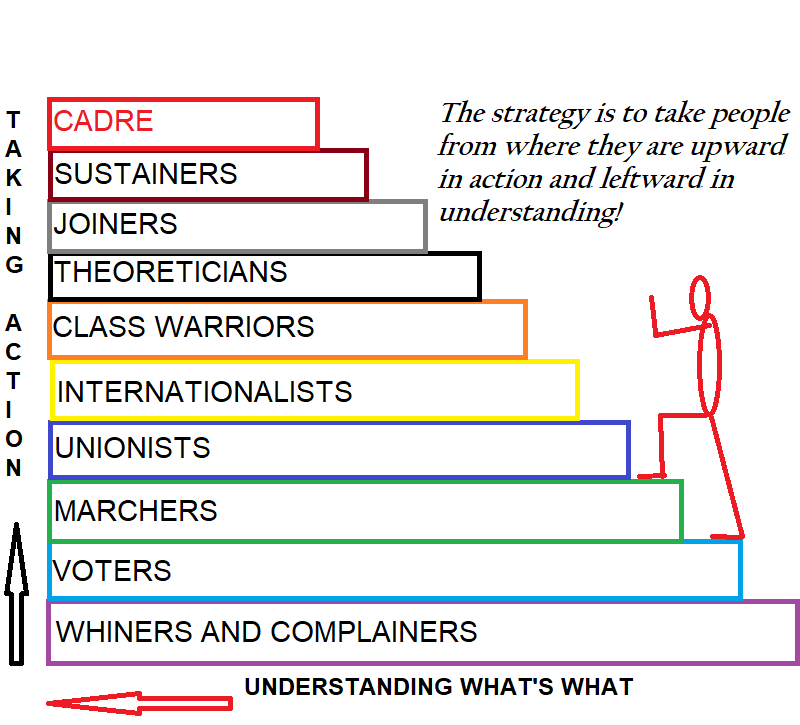
The model that guides all my activities is a picture of a person climbing a staircase from right to left. I try to help that person, or all persons I may be able to influence, make steps upward in their level of activity and leftward in their level of understanding.

At the bottom step are the millions, at least 30% of the adult U.S. population, who don’t seem to do anything nor hold any important opinions. At the top are well-informed and very active people. Just for convenience, I call the ones at the bottom step “Whiners and complainers,” while the ones at the top step are “Cadre.” I also have convenience names for 8 other steps.

The names I attach to the steps may not be important nor meaningful to everyone, but they mean something to me. I don’t think that everyone needs to make each step separately. On real staircases, some people can hop up 3-4 steps at a time. They can also fall backward, but that is rare.

According to Pew Research Center, 30% of eligible voters in America do not vote, even in the highest and most generous estimates. Their idea of “eligible voters” might be the same as “registered voters,” because other estimates say that only 69.1% of eligible adults in America were even registered to vote in 2022. If one had a higher standard — asking if people voted at every opportunity, for example — the proportion of “whiners and complainers” would be far higher and would include the vast majority of the nation.

The terrific news from the Pew researchers is that voting rates are rising to record high levels. In other words, the number of people stuck at the “whiners and complainers” level, is diminishing.

The next step in activity and understanding consists of voters. Voting requires the least thinking and the least energy of all political activity. In the 2020 presidential race, about 65% of registered voters rose to that step. As I work my model, I try to get people to register and to vote. If I succeed, then they have moved upward and to the left one step.

Just getting people to make that first step is challenging, and it’s about as far as most individuals and organizations go. But I have higher aspirations. I want people to make progressive changes in America, so I ask them to take their next step upward and to the left.

I call the third step, “marchers.” People in this category go beyond voting and participate in physical actions such as marching, picketing, sign-carrying, canvassing, rallying, phone banking, petitioning, or any other physical show of commitment. As far as I know, America has had very few mass demonstrations with more than a million people, so the estimate of people at the “marcher” step is a lot smaller than that of “voters.” But they are the ones making a difference. Even though they may not be exactly committed ideologically, a lot of union members find themselves taking such physical action during their contract negotiations.

People at the fourth step have achieved union consciousness. They may not be union members, but they have figured out that organized workers are a powerful force for good, and that they should be supported. It would be really hard if not impossible to tally up the number of people who have demonstrated their union consciousness, but I think all would agree that the number is rising. There are estimates that as high as 80% of Americans approve of unions. By contrast, hardly any politician or political entity can boast of 50%.

By the time a person rises toward the fourth step, they become aware of some strong gravitational forces pushing them backward. America’s rulers hate unions, and they control all the information sources. Consequently, people find themselves pushed mightily against union consciousness. It’s amazing that so many Americans have made this step!

Union consciousness is a mighty achievement. Not even all union members rise so high and leftward. But unions are defensive organizations and rarely act for the general good of people outside their membership. Until recently, very few unions even considered taking any foreign policy position that was not in line with the government. In 2024, the Autoworkers (UAW), then other unions, and finally the AFL-CIO labor federation began to demand a cease fire in the Middle East. By contrast, nearly all unions, and especially the AFL-CIO, supported the American invasion of Vietnam in the 1960s. Most union members, like most Americans, tend to go along with whatever the bosses tell them through their control of all information sources.

A higher step, the fifth in my model, is “internationalists.” These people have already recognized the great importance of organized working families in America and have gone further. They recognize the common interests of working families all over the world. They will face up to mighty force from the bosses, but they will actively work for justice for all nations.

The sixth step is “class warriors.” At this stage of understanding and activity, people support working families as the only category of people capable of standing up to the bosses. They recognize the reactionary nature of the bosses and their system, and they know that our profit-based employer dominating system needs to be changed. They may have, and probably did, start on this staircase with something else in mind.

In my own case, I took my first steps upward and to the left because of school reform. Back in the 1960s, I was an advocate for children and took action to end corporal punishment in the schools. To this day, I still have strong feelings about educational reform and would like to spend my time and energy on that topic — but I realized along the way that school reform is not all that’s needed. I know people who began with gay pride, election reform, civil liberties, and, especially, civil rights before they rose on the staircase to see what is really wrong and what really must be done.

I made “theoreticians” my 7th step. Probably, everybody is a theoretician in one way or another. I just wanted to show that there are good class warriors who aren’t applying all of their best thinking to every task. Those who are doing their best thinking (I might have called them “anguishers” because the term fits me so well) made it to the 7th level.

Joiners, the 8th step, are people who have recognized that the only way to make progressive change is by working together. They’re already doing great activities and thinking, but they have realized that it is going to take a concerted effort with other like-thinking activists to make progressive change.

I made a special step for “sustainers.” The term comes from fund raising and means people who donate regularly. But there are other ways to make sure that a progressive organization thrives. The problem is that some of us think “joining” is a passive verb. The sustainers at the 9th step are members who take responsibility for their organization.

Finally, at the tenth step and top, are “cadre.” It’s not a word that is well understood, but there is no better replacement. To some, it means, “dutiful followers,” and to others it means “outstanding leaders.” In truth it means both and everything in between. Cadre members are the absolute best leaders, and the absolute best followers, depending on what is needed. They are hard to find.

Not a lot of people find their way to the top of my staircase. I encourage them, but my effect is relatively insignificant. What propels them upward and leftward is the truth. Like a wind at our backs, the truth pushes us toward understanding and activity. All an individual needs is a little bit of courage and, sooner or later, all will rise.

–Gene Lantz

I’m on KNON.org and 89.3FM radio every Saturday from 9 to 10 Central Time. If you are curious about what I really think, check out my personal web site at https://www.lilleskole.us.

People are frustrated with one another and finding it difficult to carry on conversations. My liberal friends think that the MAGA Republicans have lost their minds and aren’t worth talking to; consequently, they just make it worse.

Let’s try to understand the problem and then find a solution. Time Magazine said that a recent poll shows Biden and Trump voters are living different realities. That’s more an expression of frustration than a helpful description. There are no different realities.

But there are lots of people, on both sides of the argument, who depart from reality. In philosophy, there are basically only two main schools: one is based on feelings, faith or superstition and the other is based on reality as ascertained through our senses. We could also call the two schools “religious” and “scientific,” or, and this is my preference, “Idealism” and “materialism.” The materialist assesses their choices and asks “What is likely to happen with this or that course of action?” The idealists consults their feelings.

A materialist cannot usually win an argument with an idealist because they are using different world views. However, the good news is that reality is the great teacher and will eventually prevail. All of us are somewhat idealistic and somewhat materialistic, but in things that matter, materialism tends to erode idealism away.

The answer to the problem is civil discourse. It may be true that you cannot win an argument with someone who doesn’t believe in facts, but it is also true that you can keep communications lines open while the facts chip away at the fantasies. Civil discourse is America’s only hope for overcoming the polarity that is driving us to a violent end.

I notice this a lot because I am a talk show host on KNON.org and 89.3FM in Dallas (9AM Saturdays). People call with some of the most outrageous fantasies and outright lies. I’m well aware that I probably cannot out-argue them. But, if I keep the discussion civil, I can make my case for the hundreds, perhaps thousands, of radio listeners. Every caller on my show should get a chance to briefly make their point, and, if there is time, I get to respond. When somebody tells outrageous lies, subsequent callers can usually point it out, so the radio listeners benefit from the entire discussion. Yelling at the reactionaries who call, or cutting them off, has a big negative effect on the rest of the listeners. It makes the polarity worse.

–Gene Lantz 6/9/24

Book Review (Partial): Medhurst, John, “No Less Than Mystic. A History of Lenin and the Russian Revolution for a 21st Century Left.” Repeater Books, London, 2017

Somebody sent me a book anonymously. The package just said “Pearl Books” Wisconsin. I don’t know if everybody is getting one or if I was singled out. Even in paperback, this one costs $19.95 so whoever sent it must have either been strong of purpose or just has a lot of money. I get a lot of books because book salesmen mis-read “Workers Beat” the title of my radio show, and send me business management stuff. They think it’s “Beat Workers,” I guess.

Nevertheless, I liked the “21st Century Left” part of the title, so I’m trying to read it. Also, it led off with an interesting quote, “The Marxist doctrine is omnipresent because it is true.” –V.I. Lenin.

But I got really worried as soon as I got to the top of the second page of the Introduction: “In the end I suggest that that anti-capitalist writers such as …Noam Chomsky… have more constructive options to offer the left today than do the sages of Bolshevism.” I flipped back to the cover and, sure enough, there was a flagrant endorsement from the world’s champion armchair socialist himself, Chomsky!

Determined as I am to hear both sides of the story, I’m still trying to read it and have accomplished all the way to page 127 now. There are 467 to go. It’s pretty easy to see, from the git-go, that the author is against all revolutionaries and for all back-biting intellectual splitters. It reads very much like a treatise on theology – lots of name dropping, obscure quotes, and hardly any commitment to a course of action.

Since the author rules out revolution in the first few pages, I was eager to see what he does recommend, so I skipped to the last chapter. It wasn’t exactly clear, but he seems to favor early anarchism – the idea that capitalism has an on/off switch that needs no process. He likes the occupy movement, whether on the large scale like the Zapatistas in Mexico or the small scale such as what occurred recently in America’s parks and public places. He likes employee stock option plans in which laborers own a controlling stock in (usually small) businesses. He likes the word “libertarian,” but I don’t think he means America’s Libertarian Party. I think he means “more liberal.” Oh yes, I nearly forgot, he favors the counterculture idea – in which no revolutionary activity, or any activity at all, is required because the bosses are about to capsize on their own and all we have to do is grow our hair long, listen to music, and recycle our trash until they’re gone. All of the people he quotes that I recognize were gradualists who believed that the bosses will stand by while we elect revolutionary socialists to replace them.

When it suits him, the author finds anti-revolutionary quotes from Rosa Luxemburg or even Leon Trotsky to discredit the people who actually did make a difference in their lifetimes.

As I spent considerable time as a counter-culturalist and, later, as a Trotskyite, I felt that I had a special need to set the record straight on Luxemburg and Trotsky. Both of them were lifetime revolutionaries with slightly divergent views on how to overcome the bosses. Luxemburg, in fact, wrote what is probably the best refutation of people like Medhurst, the present author, in her short book “Reform and Revolution.” She spoke the truth and paid for it with her life. She’s essential reading.

I don’t like dissing somebody’s thinking without offering an alternative, so let me explain a short version of the actual situation. It begins by asking “what’s wrong?”

What’s Wrong?

Nothing is wrong. Everything is going swimmingly – but only for the bosses. The people who are running most of the world are running it very well, from their point of view. Working families may not like constant wars and environmental disaster, but oil stocks are skyrocketing. Racism and police misconduct may be ugly from our point of view, but they have always paid off nicely, from slavery thru Jim Crow to the present state of things, for our employers. Mass murders may be unseemly to us, but they are just fine for arms manufacturers. For our bosses, hunger and disease are just the cost of doing busines

Anybody who is thinking clearly will see it. Working families’ problems come from our bosses, and the only long-term solution is to remove them from power. I figured that out without any help from Marx, Engels, Lenin, Trotsky, Luxemburg, Mao Tse-Tung, Che Guevara, Patrice Lumumba or Fidel Castro, and certainly not from Noam Chomsky. In my own case, I was simply an elementary school teacher who thought, at first, that the world would change if I could end corporal punishment. When I paused being a knee-jerk activist and thought about it, though, I realized that America’s system of public and private education has not “gone astray” or “missed the point.” They may not always be good for working families, but they function pretty well for the bosses. The same is true for all the other of society’s “ills.”

What I couldn’t figure out, and, like most people, what I’m still grappling with, is what to do about it. History’s great revolutionaries may have had minor differences in their strategies and tactics, but they all agreed that the bosses need to go. In some parts of his long book, Medhurst hints that he thinks so, too, but, for the most part, his contribution provides comfort for those who don’t really intend to do anything at all.

One can live a long and comfortable life writing books about the need for change as long as they stay away from doing anything, or advocating anything that might work. They can advocate for change – heck, they can even get big financial grants from the bosses for their projects – as long as no real challenge to the bosses is involved.

Clever writers can rise to fame and fortune if they defame the people and ideas that might actually make a difference. The armchair socialist, like the cockroach, will survive after all.

–Gene Lantz

I’m on KNON.org’s “Workers Beat” radio talk show every Saturday at 9AM Central Time. My “Workers Beat Extra” podcasts usually go up on Soundcloud every Wednesday morning. If you are curious about what I really think, look at my personal web site

Book Reviews:

Two books on MacArthur and Truman

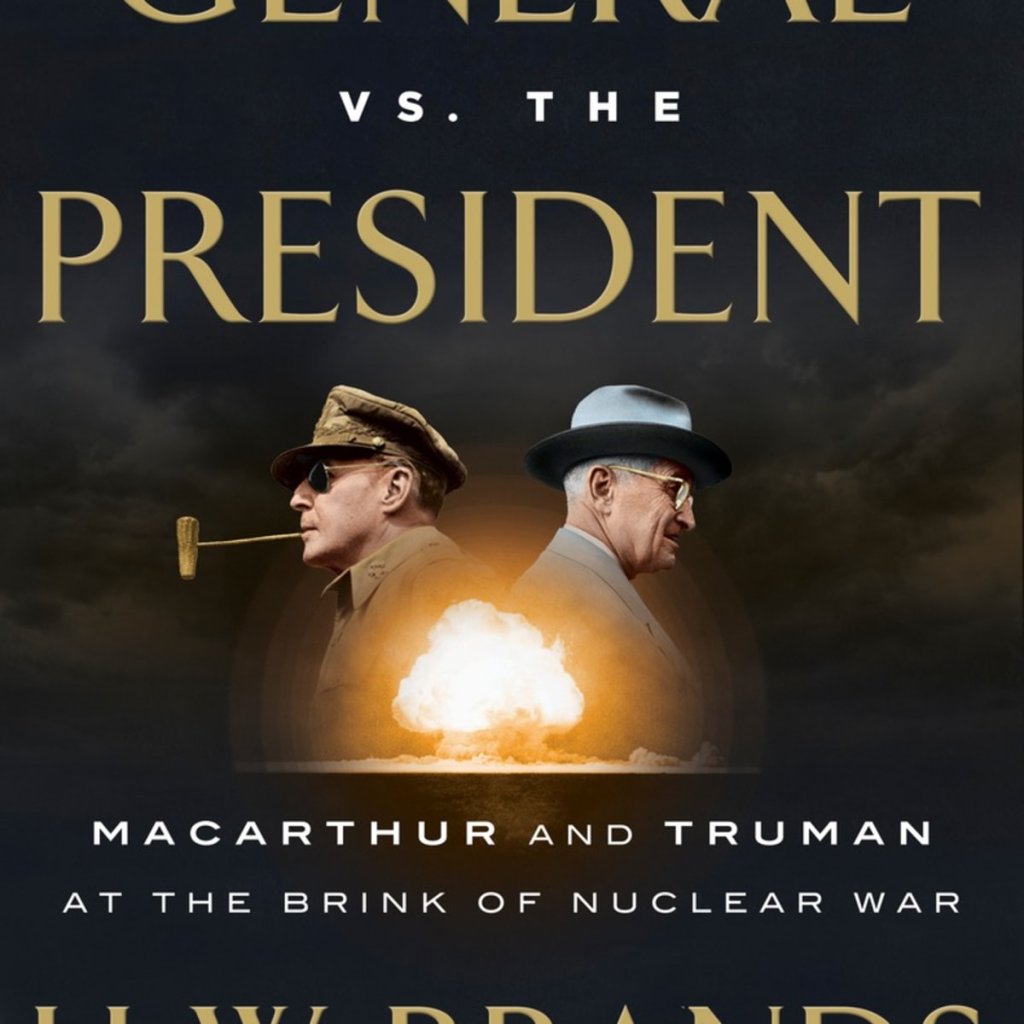
H.W. Brands, The General vs the President. MacArthur and Truman at the Brink of Nuclear War. Doubleday, New York, 2016

William Manchester, American Caesar: Douglas MacArthur, 1880-1964. Little, Brown and Company, New York, 1978

Readers who want to know how the Cold War was fine-tuned will find good discussions in these two books. However, both books are based on questionable assumptions that undermine their historical value. Also on the downside, much of the information in the 2016 book seems to have been taken directly from the 1978 book, or from the same sources. I think that both MacArthur and Truman wrote autobiographies that provided much of the original information, but, of course, without a critical eye.

I recommend getting some familiarity with the Korean War before reading these books. Wikipedia has a pretty good summary: https://en.wikipedia.org/wiki/Korean_War.

The two authors do not really explain the war. Even worse, they buy uncritically into the U.S. State Department version of what happened. The Americans were heroes, the South Koreans were incompetent, the North Koreans and the Chinese were evil and aggressive imperialists.

The differences explored in these books were not the differences between the U.S. and North Korea, the U.S. and China, the U.S. and the U.N. nor the U.S. and the Soviet Union. The only differences explored are the minor differences between committed anticommunists, especially Truman and MacArthur.

MacArthur, everyone in the book and the authors agree, was a brilliant military strategist. He was also an arrogant gloryhog who wanted to be President. Truman was an outstanding politician. Various other generals and politicians exalted MacArthur, but eventually came around to Truman’s side. The difference between the two main protagonists had to do with the conduct of the Cold War. Basically, MacArthur was ready to risk everything for a military victory against all communists; Truman wanted military containment of the communists while draining them economically. Truman’s version is the one we lived with, but he had to fire one of the most popular military leaders in modern history to establish his program.

MacArthur wanted to destroy the Chinese Army. Truman and his cohorts thought that a long-term effort to destroy the Soviet Union was preferable. The American people were divided, as we are now.

–Gene Lantz

I am on KNON’s “Workers Beat” radio talk show every Saturday at 9AM Central Time. Programs and my “Workers Beat Extra” podcasts are posted on soundcloud.com on Wednesdays. If you are curious about what I really think, check out my personal web site

I’ve seen several recent articles worrying about declining fertility rates. Two of them caught my eye today:

https://www.washingtonpost.com/world/2021/11/25/india-birth-rate-replacement-population/

https://www.washingtonpost.com/opinions/2021/11/25/fertility-rates-keep-falling-there-are-no-easy-solutions-fix-it/

In one of them, government spokespersons complain about the falling birth rate in India, the worlds most populous country. The other lamented falling birth rates in the United States, the richest. Both of them complained that economies would suffer if people didn’t rev up their baby production. Both of them offered no explanation for declining birth rates except to say that people just don’t want kids like they used to.

Do People Want Kids?

People are hard-wired to have children whether they want to or not. The difference between today and the past is that more people have a choice. Thank Margaret Sanger for promoting birth control. Thank millions of women for fighting for their rights. The fight is certainly not over, but women have made some gains, and one of those important gains is that they get a little bit of say-so over when and whether they will have children.

At the risk of offending the religious and anti-woman crazies, one could make a strong case that people don’t really want children, or at least they don’t want a considerable number of them. Start with the scandalous treatment of foster children in Texas, for example. The Texas Tribune says there are 28,000 of them. Many have no foster “families.” Some of them sleep unprotected in Child Protective Service offices!

The United States has 12,000,000 children living in poverty, according to The Anna E Casey Foundation 2021 report. Texas has 1,401,000, or 19% of its total. Texas ranks Texas 46th in taking care of children. It has the most severe anti-abortion law on the books. Texas, one might conclude, has no use for children after they are born!

Is More Population a Good Idea?

At last count (2020), this planet was supporting 7.753 billion human beings. It was 7.673 billion the year before. Some of them are at war. Some of them are dying from disease. Some are being killed by the effects of climate change. Many of them are transient immigrants. 1 in every 10 is undernourished.

Book Review:

Campbell, Randolph B, “An Empire for Slavery. The Peculiar Institution in Texas 1821-1865.” Louisiana State University Press, 1989.

I had Dr Campbell on KNON once, years ago. He was teaching at North Texas University in Denton.

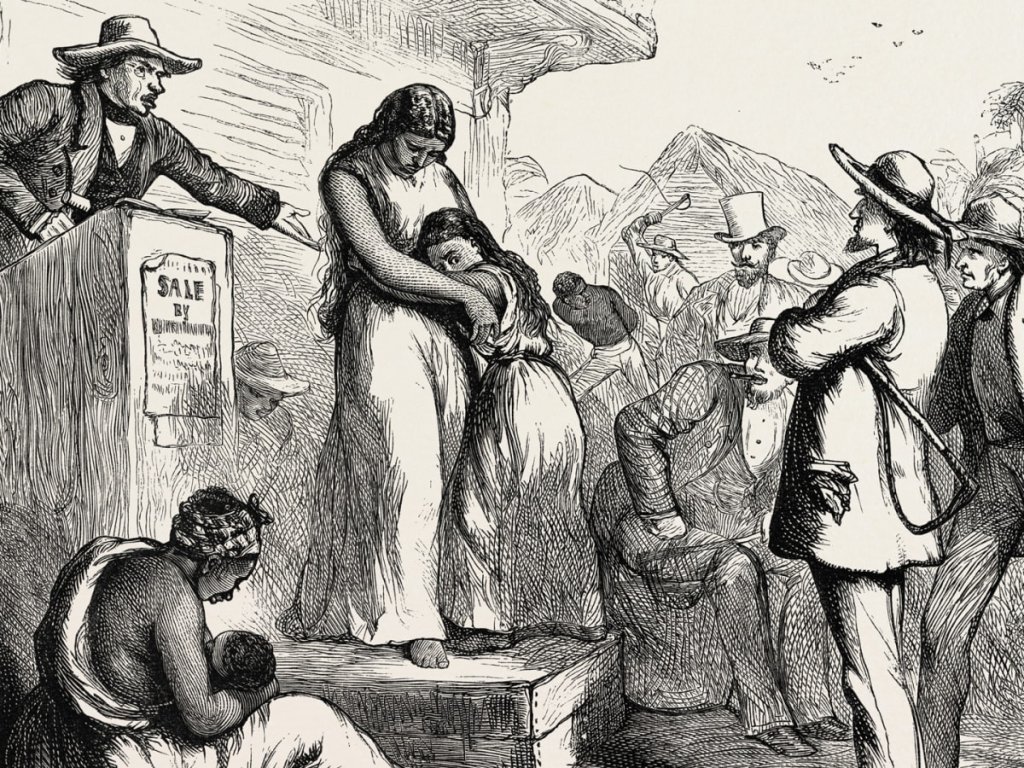
Dr Campbell has strong factual basis for his description of slavery in the Lone Star state. There are 15 pages of bibliography notes that include census figures from 1840, 1850, and 1860 as well as the recordings that were made in the 1930s by former Texas slaves. He had judicial proceedings against slaves and civil cases concerning squabbles between one “owner” and another – as well as squabbles over slave “rentals” and “mortgages.” He has a lot of wills in which “owners” divided their “property” among their heirs. Campbell knows his subject.

This is a dispassionate work of history, not a polemic against slavery nor one of the many apologies for it. He just tells what happened, and that, by itself, makes riveting reading. Given the many misleading accounts of Texas history that exist and are pushed by Chambers of Commerce and politicians, this one is a genuine relief. By looking at the facts, one can finally see through some of the mythology and deliberately misleading versions. Certainly in reality, Texas slaves were not happily playing their banjos and loving their “masters.”

There are some revelations. For example, every Texas child knows that Stephen F Austin, “The Father of Texas,” spent considerable time in Mexico as a representative of his group of settlers. What I hadn’t realized is that a lot of Austin’s Mexico mission consisted of pleas to the Mexican government to allow slavery. During the entire period that white settlers poured into Mexican Tejas, slavery wasn’t legal. The law just generally wasn’t enforced, not for ideological reasons but simply because Tejas was rough country and far away from Mexico City. Many of the new settlers brought their slaves.

Campbell takes a position on the role of slavery in motivating the white settler’s eventual rebellion against Mexico. He says that it was certainly a factor, but not the immediate cause. He does note that the constitution of the Republic of Texas strongly favored slavery, as did state laws after Texas joined the United States. At the beginning, and from time to time, Black freepersons were not allowed anywhere in Texas. After Texas joined the Confederacy, manumission was outlawed.

As to the theory that white settlers intentionally moved to Texas in order to steal the land from a weak Mexican Republic, Campbell offers no opinion in this book. This is just about slavery.

Speaking of laws, Campbell explains that slaves were not legally equal to other forms of “property.” The law had to recognize that slaves were people as well as property. Slaves endured all kinds of punishments, including legal jailing and execution. Dallasites who have read the transcript of the trial of Jane Elkins, the first Texas woman officially executed, may have wondered why it included her dollar value ($700) along with the rest of the proceedings. Campbell says that the “owner” of executed “property” was legally entitled to half their “value.” Apparently, someone got $350 from the county when Jane was hanged.

It is interesting that lynching was never popular in Texas until after African Americans were freed. There were no laws protecting them from lynching, but there were plenty of laws protecting their “owners” from losing money.

Even though I know that farmers regularly try to upgrade their livestock through selective breeding, it had never occurred to me, until I read to page 154 of this book, that some “owners” did the same thing with their human “livestock!” Some male slaves were rented out to stud!

Did slaves and abolitionists fight for freedom in Texas? Well, Campbell estimates that about 4,000 slaves managed to escape to Mexico or to a few friendly native tribes, but most slaves just tried to “get by” with things the way they were. Many of the Germans who migrated to Texas after 1848 did not use slaves, some opposed it, and at least one editor, Adolph Douai of San Antonio, made a public fuss, at least for a while. Seventy percent of free Texans did not own any slaves, but they voted the slaveowners into all important offices; consequently, we may assume that they took no stand against it.  Slavery was apparently considered an economic question, not an ideological nor moral one. During the Civil War, Campbell says that 98,594 African Americans took up arms with the Federal Army. Only 47 of them were from Texas. The main reason is that Federal forces never invaded Texas; consequently, no Texas slaves were freed before Juneteenth.

Was slavery worse in Texas than elsewhere? Campbell says there is no evidence of it. As one reads of the horrors endured by Texas slaves, we can take no comfort from the idea that it was better elsewhere. Campbell says that the treatment of slaves, which varied greatly from “owner” to “owner,” was nevertheless about the same throughout the South.

–Gene Lantz

I am on KNON’s “Workers Beat” radio talk show every Saturday at 9AM Central Time. Programs and my “Workers Beat Extra” podcasts are posted on soundcloud.com on Wednesdays. If you are curious about what I really think, check out my personal web site