Archive

politics

Book Review

Billionaires Are Pulling America’s Strings

Mayer, Jane: Dark Money. The Hidden History of the Billionaires Behind the Rise of the Radical Right. Doubleday, New York, 2016.
dark_money600x350px

There’s a great quote at the beginning of this best-selling book:

“We must make our choice. We may have democracy, or we may have wealth concentrated in the hands of a few, but we can’t have both.” –Louis Brandeis

This wonderful book solves a number of contemporary mysteries:

  • If Americans are better educated and better informed than ever, why have our political ideas lurched toward ignorance?
  • If we understand economics better than ever, why is wealth disparity so awful?
  • How can our commentators and professors afford to say patently ridiculous things without losing their livelihood?
  • If we all have to live on this planet, why are we polluting so much?

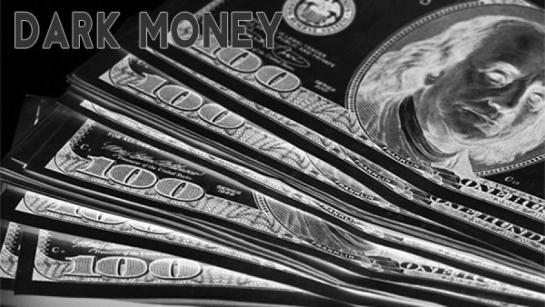
The answer is dark money. A carefully crafted network of billionaires has bought off politicians, economists, professors, and commentators and turned them into ventriloquists’ dummies who repeat and repeat and repeat the things that billionaires want said. They have gone beyond buying a few columnists and professors. They own think tanks, newspapers, information networks, Radio & TV networks, professors and entire faculties, individual politicians and entire state legislatures. Their effect on the federal government is substantial.

Their contributions to this underhanded scheme are more or less legal and even tax deductible!

The main architect of this secret and underhanded network is named Charles Koch. Many years ago, he took up his father’s interest in right wing organizations such as the John Birch Society. As the years passed, Koch and his billionaire co-conspirators became better and better at influencing legislation and public opinion. It’s all detailed in Jane Mayer’s book.

Although most of their maneuvers result directly in more money for themselves, the perpetrators generally claim to be ideologically motivated. The book’s author, in my opinion, gives them too much credit in this direction. She usually refers to them as “arch conservatives” or “libertarians.”

I wouldn’t characterize them so generously. If Benito Mussolini was correct when he defined “fascism” as simply “corporatism,” then “fascists” is the more accurate description of Koch and his cronies. Nazi propagandist Joseph Goebbels would be proud of them!

In that regard, they are not completely in step with the entire ruling class of America, which has so far not elected to rule through fascism. They still rely on the Republican and Democratic parties to keep our limited democracy working for them. The Koch network operates primarily through the Republican Party, but not completely. They maintain their independence and their “corporatism” fascist goals. It would be interesting to see if they completely try to take over the Republican Party, as seems to be their goal, or if they try to establish a formidable fascist party.

Whichever way they go, a united and well informed progressive movement is the solution to the threat they raise. This book goes a long way toward that solution.

–Gene Lantz

Pictured are today’s harvest of nails from the streets around my neighborhood. Actually, one of them turned out to be a bobby pin. I’ve been picking up nails since I was 10. Originally, I was looking for coins. I don’t know how many thousands of flat tires I’ve saved my neighbors over the years.

nails I picked up

OK, one of them is a bobby pin

Long ago, there was a religious TV show called “The Christophers.” Here’s their theme song:

“O if everyone would light just one little candle…

What a bright world this would be!”

Little Things Are Nice, but Big Things Matter

I don’t recommend going around doing nice little things. I wouldn’t even pick up the nails if I weren’t exercising to begin with. If you give $5 to a panhandler, does that mean it’s OK to support drone warfare? If you go to church on Sunday, can you rip off your employees all week?

Everybody’s heard the quote about giving a man a fish and teaching him to catch his own fish. Here’s a similar quote:

“When I feed the poor, they call me a saint.

When I ask why the poor have no food, they call me a communist.”  — Dom Helder Camara, Archbishop of Recife, Brazil

Billionaires Do Charity

Billionaires believe in charity. They even donate to it, although proportionally much less than poor people do. Billionaires also believe in government handouts for the rich and austerity for the poor. It’s easy to get confused when we’re talking about little things.

Americans need a change. A big change, not just a little one. That’s what we should be working on.

–Gene Lantz

How do you decide whom to vote for? How do you decide anything? I’m reading postings that say “If Bernie isn’t the candidate, I will never vote for Hillary.” or “If my candidate doesn’t get the nomination, I’m not voting!” and things like that. How did they decide those things?

voteclass

How Do We Decide Anything?

Once, I was astounded when I was taking a class in business finance. The homework assignment was whether to buy factory machine A or machine B. It dumbfounded me. The astounding thing was when I found out how the decision was made in business. They figured cost, production, and expected life of each machine. Whichever one made the most money over a period of time was the right answer.

In other words, the decision was made based on the probable outcomes of the choices. If you support this person and he/she wins, what do you think will happen? If you support that person and he/she wins, what do you think will happen? If you support some other person and he/she doesn’t win, what do you think will happen?

It’s Not Whom You Love

It’s not a question of whom you love or whom you hate, who gives you the creeps and who makes you feel all sunny. None of the candidates are perfect, but you still have to make a decision. Your decision will have likely consequences, outcomes. Some of those outcomes are better than the others. That’s rational decision making.

Progress Comes from United Working People

The best political advice I ever got was “think of the class.” How will the working class fare under this or that political leader. And don’t try to convince yourself that the working class has no interest in elections. We have an interest in every arena of struggle, a big interest — and it’s usually the opposite of the bosses’ interest.

End of Sermon

Put your emotions aside, make a rational decision about what to do, then do it. Afterward, you can re-evaluate and do the same thing or something else. Whatever you decide, rationally.

–Gene Lantz


Some would say that World War III is overdue. If one looks at the basic reasons for the first two world wars, one might get pretty worried about the present situation. bombbang

There have been wars as long as one organization of people has had something worth stealing by another organization. Even some of our classically peaceful, nature loving Native Americans raided one another from time to time.

Capitalism Changed Everything

But capitalism and the modern capitalist nation changed everything, including the nature of war. By 1914, war wasn’t about one-upping another nation, exacting revenge, or even acquiring territory. The first world war came about because the industrialized nations had economically taken over the entire world. The only way any of them could continue to expand was at the expense of the others.

And capitalist economies have to expand. The simple way to explain that may not be theoretically correct, but it’s easy to understand: To make a profit, the capitalist has to sell his product for more than it cost to make it. The workers within his own economy only have what he paid them, which was less than his necessary selling/buying price. So his economy has to grow, somewhere, somehow.

For a better, more exact explanation of imperialism under capitalism, read Marx or, even better, Lenin.

World War II may seem more complicated because of the way they maneuvered to destroy the Soviet Union, but it had essentially the same cause. What did Hitler want? More “room,” Liebensraum!

Americans Have Had It Easy

Most Americans alive today grew up in a very strange period of history. The United States came out of World War II with almost the only productive power on the planet. American capitalists literally dominated everything. Here at home, it seemed like a natural state of affairs, but it wasn’t. It was a weird period, and it distorted our point of view.

By the early 1970s, the world economic situation was different. American cars no longer dominated the streets of the world. Volkswagens and Hondas appeared in our home towns. People laughed at first.

But President Nixon’s administration re-organized the world monetary system to deal with the new situation. The United States continued to dominate and continues today. But when the U.S. capitalists lost their war in Vietnam, a trend of change was apparent to more people.


Where Will They Expand To Now?

Today, the U.S. continues to dominate economically and militarily. But, on the economic side, others are approaching. The Chinese have the second largest economy. The combined Europeans and the Japanese are in competition, too. Where will any of those big capitalist economies expand?

The U.S. is bombing like crazy to hang onto their oil-rich countries. The Chinese are actually building new islands in the South China sea. There are no answers to the questions there. Each of the three major capitalist centers are building trade associations to try to improve their economic clout in opposition to the others.

So, Why No Third World War?

So far, the competing capitalists have only attacked their own workers. In driving down production costs and raising profits, they have slammed us with austerity programs and hit themselves with generous tax giveaways. In theory, they can only go so far with that. Once they have reduced their working class to slavery and starvation, no further profits can be made.

Sane people will never start a Third World War. The first and second world wars took place before the capitalist governments had the ability to destroy the world. Even if the economic conditions that underlay the first and second world wars were met, no rational system would start a third.

The problem is, capitalism isn’t a rational system.

–Gene Lantz


My friend Glenn Scott at a democracy rally

My friend Glenn Scott at a democracy rally

We live in a limited democracy. Its extent is constantly being re-defined by class struggle. When the nation began, white male property owners aged 35 and up ran everything. Slaveholders got extra clout. We came a long way, and every inch was a fight. I’ve written about democracy  before.

The fight for democracy is being led from North Texas by Congressman Marc Veasey. Local activists stand strongly with Veasey on issues such as unfair redistricting and voter suppression. Both are supposed to get decisive court decisions this summer.

Unions Are in the Fight

CWA Notes reports on a news conference in front of the White House. CWA, Public Citizen, Common Cause and other democracy allies called on President Obama to issue an executive order requiring federal contractors to disclose their political spending and to push Congress to take action to repair and strengthen the Voting Rights Act.

“Wall Street’s deregulated, anti-union, trickle-down, one percent economics are being propped up by out-of-control campaign donations to our elected officials,” said CWA President Chris Shelton. “Americans deserve a democracy that works for all Americans – one in which everyone has an equal voice and elected officials are accountable to the people, not the wealthy.”

The Communications Workers are inviting people to join Senator Warren in a telephone town hall meeting June 15 at 7P. The Take on Wall Street campaign will be explained and volunteer efforts will be solicited. That’s organizing for democracy!  Click here to register for the telephone conference.

The Election Campaign has Revealed a Dark Truth

Both the Republican and the Democratic presidential campaigns drew back the curtain shrouding the basic secret of the two-party system: neither party is actually very democratic. The bosses have rigged the game. As I have written before, we may have already entered the early stages of the next giant historical step for American working people — the formation of a workers party.

That would be a lot more democratic. We’d be able to move a few inches in the right direction after several decades of lost ground.

What About Real Democracy?

As long as there is inequality, there can be no complete democracy. The worse the inequality, the more democracy suffers. That’s what has been happening since about 1980 in America — growing inequality and diminishing democracy.

If we want a strong, lasting democracy, we are going to have to do something about the vast inequality that is subverting democracy today. The good news is that more and more people are figuring that out and joining the fight!

–Gene Lantz


walnolangeorgebusted Traditionally, it’s easiest to organize economic units working under the same employer in more or less the same vicinity. It’s even better, as the auto workers showed us, if they work on assembly lines, so that just a few missing workers can stop production.
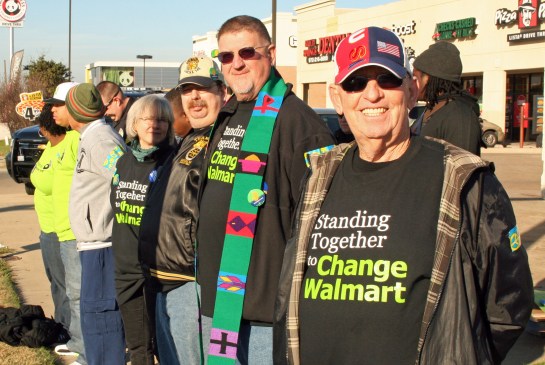
People who are scattered out, working under multiple employers, aren’t so easy. Until recently, they were considered pretty well impossible to organize. But some groups, such as For Respect at Walmart, are organizing the impossible. In the photo, right to left, there’s a retiree activist, a preacher, a Teamster, then a housewife. The rest are low-paid part-time Walmart workers. They’re all in handcuffs waiting to be taken to a police station.

Once I rode a bus to a Farm Workers action in California. The other occupants were home health care workers. If there were 50 of them, then they had 50 employers, most of whom were old people with limited money. And yet, they were organized! The Service Employees organized them by targeting the state agency controlling their working conditions rather than the 50 employers!

All over America today, low-paid part-time food service employees are being signed up for the “Fight for $15” minimum wage movement. They’re also signing up members of more substantial unions, students, and a whole lot of well-intentioned, high-intelligence people who don’t otherwise have anything to do with food service.

The new progressive leadership of the AFL-CIO is emphasizing its constituency groups. In most cases, people don’t have to be union members to join. The connection to organized labor makes them much more powerful.

Our traditional methods of organizing are way out of date. Revolutions are being organized today with social media, and American organizers are learning how it’s done. The internet changes the very nature of organizing.

If we are going to save the planet and ourselves, every worker needs to be organized. Every worker can be organized.

–Gene Lantz

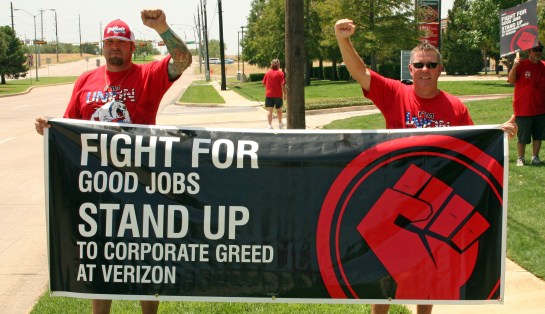
Around the nation, people are celebrating the 2016 Verizon strike. I don’t usually celebrate until the affected members have voted on the contract offer, but there are important lessons to be learned here. Americans can use strikes to win, not just a little bit but everything!

Here’s what “Gawker” had to say on its web site about Verizon:

“Strikes have always worked. Strikes still work. Pro-business forces like to deride unions as socialist parasites, but strikes are, in a sense, one of the purest free market actions that workers can take: the refusal to sell

verizon strikers

The public is asked to join in — and they should!

labor at a price that is deemed too low. This has the effect of raising the price of labor. Though “Economics 101″ idiots like to pretend that the free market will always magically produce the perfect wage for every job, the reality is that working people-people with less money-are always at a disadvantage when it comes to asserting the leverage necessary to raise their own wages, because they can’t afford to stop working and lose a paycheck. This is the biggest hurdle that strikes have to clear. It’s hard for working people to leave work, demanding better wages and working conditions. It’s a gamble. But it tends to pay off.

‘As much as workers need wages, businesses need labor even more. The free market has not raised your wages in decades. The government has not raised your wages in decades. You need to raise your own wages. Organize. Then strike. It’s always good to be reminded that it works.”

Working People Have Few Weapons

The ability to withhold our labor, either through strikes or slowdowns, is the strongest thing we can do. Nearly every tactic in our arsenal is just a way to lead up to a strike or a slowdown. We need to think seriously about how we can use our main power.

Do Strikes “Still Work?”

A lot of people might disagree that “strikes still work.” If you look at the Bureau of Labor Statistics on strikes, you can see that strike activity dropped tremendously in 1982, and there have been fewer than 100 big strikes in the entire nation in the years since then. In 2015, there were only 12. In 2009, when the recession was at its worst, there were only 5! In 1952, there were 470!

What Happened in 1982?

Reagan happened in 1982. The spokesperson for General Electric and corporate America in general dragged out an obscure court ruling, NLRB v. Mackay Radio, that cut away most of our legal right to strike in America. He used it to “permanently replace” the Flight Controllers. Unions have to think long and hard about conducting an economic strike now, because the company can hire scabs and keep them permanently.

The Reagan presidency signaled the end of any hope of labor-management partnership, even though many labor leaders clung to their illusions. Government was clearly on the side of business, and both of them were against American workers!

Why Bring It Up?

There are more than one kind of strike. I don’t mean the legal difference between an “economic” strike and an “unfair labor practices” strike. I mean that there are strikes against companies and there are strikes against governments.

Strikes Against Governments?

The idea of a political strike to change government policy is well known in Europe, and it used to be known here in America. The great worldwide strike of May 1, 1886, is celebrated all over the planet, and it was centered here, in Chicago! It was a political strike to get government to set an 8-hour day. The “student moratoriums” and the “Chicano Moratorium” of the 1960s were political strikes.

We usually treat the Industrial Workers of the World (IWW) as part of our illustrious union history. But they weren’t exactly unionists. They were revolutionaries.

The IWW intended to organize all workers, or at least a large enough percentage of workers, to be able to shut the entire nation down. They weren’t planning it so they could get a raise or a 10-minute coffee break. They intended to overcome capitalism and institute socialism in America. If only the workers had known about it, they might have won; but the bosses found out, too.

Economic and Political Strikes Both Deserve Our Support

In a way, every little strike action in America is a dress rehearsal for something much more profound. The Communications Workers at Verizon asked for, and got, a lot of public support and participation. The Wal-Mart workers strain to get everybody’s help, as do other groups from time to time.

Participating in a strike for better wages and participating in a strike for government change — both — are good training for everyone. They result in a better organized, better informed, more capable, stronger progressive movement.

Let’s Daydream Together about Political Strikes

Suppose someone was able to unite the progressive Americans who really want fundamental change. Suppose they had the technical know-how and the access to internet servers to organize us by the millions. That’s not as crazy as it sounds. Bernie Sanders just did it this year!

Suppose those millions agreed on some fundamental demand. It might be raising the minimum wage to $15/hour. It might be cutting working hours. It might be saving the planet. Anyway, suppose they came to agree on something.

Then suppose they set a date, for example May 1, 2017. Then suppose they said that date would begin a “virtual” strike. Nobody would actually stop working, but people would declare their willingness to participate. We’d learn from that, every time we did it.

Eventually, suppose somebody examined the data from the “virtual” tactic, found it very good, and then actually called for a do-or-die nationwide political strike until the goal had been met. You see where I’m going with this?

–Gene Lantz