Archive

democracy

All democrats want unity. Bernie Sanders and his supporters want to beat Trump, but they want to do it by unifying around a progressive program. I can’t understand why anybody would surrender that vision before the primaries.

The Democratic Party’s final decisions on candidates for 2020 is at hand. Bernice Sanders is quoted in a recent AP News story: “Let me say this so there’s no misunderstanding,” he told a rally in Indianola, Iowa. “If we do not win, we will support the winner and I know that every other candidate will do the same.”

But the article by Will Weissert  is headlined, “Sanders calls for unity, but his supporters have other ideas.” Bernie endorsed Mrs Clinton after he lost the 2016 primary, but a lot of his young supporters stayed home on voting day. They just don’t trust or care for the Democratic Party as it is and has been.

Something similar happened in the Republican Party in 2016. Many Republicans declared that they would never support Mr Trump if he got the nomination. Today, they slavishly support everything he does. They unified despite their objections. They chose power over all other considerations.

Almost all of my friends today advocate for that kind of unity in the Democratic Party. Only by unifying, they say, can they defeat Trump and incipient American fascism. I would go so far as to say that they all agree on that.

But unity around what? Does ‘unity” mean accepting the old “lesser evil” corporate capitalism of the Democratic Party? For many of my friends, that is exactly what they mean. They mean “vote for Biden in the primaries” because he is “moderate” enough to “capture the middle.” They argue that he is “the only way to beat Trump.” The logic is inescapable, but don’t forget that they said the exact same thing about Mrs Clinton in 2016.

If Mr Weissert’s article has predictive power, the young and progressive voters currently pushing Mr Sanders into the top ranks of candidates may not transfer their allegiance to Mr Biden after the primaries. One has to add another very important argument that must be dealt with: if Sanders supporters feel that the Democrats cheat to defeat Bernie, they will be less likely to support the Democratic candidate.

Are the primaries fair?

Did the Democrats cheat in 2016? Certainly they stacked the deck with super delegates committed to Mrs Clinton long before the primaries started. Certainly, Mrs Clinton was given an advanced look at the questions in at least one of the debates against Bernie Sanders. Everybody knows both of those things, and Sanders supporters were not forgiving in 2016. If they suspect chicanery, they won’t be forgiving in 2020, either. And in fact, they already do. If you get news from the main independent Bernie group, Our Revolution, you have already seen headlines charging that the establishment Democrats are out to defeat Bernie Sanders through underhanded tricks. They might as well extend the charge of cheating to cover other progressive candidates.

United, the Democrats will certainly defeat Mr Trump and blunt the drive to fascist America. But progressive voters want that unity around a progressive program, not around the old business-as-usual corporate liberalism of the Democratic Party as practiced for decades and espoused today by Biden and most of the candidates.

Taken one at a time, Bernie Sanders’ programs are popular with voters. They sincerely want better education, better protection of the environment, more democracy, better health care, and improved possibilities for working and retired Americans. That’s the program that they want to unite around.

Will the Bernie Movement Grow?

Sanders’ age adds another dimension to the situation. His supporters are willing to vote for him even though he is the oldest candidate in the field and one of the oldest to ever run. But they must also feel that 2020 will be his last campaign. He had a heart attack during this one. Sanders has never claimed that he, personally, could change America, but that the movement he is building can. I’m one of the people that subscribes to that idea. But would the movement continue if Bernie loses in the 2020 primaries? It would to a large extent, but it wouldn’t have the dynamism that it draws from Sanders’ presidential campaign.

Sanders and his supporters want to beat Trump, but they prefer to do it by unifying around a progressive program. I can’t understand why anybody would surrender that vision before the primaries are over.

–Gene Lantz

I’m on KNON’s “Workers Beat” radio talk show at 9 AM Central Time every Saturday. If you are curious about what I really think, check out my personal web site

Book Review:

Rosswurm, Steve (editor), “The CIO’s Left-Led Unions.” Rutgers, New Brunswick, NJ, 1992. Available from Amazon

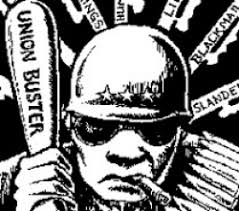
A friend recently told me that the current union-busting effort against the Auto Workers is “the worst union busting in history.” If it is, then the destruction of the most progressive unions in the Congress of Industrial Organizations (CIO) during 1947-1957 is surely second. I would only concede to my friend’s opinion about the UAW because the post-war attacks took place in a period of union upsurge, and today’s union busting occurs when we are being forced to our knees.

Today’s attacks have brought us to a time when barely over 1 in 10 American workers has union protection. The post-war attacks came when union density was three times higher and American workers were aggressively seeking unionization.

I almost began by not recommending anyone read this book. It’s too depressing. However, the sadness is not the fault of the book nor its contributing authors. This is really what happened. After Republicans succeeded in passing the Taft-Hartley anti-labor act in 1947, the CIO adapted itself to anti-communism. That meant expelling its most progressive and energetic union members, leaders, and entire unions. It meant adapting to “business unionism” and cooperating with management. It meant, in a few short years, joining the lifelong anticommunists and business unionists in the American Federation of Labor. It meant turning toward the management-rigged government oversight system and away from union memberships. It meant curtailed democracy in our unions. It also meant a long downward spiral toward helplessness for American workers.

My friend, talking about today’s attack on the UAW, also said, “I don’t think this started recently. I think it’s been coming for some time.” I agreed. The chickens are coming home to roost.

Hardly anyone I know in today’s labor movement knows anything about labor history 1947-1957. It just isn’t in their history books. They celebrate the Flint Sitdown (1937), or maybe the Occupational Safety and Health Act (1974); but they don’t know the first thing about the great negative turnaround sometimes called the “Treaty of Detroit.”

They don’t know when unions gave up on civil rights, when they gave up on organizing the South, when they disassociated from international solidarity, when they spurned women’s rights, when they gave up on national health care, on improving Social Security, on shorter working hours as a remedy for automation, or when they stopped listening to their members.

To be fair, the darkness that began in 1947 began to be illuminated in 1995 when the AFL leadership failed to pre-select its own replacements for the first time in a century. The Sweeney/Trumka/Chavez-Thompson leadership started reversing the many aspects of “business unionism.”  They have made great improvements without ever admitting what was wrong and why. That fight goes on.

The book that Steve Rosswurm brought together does us a service. It tells, in some detail, a few parts of the story. These are stories that almost no one knows, or almost no one will admit knowing. It’s the police, the press, and the reactionary unions destroying the International Longshoremen and Warehousemen Union’s effort to organize in the South. It’s the end of the great civil rights efforts of the Food and Tobacco workers. It’s the nasty anti-worker efforts of the Catholic Church. It’s the role of the main labor-bashers—the U.S. Government. It’s the betrayal of the Tannery Workers. It’s the mercenary creation of the International Union of Electrical Workers (IUE) to deliberately undermine what was probably the best union in America, United Electrical, Radio & Machine Workers of America (UE) and lower workers’ standard of living at Westinghouse.

But the book falls short. It only gives parts of a much bigger, much uglier picture. To be fair, it tries. It lays the blame on those who deserve it. A small part of that blame falls on some of the victims. The Communist Party members in unions, according to the book, were too secretive and too ardent in their devotion to existing socialist countries. They may have been superior union leaders, and the book says they were, but they had holes in their armor. I tend to agree with apportioning that small part of the blame to the Communists. I think they misread the period, and that is fatal in politics. I think they expected a continuation of the pre-war hard times and failed to appreciate the great prosperity that Americans enjoyed after the war.

That’s another fault of the book in my opinion. It names the perpetrators of the witch-hunt that distorted and crippled American labor, but not the main one. It was Prosperity that misled the American workers and is misleading us now. Working people today vote for Donald Trump because they think that post-war prosperity was permanent, when it always was and had to be temporary.

The book names these perpetrators: The news agencies, the Catholic Church which deliberately sent agents to cooperate with anti-union entities, the AFL who teamed up with the CIA against unions worldwide, opportunistic CIO union leaders who saw a chance to advance themselves over the interests of union members, government agencies such as the FBI, the House Un-American Activities Committee, and the National Labor Relations Board and, especially, crafty businessmen who knew how to take advantage of everybody.

Those who know any labor history at all know that the CIO expelled its best unions in 1949 and 1950, but they may not know that expulsion didn’t end that battle. The CIO and the rest of the anticommunist cabal then had to cooperate to destroy those unions. They raided them mercilessly. The government withdrew all protection so that the raids could proceed. Leaders were maligned and sometimes arrested.

Newspersons whipped up a steady stream of misleading vituperation for progressive union leaders. Hey, that’s what they’re doing to the UAW today!

–Gene Lantz

I’m on KNON’s “Workers Beat” radio talk show at 9AM Central Time every Saturday. If you are curious about what I really think, check out my personal web site

Notes:

Pg ix: “The federation’s leadership then had to commit sizable resources to destroy the expelled uions…”

Pg6: “It is difficult to provide precise figures for the number of CP members in the expelled unions, but we know it was small.” (he extimates 1.8%)

Pg7 “The CP, then, despite a small membership in the expelled unions, played a central role in them because of its leading political position…” And because they earned the respect of non-communist but sincere union members.

Pg9: I had always thought that 14 unions were expelled, but this book says there were 11. It also mentions that two, the UE and the Farm Equipment (FE) unions left voluntarily “despite the CP’s wishes”

Pg9 “The expelled unions were at least as democratic, if not more so, than other CIO unions.”

Pg 13: The UE fought automation. As far as I can see, there has been no fight against automation since then.

Pg 13: “The destruction capital has wreaked upon working people in the past 20 years [written in 1992] ought to suggest to both scholars and today’s trade unionists that the expelled unions were on to something.”

Pg14: “Militants’ ‘discovery’ in the early 1980s of ‘in-plant’ organizing suggests the strength of the ‘workplace rule of law’ paradigm, politically induced historical amnesia, and the impact of the missing activists.” This was very personal for me, because it was my local union that “discovered” in-plant organizing in 1984-85. We called it something else, but it was the age-old union tactic of slowdown. It had been long-forgotten due to historical amnesia.

Pg 15: “An article about the IUE and [James B.] Carey might well be titled, ‘In Bed with the Feds: The Conception and Birth of a Bastard Union.’ There was scarcely a federal agency – the FBI, the presidency, the House Un-American Activities Committee (HUAC), the Atomic Energy Commission – that was not at Carey’s service in the battle against the UE.”

Pg 15: “…the CIO leadership’s acceptance of capitalism – or lack of understanding of it – stands in stark contrast to the expelled unions’ comprehension of its dynamics.”

Pg 15: “Capital mobility was an important part of the corporate postwar counteroffensive against the CIO…”

Pg16: “What predominated, however, were the solutions of Walter Reuther and the IUE. Inevitably, those chickens came home to roost in the 1970s and 1980s.” The steady erosion of American labor was apparent by 1972, for those who wanted to see.

Pg 78: …the failures of the 1930s, when FTA [Food and Tobacco Workers], then the United Cannery, Agricultural, Packinghouse & Allied Workers Union of America, had tried to organize and maintain viable local unions among the seasonal agricultural workers.” So, UCAPAWUA tried to relieve the miseries depicted in Steinbeck’s “The Grapes of Wrath!” They also tried to organize cannery workers in Crystal City and Pecan Shellers in San Antonio. I knew one of their organizers from back in those days. She was a Communist, or course.

Pg 85: …in April [1947], Congress passed the Taft-Hartley Act, among the most restrictive pieces of labor legislation in our country’s history.”

Pg 169: Management leader quoted, “I hated the Communists! I hated the Communists! Hell, I would have shot them on sight.” But even he acknowledged superior leadership of the open Communist leading the International Fur and Leather Workers Union (tanners).

Pg183: …a good deal of outstanding labor history has been written about workers in the United States, from the American Revolution through World War II. Yet, most post 1945 labor history is an afterthought, consisting of sweeping generalizations, spiced with a bit of anecdotal evidence.”

Pg185: ‘Beyond ardent anticommunism, it is difficult to pin down the ideology of the IUE in the 1950s.”

Pg198: The IUE accepted contracts that ripped away all the seniority rights that the UE had won for married women. “”Once again, a married woman had no seniority rights and could be fired if she failed to notify her foreman of her marriage.”

The last page repeats the lyrics of Tom Juravich’s “An Old Soldier.” It’s on YouTube at https://youtu.be/jgxAcdqLVTM

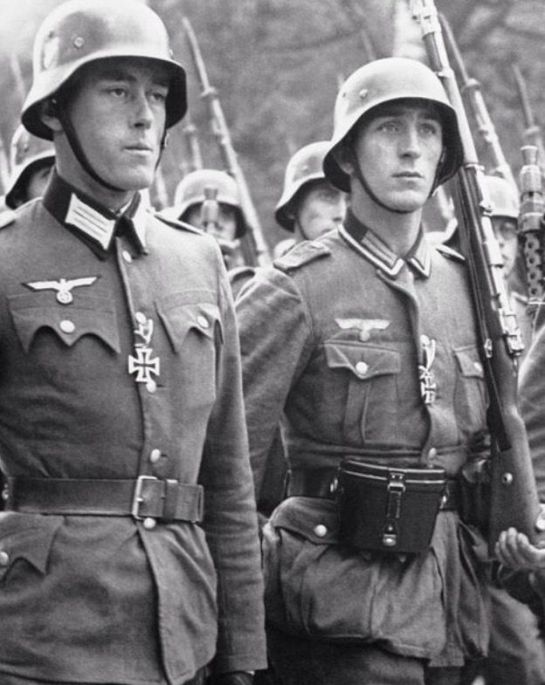
Rich people live a lot longer than poor people. The difference may be as much as 15 years.

Why?

It’s easy to find a chart on preventable causes of death on the internet. Here are some in order of the most deaths caused.

  • Nontransport accidental injuries
  • Intentional self-harm
  • Transport accidents
  • Assault
  • Event of undetermined intent
  • Complications of medical and surgical care
  • Legal intervention
  • Operations of war

Poor people get killed on the job, rich people generally don’t. Poor people get depressed and kill themselves, rich people generally don’t. Poor people are always in a hurry and have unsafe cars, rich people generally don’t. Rich people have better protection, better medical care, better lawyers, and rich people generally don’t risk their lives in war.

That’s why.

Gene Lantz

I’m on KNON’s “Workers Beat” radio talk show at 9AM Central Time on Saturdays. If you are curious about what I really think, check out my personal web site

Book Review:

Sampson, Anthony, “Mandela.”  1991. Dallas Public Library e-book. I learned a lot about “Madiba” Nelson Mandela in this even-handed account. Sampson had known Mandela since 1951 and was generally favorable to his efforts.

Mandela was born into the family of a tribal chieftain. (Xhosa tribe?) He was educated largely at Methodist institutions and eventually qualified as a lawyer. The African National Congress, which began I believe in 1912, was at that time pan-Africanist. Mandela believed in armed struggle and eventually became the head of the armed struggle wing of ANC. He was pictured in fighting attire in those days.

The Afrikaners took over the government of South Africa (1947?) and established apartheid fascism. They had a network of informers, black and white, so that very few militants escaped their grasp. Mandela was arrested. I don’t think he had actually led any armed conflicts at that time, but was more of an organizer.

During one of his hearings, Mandela appeared in full African traditional regalia. But his speech in his trial was what gained international recognition. Then he spent 27 years in custody. Most of the time was on Robben Island.

During that period, Mandela showed how dignity and wisdom can help people cope with even the most difficult of situations. Even his Afrikaner warders tended to respect him. Mandela and others began to call for a united effort of all South Africans of all racial backgrounds. He also called for a peaceful solution to the apartheid situation, but he demanded full voting rights for all.

Mandela’s great ideological contribution to South African history was his idea of uniting all races. Previously, the ANC had no such plan. Another group “Pan African Nationalists” became one of the main competitors with the ANC. The Zulus and several smaller tribal-based groups also opposed integrating democracy. But of course, the biggest opposition was the privileged white Afrikaner nationalists.

The armed struggle, the organizing effort within the country, and international pressures eventually forced the fascists to negotiate some kind of democracy. They greatly preferred to “negotiate” with some of the Black compradores that they had put into power and, often secretly, supported by force of arms. The top Zulu, Buthelezi (?) was the Afrikaner’s choice over Mandela. But the public and the international community were settled on Mandela, so it was he who eventually led the negotiations that ended in a more democratic nation.

I read with personal pride about the effect of international opinion, because my union, the United Auto Workers was very much a part of that effort. My own union local, UAW 848, was involved. I myself led pickets at Shell Stations against apartheid. My wife and I regularly sold “Free Mandela” buttons. They were very popular in the early 1990s. Mandela became President of South Africa, I believe, in 1994.

It is interesting to contrast Mandela’s “Peaceful Road” to that of President Allende in Chile. Most radicals believe that Allende should have armed the public and confronted the military rather than try the peaceful road that eventually led to his death and fascism. We usually say that Allende was totally wrong.

How then, would we explain Mandela’s comparative success with the peaceful road? Was it comparable to Allende’s situation? If it was, then his success would detract from the argument that Allende was wrong to focus on the peaceful road. I don’t think the two are comparable. Allende was trying to institute socialism. Mandela, for all of his communist ties, didn’t even try to dismantle capitalism in South Africa.

Anthony Sampson’s account leaves one with the impression that Mandela was one of the great men of history, but even Sampson would probably say that Mandela was more saint than revolutionary. I recently met a member of the All African People’s Revolutionary Party here in Dallas. I told him I was reading about Mandela and he said, “We don’t think he was any good!”

–Gene Lantz

I’m on KNON’s “Workers Beat” program every Saturday at 9AM Central Time. If you are curious about what I really think, check out my personal web site

Below are listed some of the things that Texas labor accomplished over the past year. Even though federal and state governments sent us backward as much as they could, the battles we won are pretty impressive.

But those milestones aren’t even the most significant gains of the year. The biggest gains can only be seen by looking at the trends that are underway:

  • People are better informed than ever in history, and labor’s communications efforts are part of the reason
  • People are communicating with each other better than ever in history
  • Women are taking over leadership and winning
  • Racism is being recognized as everybody’s problem
  • Undocumented workers are finally seen as part of the working class
  • Turnout at elections may be embarrassingly small, but it’s on an upswing
  • Labor’s electoral successes have the 2020 candidates lining up for endorsements
  • Unions are helping each other more than anytime since the heyday of the Congress of Industrial Organizations (CIO), around 1947
  • Unions and other progressive organizations are receiving more and more help from the general public. Our rallies and picket lines are backed with volunteers from everywhere
  • People are openly grappling with our problems and possible solutions

On that last topic, we can thank Senator Bernie Sanders for bringing the word “socialism” back into common parlance for the first time since the red scare of the 1920s. I would not go so far as to say that it is widely understood, but it’s definitely being talked about.

My good friend Morris Fried had a letter-to-the-editor published on Christmas Day. He said that he had been studying newspaper coverage of the battles over education and had concluded with his own definition: “Capitalism molds people to fit the economy, socialism molds the economy to fit people.”

That’s real progress!

Texas Labor’s 2019 Achievements:

* We won paid sick leave for everybody living in Dallas and San Antonio

* We survived a grueling 40-day strike by United Auto Workers members against General Motors

* Members of the United Steelworkers at plants owned by Dow Chemical in Deer Park withstood a seven-week-long lockout

* UNITE HERE members in Dallas and Houston led raucous airport rallies

* The Central South Carpenters Regional Council joined the Texas AFL-CIO in leading opposition to a hastily adopted Texas Workforce Commission rule that exempts “gig economy” companies from paying for Unemployment Insurance. 

* The Texas AFL-CIO Citizenship Program held drives in cities across Texas, helping hundreds of eligible residents navigate the complex naturalization application process.

* Federal workers, many of whom are represented by the American Federation of Government Employees, stood tall during the longest shutdown in government history – a 35-day fiasco

* An international delegation of labor leaders, including officers and staff of the AFL-CIO, Texas AFL-CIO and national unions, converged on El Paso to build solidarity among working families in the U.S. and Mexico. 

* Unionized Plumbers in Texas worked with their non-union counterparts to kill legislation that would have undermined state safety regulation of the plumbing industry.

* Texas teachers, prominently including the Texas American Federation of Teachers, led the way to achieving a major education reform bill that delivered pay raises for teachers and other public-school employees,

* Amid a high-profile campaign by a coalition that prominently included labor unions, the Texas Senate declined to confirm Gov. Greg Abbott’s nominee as Texas Secretary of State.

* ULLCO, the coalition of labor unions that advocates for working families at the Texas Legislature, stopped dozens of seriously bad legislative proposals, 

* The Texas AFL-CIO’s Ruth Ellinger Labor Leaders School graduated its third class

* Young Active Labor Leaders, a Texas AFL-CIO constituency group for workers under age 35, held its second statewide summit in Houston

* Across the state, Building Trades unions that include Electrical Workers, Iron Workers, Painters, Steelworkers, Laborers, Plumbers and others advocated strongly for high-road policies that offer working families a path to middle income.

* Labor’s goal of enabling solid middle-income jobs to evolve and grow included an ongoing battle against off-shoring, excesses of automation and other factors in a toxic mix aimed in large part at driving down wages.

* The campaign to save the U.S. Postal Service as we know it gained ground

* Delegates to the Texas AFL-CIO Constitutional Convention created the Texas AFL-CIO Veterans Committee

* The Texas AFL-CIO stepped up its social media reach

–Gene Lantz

I’m on KNON’s “Workers Beat” talk show at 9AM Central Time every Saturday. If you are curious about what I really think, check out my personal web site

  1. Capitalism has never failed, even though its failure has been predicted for a 1 ½ centuries
  2. Capitalism is already on its way toward peaceful cooperation for the good of humanity

.

Capitalists failed

Sincere socialists believe that the working class will place the world’s economy under democratic control at a juncture when two important conditions are met during the same period of time. The first is capitalism’s natural tendency to create its own great crises; the second is that capitalists create a working class that is informed, organized, and ready to take over.

In 1916, V.I. Lenin explained in his short book, “Imperialism,” that capitalists cannot cooperate across national borders, where each set of capitalists operates its respective armies. The First World War, followed quickly by the Second World War, seemed to validate his assertion. During WWI, Lenin’s prophecies came true in the case of Russia. The capitalists there were not able to govern and the Bolsheviks were ready and able to take over. To Lenin’s great disappointment, however, those two critical conditions were not met in other great industrialized nations.

Despite constant threats, World War III has still not happened. The long period between 1945 and the present, and especially the implosion of the Soviet Union, tends to argue for the first argument against revolution given above: capitalism has not failed. Or so they would say.

But capitalists destroyed tens of millions of young men and innumerable civilians in two world wars and interminable smaller wars. The United States is directly involved in at least three wars as this is written. Is this not failure?

Would it not be honest to say that capitalists failed, at least twice in world wars, or at least four times if one counts the Great Depression and the recent Great Recession? Would it not be honest to say that socialist revolution has failed because workers were not ready, rather than because capitalists did not fail?

Capitalists do not cooperate

Since World War II, the major industrial nations have not returned to the battlefield against each other. One reason, often given, is that they were reluctant to destroy the planet with nuclear weapons. The other reason, though, was that they couldn’t. After 1945, the United States had almost the only functioning factories in the world. The U.S. economy completely dominated the world’s prostrated bombing victims for at least 30 years. Militarily, the United States still reigns supreme.

During the years of U.S. domination, certain “international” organizations were put in place. The UN, NATO, SEATO, OAS, WTO, and WMF are examples of “international” organizations that were set up by the United States and operated for the good of the United States. Other nations were forced to go along. It may have looked like international cooperation, but it wasn’t. It was international domination, and that domination is now crumbling.

In the past week, the elected President of the United States has upset “world cooperation” with verbal attacks against other nations, trade wars, and undermining the World Trade Organization. America has begun to militarize space in clear violation of international law. Does that sound like cooperation?

Conclusion

The capitalists fail because they cannot do otherwise. Working families are being forced to educate themselves and fight back together. Two conditions are being met. Let us hope they come together in time!

–Gene Lantz

I’m on KNON’s “Workers Beat” program at 9 AM Central Time every Saturday. It’s podcast, too. If you are curious about what I really think, check out my personal web site

We’ve been studying theories of social change:

  • Utopianism: We don’t have to do anything about effecting change. We will just live good lives and other people will start copying us. Beatniks, Hippies, Counterculturalists, early French socialists
  • Economism: Capitalism will inevitably fall of its own weight. All we can do is help it along with economic struggles such as union contract battles.
  • Populism: We’re all pretty much the same so all we have to do is get everybody together somehow. The main thing we need is great leaders to spark the revolution. Anarchists, terrorists
  • Syndicalism: We will organize everybody into one big union, then call a general strike and take over. IWW
  • Reformism: If we just keep improving our society, little by little, we’ll eventually make it perfect. We need to work in elections. Parliamentary cretinism. Capitalist liberalism.
  • Class struggle: Working families have enemies: our owners and employers, who must be overcome before lasting change can occur. We have to fight on the side of working families in all arenas and at all times.

If you have time to do some reading, I recommend the 60 pages from “Reform or Revolution” by Rosa Luxemburg. She argues that we must fight for immediate reforms while pushing for an ultimate class confrontation. She was arguing against a German Philosopher named Eduard Bernstein. Bernstein personified the category of “reformist.”

This same argument is the number one issue in our progressive movement today.

Luxemburg, Rosa, “Reform or Revolution,” included in ‘Rosa Luxemburg Speaks” edited by Mary Alice Waters, Pathfinder Press, New York 1970. Available at https://www.marxists.org/archive/luxemburg/1900/reform-revolution/index.htm. A note of caution: All of the world’s revolutionary parties prior to 1917 called themselves “social democrats.” After the Russian revolution, the world movement split. See the great movie “Reds.”

The answer to the question posted in Luxemburg’s title is “both.” She says that revolutionaries must join the working class in every struggle. It is not because those struggles will lead to permanent and significant change, but because working families become strong, well organized, and well informed with each success. She says on page 36: “Between social reforms and revolution there exists for [revolutionaries] an indissoluble tie. The struggle for reforms is its means, the social revolution, its aim.”

More specifically, here is how she describes the ultimate goal (page 39): “The scientific basis of socialism rests, as is well known, on three principal results of capitalist development. First, on the growing anarchy of capitalist economy, leading inevitably to its ruin. Second, on the progressive socialization of the process of production, which creates the germs of the future social order. And third, on the increased organization and consciousness of the proletarian class, which constitutes the active factor in the coming revolution.” In simpler terms, she believes that everyday democratic struggles get working families ready to take over when capitalism inevitably goes into crisis.

 But, Luxemburg says, there is a completely different theory which can only lead to disaster. The main proponent of this other theory was the German philosopher Eduard Bernstein. Bernstein was a gradualist. He believed that the everyday struggles for democratic reforms were sufficient by themselves to bring revolutionary change. One good reform would build on another one until, pretty soon, we’d have perfected society. Because Bernstein believed that reforms were all we needed to do, she called him a “reformist.”

Most of “Reform or Revolution” is an argument against Bernstein and his co-thinkers of the time. As I reread it this year, though, I substituted the names of leading writers and organization of today, because they are still preaching that reforms are enough.

Luxemburg says on page 38: “According to Bernstein, a general decline of capitalism seems to be increasingly improbable…” I haven’t actually heard those exact words in today’s arguments, but I heard “socialism is not on the horizon” many times. It’s practically the same thing.

(Page 50) “Bernstein says, The [revolutionary party] must not direct its daily activity toward the conquest of power, but toward the betterment of the conditions of the working class within the existing order. It must not expect to institute socialism as a result of a political and social crisis, but should build socialism by means of the progressive extension of social control and the gradual application of the principles of cooperation. Bernstein himself sees nothing new in his theories.”  I don’t see anything new in today’s reformism either.

Bernstein’s followers say (page 50): “They hope to see a long succession of reforms in the future, all favoring the working class.” That’s reformism in a nutshell. A pipe dream!

As I read Luxemburg’s argument, I realized why reformism got such a big boost over the last few years. During the first decade of this century, relatively progressive leaders were elected in places like Tunisia, Venezuela, Brazil, Bolivia, Ecuador, and the United States. When Bernie Sanders became a household name nationwide, it really looked like we could achieve permanent structural change just by voting. We could get good political leaders in the current election and even better ones in the next, or so we thought. I don’t know if anybody still thinks that, but that’s how it looked when Obama was in office.

Luxemburg continues about reformism on page 50: “He thinks that the expropriation of the means of production cannot possibly be effected as a single historic act. He therefore resorts to the theory of expropriation by stages.” After “socialism is not on the horizon,” I began to hear a lot more about stages, even though nobody ever explained which stage was which and how they knew.

On page 59: “We move here in a straight line toward the total abandonment of the class viewpoint.” In modern times, I heard that working families were just one of several important “core” groups. Like all good liberals, we should work for each of them equally, I heard.

Page 69: “Bernstein’s socialism is to be realized with the aid of these two instruments: labor unions – or as Bernstein himself characterizes them, economic democracy – and cooperatives. The first will suppress industrial profit; the second will do away with commercial profit.” She explains that unions are totally defensive, never offensive. She goes on to explain why ESOPs could never replace capitalism. Anybody who has ever been in one of today’s American unions know that they are defensive organizations. Lately, I’ve heard a lot about employees taking over enterprises and running them successfully. In real life, they tend to have a very short life, and anybody who thinks about it should realize that they will never overtake the mighty corporations that run the world today.

On page 76, Luxemburg sums up Mr Bernstein: “He who renounces the struggle for socialism renounces both the labor movement and democracy.”  I’ve seen that in action, just lately.

–Gene Lantz

I’m on KNON’s “Workers Beat” program at 9 AM Central Time every Saturday. If you are curious about what I really think, check out my personal web site

How do we choose what to do next? The movement for progressive change is in an upsurge. Most of us have far more opportunities than we can use.

Our little discussion group has been examining the current situation and some of the ideas of the great revolutionary thinkers of the past. We’ve been using the simple programmed modules at http://lilleskole.us/school.

Before today, we had already enlarged our understanding of “class” and asserted that only the working class can make the fundamental change that is so necessary. A good guideline for deciding what to do is: “Think of the class.”

Today, we discussed unions

The great revolutionary thinkers valued unions because they are a great training ground for the working class.

In America today, unions are the largest, richest, and most influential progressive organizations. Unlike most other progressive organizations, they are solidly working class. It is noteworthy that most union leaders come directly from the rank and file.

It is also important that American unions are the bedrock of democracy. They are formally democratic. Nearly all their problems could be solved if they had member participation.

BUT

BUT some activists misunderstand the nature of unions. Union leaders aren’t revolutionaries. They generally don’t take the offense on social questions or on any questions at all. Whole American organizations dedicate themselves to trying to turn unions into revolutionary battering rams.

The best and worst thing you can say about unions, like any other member organization, is that they represent their members. Do not confuse a union, or even all the unions, with the working class. They are a subset of the working class. Even if all working families were union members, they still wouldn’t be revolutionary, because they would still be divided.

Only 3 unions today support impeachment: National Nurses United, the Teachers (AFT) and the Service Employees. Unions are divided or waffling on “Medicare for All.”

The great revolutionary thinkers of the past prized unions, or what they often called “combinations.” BUT they called them “Great training grounds for revolution.”

Rosa Luxemburg’s German revolutionaries, who were very close to the Russian Bolsheviks, caved in to the trade unions and removed the idea of a general strike out of their program. Luxemburg was furious.

The IWW’s program was to organize everybody into One Big Union, then take power, presumably through a general strike. It sounds so simple and easy, but is it?

For next time, we’ll go directly into how activists can decide what to do next. Knowing what to do next is the very definition of leadership. One of our activists has been studying the relationship between everyday reform activities and revolutionary work. She will lead our discussion on December 15. The Little School has no material on “Reform Or Revolution,” but the classical work of Rosa Luxembourg is on-line at:

https://www.marxists.org/archive/luxemburg/1900/reform-revolution/index.htm

Let me know if you would like to join us.

Gene Lantz

Contact me at genelantz19@gmail.com. I’m on KNON’s “Workers Beat” program at 9AM Central Time every Saturday. If you are curious as to what I really think, check out my personal web site

Choose your favorite coming disaster:

  • Environment
  • Economy
  • War
  • Democracy

Strangling and drowning

Speeches and articles about the environment tend toward dry statistics, but the facts of drought, famine, and flood are talking louder. It’s hard to ignore climate change when your house is washing away.

Environmentalists have always been with us. They range from the driest academics to the eco-terrorists. Their arguments often involve human health, endangerment of species, and the general disappearance of our way of living. Their message grows more relevant with every weather report.

Poverty and famine

The latest figures indicate that 8 men, 6 of them in the United States, hold more wealth than the poorest half of the world’s population. Rich men live 15 years longer. Inequality is rampant and growing. A few rich families enjoy untold luxuries while most children are underfed!

Contrary to what most economists tell us, the reason is deeper than what we can learn from a quick look at recent economics. Most of the analyses we see indicate that everything would be fine if we could just get back to the conditions in America in, say, 1955. Piketty debunks them.

Thomas Piketty’s collection of data shows clearly that the American situation around World War II was nothing normal. In fact, it was a complete exception to the rest of capitalist history. Except for that short period, inequality has always risen under capitalism. Piketty concludes not only that capitalism creates inequality, but that it always will.

Murder and genocide

Wealthy people protect and extend their wealth, just as they always have, with armed police and soldiers. No matter the prayers that we deliver and the songs that we sing, wars are caused by economic inequality. As inequality rises, so does the danger of war.

World War I and World War II, and all the little wars before, between, and since, were basically fought for economic advantage. The sole reason that World War III has not already started is the understanding that nuclear war will have losers but no winners. Even so, threats of nuclear belligerency have become so common that we barely notice them. And non-nuclear war takes up much more of our current history than peacetime.

Just because war is impossible doesn’t mean it won’t happen.

Isolation and political impotence

The majority of us, here in America we casually call ourselves the 99%, are increasingly dissatisfied with the suffering side of inequality. In several countries today, the “have nots” are revolting against the governments that protect the “haves.” Today’s news talks about Colombia, France, and Bolivia, but they could as easily have mentioned half a dozen other countries.

The solution, for our side, is to take democratic control over foreign relations, economies, and environmental concerns. The tiny majority of rich people now controlling all those essential areas would rather we didn’t. Their massive propaganda machines are working to that end. They are also going to great pains to strip us of the partial democracy that we have won over the ages. Voter-rolls are being purged, polls are being closed, unions attacked, and burdensome conditions are being put on our right to speak for ourselves.

Increasingly, the rich are relying directly on their police and soldiers. We rely on the only thing we have, people power, to blockade their four roads to hell.

All my facts and figures come from today’s news.

–Gene Lantz, November 27, 2019

I’m on KNON’s “Workers Beat” program at 9AM Central Time every Saturday. If you are curious about what I really think, please check out my personal web site