Across the world and at home, we are learning how to improve
our societies. At a breakfast meeting Sunday, November 17, we discussed the
present situation and went over some of the lessons of the past.
The United States had more workers on strike in 2018 than in
any year since the crackdown against the working class began in the 1970s.
Working families in Chile, Bolivia, Brazil, Argentina, Iraq, Iran, Spain, and
Greece and other nations are holding massive protests. The progressive movement
is far broader, that is that more disparate individuals and groups are
practicing solidarity, than in recent history.
How do we make sense of it all and decide which of the many opportunities most merit our resources? We posed some interesting questions that, for most of us, are not easy to answer:
Why are there so many arguments in the progressive movement? What are some of the major divisions in the progressive movement today?
What is happening in Bolivia? In Hong Kong?
Are all the world’s protesters working toward similar goals?
Would you defend the right of the Ku Klux Klan to recruit members in public places?
Would you defend the right of American armed forces to recruit members in public places?
Would you defend the right of ISIS, Middle Eastern religious fighters, to recruit members in public places?
Would you defend the right of your local police department to recruit members in public places?
Would you urge police associations to join organized labor federations?
Does America really need a revolution?
Will revolutionaries be elected into power?
Were the Bolsheviks correct in taking power in 1917, or has
history shown that the Menshevik gradualists had a better understanding of
their situation?
One would like to think that all progressive activists would agree, even on difficult questions. But the truth is that arguments have always racked and divided the movement. Our group tried looking at the time-tested ideas of great thinkers of the past. We were looking for guidelines, not specific directions.
For guidelines and to initiate discussion, we used the
automated learning modules in the “ABC” section of the Little School at http://lilleskile.us/school. I am its
author. So far, we’ve looked at the first nine lessons. The next one will be on
trade unions. Some people finish a module in five minutes.
Here are some of the main points we’ve discussed so far:
Activists need to study in order to become more unified and effective
Almost everything we have been taught has been filtered by reactionaries
Of the two main branches of philosophy, idealism and materialism, materialism is the best guide
In general and in the long view, the human condition has improved
People’s views are strongly affected by their station in society
Different classes of people have strongly divergent views
Everything, including societies, is constantly changing
We plan to get together again on the morning of December 1.
Let me know if you’re interested
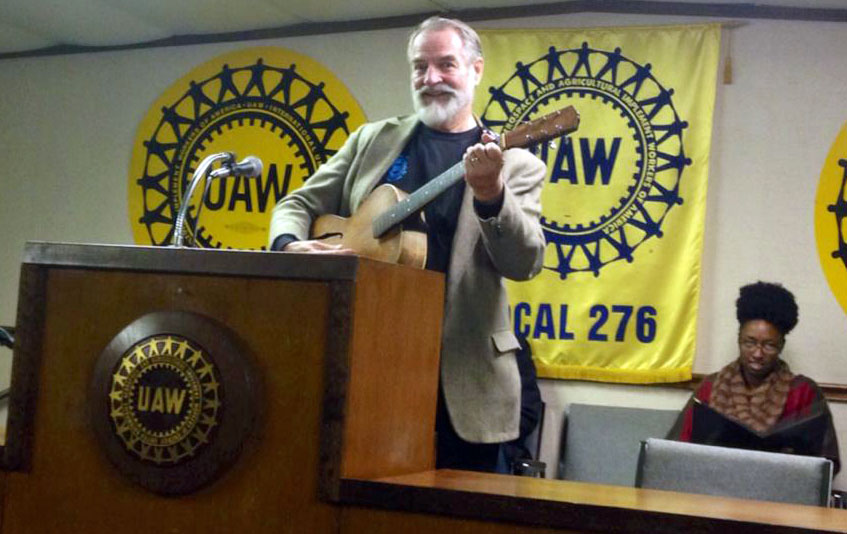
I am worrying that members may resign from the United Auto Workers because they see no way to overcome the union’s problems. Leaving the union would be a disaster for those individuals and for all their brothers and sisters. Better to stay in the union and force it to change.
Here is a short
list of reform suggestions:
One-person-one-vote for critical decisions
End nepotism
No staffer control over membership deliberations
Join the rest of the labor movement, especially in politics
Full disclosure and cooperation with the membership
Meetings in most economical venues
Put “joint” activities under the same rigorous accounting oversight as regular union activities
Hold meetings in economical venues
The Longer
Explanation
The new acting
President of the United Auto Workers (UAW) is named Rory Gamble. His peers on
the International Executive Board asked him to take over after they pressured
the elected president, Gary Jones, to take a paid leave of absence. On UAW.org,
Gamble writes: “…I know recent events concerning members of our leadership have
disappointed and angered many of you….”
He is referring
to federal indictments against a number of active and retired top union leaders
and published allegations against some more, including Gary Jones. Newspapers
also reveal that other former leaders are testifying in the federal
investigation. Charges and allegations include embezzlement, corruption, and
money laundering. Two former top staffers published an op-ed calling for the
entire leadership to be fired.
The specifics in
the newspaper articles say that union officials could not account for money
spent on wrist watches, golf fees, expensive cigars, and fine liquors. I’d like
to come back to that.
Union Busters and
Their Friends
In these times,
no one should be surprised to learn that the government is trying to destroy
the UAW and its leaders. No one should be surprised that the corporate media is
doing all they can toward that same end.
What is
surprising is the commentary that follows the news releases. Writers who say
they are union members are buying into the anti-union onslaught wholeheartedly.
When Gary Jones stepped down, for instance, hardly anyone wrote on social media
about whether or not he had actually done anything wrong. Almost all of the
comments, instead, were calling for his head. The mildest among them were
saying that his salary should be cut off immediately. This is before any
official charges have been filed.
What Makes
Unionists Anti-Union?
Some union
problems are built in, even when the union is working well.
Union servicing
reps and negotiators know that their efforts are unlikely to please any union
member without pissing off another one. If the union wins a raise for someone,
for example, someone else demands to know why they didn’t get the same raise,
or a higher one.
The published
results of union ratification votes in the recent General Motors strike reveal
that 42% of those voting did not like the contract offer well enough to accept
it. They must have known that they were voting to continue the grueling strike,
but they bravely voted against the offer anyway. After the other 58% ratified
the contract, that 42% was certain to be discontent. It’s built in to contract
negotiations that somebody will be glad and somebody else will be mad.
In enforcing
union contracts, servicing reps spend a lot of time, maybe the majority of
their time, helping the very worst members. A worker who stays sober and comes
to work on time regularly may not see his/her servicing rep for months on end.
The drunk who screws up has the servicing rep on speed dial. There’s really no
way around that.
When the union is working well, seniority is strictly observed. The first people to get promotions and raises are the ones that have been on the job longest. The first ones laid off are the newest. There’s no way around that, either, because the alternative would be to let the boss decide, and he will go with his nephew every time! But seniority creates a built-in problem for unions, especially during times like the last few decades, when more people are getting laid off than hired and the membership keeps aging.
Unions aren’t
revolutionary. Hot-blooded young members with high ideals and little to lose
are always wanting their union to take on and destroy the establishment. They
are always disappointed because unions don’t want to destroy companies or
systems. They just want better treatment for their members. It’s built in.
But There are
Preventable Problems
Unions became increasingly isolated after the 1947 Taft Hartley law was passed over President Truman’s veto. The progressives in the union movement were kicked out en masse. The conservative union leaders then embraced “business unionism.” They stopped struggling for social programs like shorter working hours, increased Social Security, and national health care. Instead, they bought management’s suggestions for company-provided pensions and health care. The UAW, in what is often called the “Treaty of Detroit,” led the charge backward.
Most union members were glad. They started seeing their wages, pensions, and health care get better and better while people without unions could only enjoy a residual effect. Union officers learned to play golf with management while growing more and more isolated, not only from the working class at large, but from their own members. In the long run, it was a recipe for disaster, but in the short run, during America’s great post-war boom, it worked great for the members. To this day, many union members think the leaders of the 1950s and 1960s were some kind of geniuses.
Membership fell steadily after 1957. Disaffection, separation of union leaders from everybody else, grew worse. Membership participation in union meetings declined. Leadership became increasingly opportunist. That is, they took UAW staff jobs because they were really good jobs, not out of any commitment to the union (witness them today hurrying to testify for the union-busters). Nepotism is one of the uglier aspects of opportunism, and it is weakening the UAW.
Then came Reagan
By the late
1970s, the United States began to lose its economic hegemony over the rest of
the world. Other industrial nations rebuilt the factories that were bombed flat
during the war, and they started producing products that were as good or
better, and often cheaper, than those made in the United States. Little foreign
cars, for example, became quite trendy in America.
In the
presidential election of 1980, the employers committed to a solid plan to drive
down unit labor costs in America. They found an excellent spokesperson and
mobilized the government, the media, and most of the establishment around him.
With government help, they shipped the best American manufacturing jobs
overseas. They automated jobs away. They busted unions when they could and
passed anti-union legislation at every opportunity.
Unions, who had completely
forgotten about the historic fight to shorten working hours in response to
automation, bled members. Some of them tried to adapt through strategic mergers
with other unions and by innovative approaches to organizing. A few of them did
OK, but the UAW wasn’t one of them. Membership fell from 1,500,000 to around
400,000.
The UAW responded
to the Reagan assault mostly by embracing the “Big 3” auto companies and
declaring that the enemies of the union were not managers but, rather, were
foreign workers, especially the very successful Japanese. They pushed “buy
union-made cars,” without mentioning that most of the foreign auto companies
were unionized. They immersed themselves into company-led “jointness” ventures
and “team” production. Union editors were encouraged, even directed, to give up
their union newspapers and join forces with management.
One result was
that “joint” ventures created opportunities for corruption, and one direct
result of that is some of the UAW leaders now in jail or under indictment. They
are charged with stealing funds that were designated for joint training
programs that had poor fiscal accountability.
The other result, far worse, was that UAW leaders were more than ever isolated from the members. Instead of interacting with members at work, they built a hierarchy of union staffers around them that completed their isolation. The union staffers, who have their own separate staff union, continued to get the best that the UAW could offer, while members’ wages and benefits eroded away.
One could argue that the UAW staffers, not the members, run the union. It is true that the UAW still has a good democratic constitution with regular elections and constitutional conventions. The problem with those conventions is that they are orchestrated by the staff. While some unions prohibit staffers from even being on their convention floor, UAW staffers literally lean over every delegation during conventions. Hardly anything happens at UAW conventions that was not planned out in advance by the top UAW leaders and executed by their paid staffers.
About Those
Cigars
Readers of the many anti-UAW articles may have wondered what union leaders might have been doing with all those expensive cigars, golf fees, watches and bottles of liquor that they were supposed to have stolen. They couldn’t have worn that many wrist watches. They couldn’t have drunk and smoked that much while playing that much golf. The answer is pretty obvious. They probably used luxury items to guarantee, through small bribes, the continuing loyalty of the legions of staffers.
We end up with the situation in the UAW today. A significant number of union members are so confused and alienated that they actually vote for their own executioners. Others, possibly with the best of intentions and highest motives, are joining the media call for destroying the union!
On the Upside
No one should
overlook the fact that the General Motors workers were able to carry out a
successful 6-week strike even while the biggest and sharpest union-busting
effort since the McCarthy period was directed against them. No one should
overlook the fact that the UAW still has 400,000 intelligent members and
several hundred million dollars. No one should overlook the fact that the UAW
has one of the proudest and most progressive histories in America. No one
should fail to notice that the American people are becoming more and more aware
of just who their real enemies are and how to fight back. That’s a lot to build
on.
Short-term
Solutions for the UAW
It isn’t likely
that President Rory Gamble is going to be able to pull the union together with
a few worn platitudes about “solidarity in the ranks” and “a few bad apples.” Even
if union leaders survive the government investigation, their alienation from
the membership will continue to eat the union away.
There are two
guys who think they have found a section of the UAW constitution allowing for
the members to call a special convention and elect new leadership. They have a
Facebook page with 12,000 likes. The two guys are arguing that members should
join their effort rather than doing what has become almost traditional –
“voting with their feet” – and leaving the union.
I hope they can
pull it off, because it might help keep our union together. But just holding a
new convention under the same old system isn’t really a long-term reform. For
example, the convention delegates are already elected. Under the UAW
Constitution, they are the same ones that attended the last convention, and
they will be sitting in front of the exact same staffers.
Long-term
Solutions
Our union needs
an entirely new attitude toward its members. Staffers must stop subverting our
democracy. Members must be consulted and listened to. Top-down thinking must
go.
The union also
needs a new attitude toward the public. More and better communications are
needed. “Go it alone” must be condemned as a union strategy and “solidarity
with all workers” must become our new guideline. We need to completely get rid
of our isolated, separate, political program and join with the other unions in
the AFL-CIO.
The United Auto
Workers, once the most progressive and democratic union, must take its place
again at the head of this wonderful new progressive movement that is sweeping
America.
–Gene Lantz
I’m on KNON’s “Workers Beat” talk show every Saturday at 9AM Central Time. If you care curious about what I really think, check out my personal web site
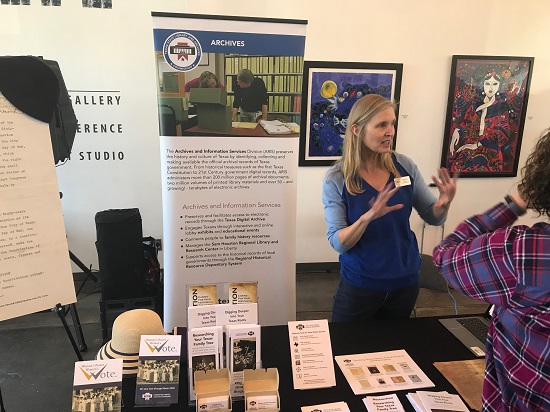
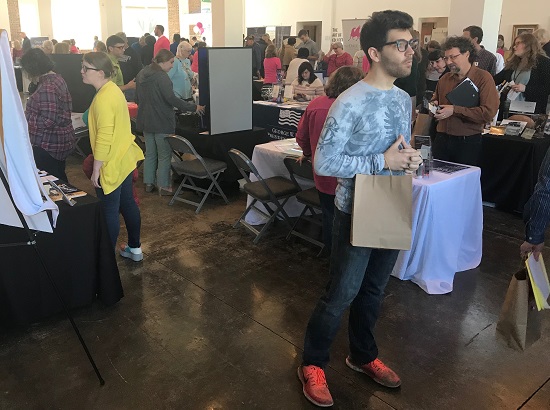
I attended the DFW Archives Bazaar in Denton, Texas, on November 2. They may seem like introverted bookish people, but they are revolutionaries.
Forty archives had tables up all day. Some of them such as public libraries are familiar to all of us, but some were slightly more esoteric. There are, for example, collections called “Dallas Jewish Historical Society,” “Diocese of Dallas,” and “The Dallas Way: an LGBT History Project.”
What’s Revolutionary?
We have more information at hand than ever before in history. Even though the forty archives at the bazaar are walk-in study centers, they also have digital aspects. All the information ever collected by anybody, in the six millennia since writing began, is in some stage or another of being digtitized and made available on the internet. It’s getting easier to find, too, thanks to these revolutionary librarians and archivists.
I wish there was an international digitization plan, so it would go even faster, but it’s going pretty fast now.
When we have enough information, truth becomes available to us. We may choose to hide it behind lies and opinions for a time, but there’s something to the old adage, “truth will out.” Lies and superstitions are wound around the truth and cannot long escape its gravitational pull.
Well-informed people are people who can figure out what to do. Eventually, they will, and that’s revolutionary.
Today’s young people are the first generations to have this incredible bank of knowledge at hand. We can hope that they will use it well, and I am certain that they will.
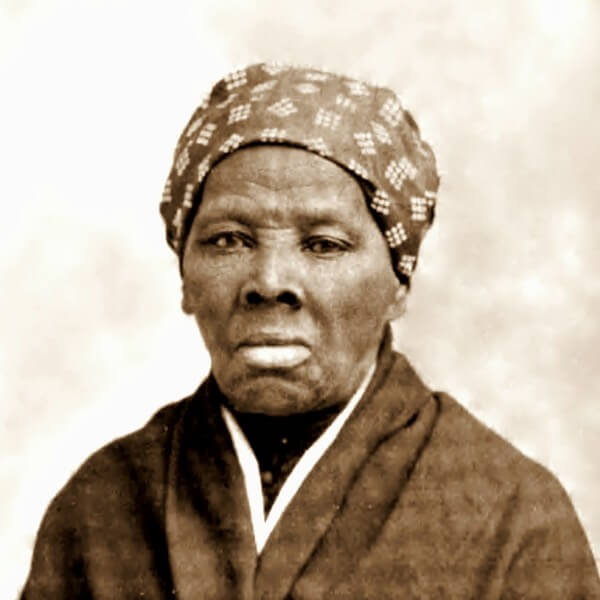
Movie Review: “Harriet,” Directed by Kasi Lemmons, 125 minutes
If you study Harriet Tubman’s life and accomplishments, you’ll wonder how the film makers thought they could cram it all into a mere two hour movie. I heard a radio review with the director, who said that she wanted to make sure that people didn’t see the film as a mere biopic.
It is a biopic, though, complete with those little written sub-headings that
show the times and places where important events took place. There was probably
no other way to do it, because Harriet Tubman was not a one-time heroine. Her
personal exploits in saving people from slavery and in actually ending slavery
spanned decades in time and hundreds of miles in distance.
We really loved this movie, but my movie buddy and I love
history and the civil rights movement. We think of the American Civil War not
as a meaningless tragedy as it is usually portrayed, but as a giant leap
forward for all of us. Those who agree are really going to like “Harriet.”
So get comfortable for a long and edifying experience when
you go to this one. It’s worth it.
I learned to type almost 70 years ago, and I still communicate with typing every day. But I also talk to Alexa, and she (it) talks to me. We are only scratching the surface.
For decades, scientists have been able to detect brain waves outside a person’s head. Any waves that can be detected can also be amplified and transmitted.
It is only a
matter of time until someone interprets those waves into something a computer can
read, and then a whole new wave of communications revolution will begin.
If a computer can
read brain waves, it can pass the information along to other computers,
sensors, and robots. Utilizing his/her brain waves, a person could theoretically
run a factory. It’s probably possible now.
If a computer can
read brain waves and translate them correctly into instructions for other
machines, it could also translate them into new information to be passed to the
brain of another human. At first, the machine might simply translate into
language, just as Alexa does now. But later, a human and machine could learn to
understand one another directly without the need for language. The technology
is within our grasp. As soon as somebody figures out a way to monetarize the project,
it will take off!
In the 1960s, a lot of long-haired hippies liked to wear headbands. It was partly practical, because lots of people wore their hair long. But it was also a fashion reflecting something about their outlook. I envision a future where lots of us wear headbands or turbans, depending on the size of the technology we need to send and receive information without using language.
Just as today’s
information explosion is changing everything about the ways we live and work, this
big new improvement in communications will have social effects. It is obvious,
for example, that we can’t go on working some people for long hours while condemning
others to unemployment and poverty. We should have shortened the workday decade
ago, and we will certainly have to in the future.
I look forward to
new and better ways to transfer and process information. There is a
relationship between truth and opinion, between science and superstition. Even
today, while politicians mobilize millions of dollars and the highest of
technology to deny the truth, truth tends to win out. Opinions, outright lies,
and superstitions are everywhere, but they are wound around a core of science
and truth.
As humans gain and process more information, we will discover more truth. Eventually, we will tend to become ungovernable by others, and capable at last of governing ourselves. It isn’t that far away.
—Gene Lantz
I’m on KNON’s “Workers Beat” talk show every Saturday at 9 AM Central Time. They podcast on knon.org. If you are curious about what I really think, check out my personal web site

It’s a peculiar thing for an activist to deliver such bad news, but there really aren’t any solutions for working people within our nation. Here’s why: If we won decent treatment for American working families , the cost of labor in the United States would go up. That’s exactly what the bosses keep telling us, but it’s true.
If the cost of labor went up in the United States, then the nation would suffer competitively with other nations. Eventually, the other nations would take over whatever goods and services we now offer to the world.
It’s a little bit easier to see in microcosm. Take, for example, the American auto industry. During the General Motors strike just concluded, management argued all the way through that they couldn’t afford to be less competitive with the transnational companies, like Nissan and Volkswagen, that are producing good cars in the United States for the United States market cheaper than General Motors. They claimed, I think, that they pay $10-$13 more per hour in unit labor costs.
Nobody really disputes that. It’s the handwriting on the wall. Eventually, those companies with the lower labor costs could drive General Motors out of business, unless we do something.
So it is in international affairs. The nations with the lowest labor costs tend to take over from those with higher costs. A lot of us would like to think that the Chinese economy has grown because of socialist planning, and maybe good planning had something to do with it, but I imagine that their unit labor costs deserve a lot of the credit. The same is true of the other rising Asian star, Vietnam.
As long as workers live in separate nations and compete with one another, then there will be pressure to drive down unit labor costs. That’s us, you and me, unit labor costs.
So there is no solution within the United States or within any of the competing nations.
That’s the bad news.
Want the Good News?
The good news is that our present idea of nation-states can be overcome with internationalism. Capitalist nation-states are fairly new in human history, and they can be overcome. The good news is that internationalism is making progress. Unionists allied with the World Federation of Trade Unions (WFTU) recently held a big conference in Nepal. They went over the same kinds of problems that we might have discussed at an American trade union conference, but their solutions are different. Their solutions are internationalist.
More and more, we are seeing the AFL-CIO unite the progressive forces in the United States. They are also doing some good outreach in other countries. President Richard Trumka recently honored the leading Brazilian leader, Lula da Silva, even though he’s in prison. Tomorrow, American trade unionists are meeting with Mexicans in El Paso to discuss problems concerning immigration. Those are marvelous developments. They point the way forward. It’s what we need. It’s what we must have.
How Do We Get There?
Working families struggle at every level. Contract fights, elections, legislative battles, and whatever else comes up. Working families have a big stake in everything that happens, and they have to fight to get anything at all. More and more, we are seeing people fight for one another. It’s called solidarity, and it’s growing nicely.
The fights will continue and so will the solidarity. It will grow into international solidarity, too. Keep going, everybody, you’re doing great!
–Gene Lantz
I’m on KNON’s “Workers Beat” program every Saturday at 9 AM Central Time. They podcast it on knon.org. If you are curious about what I really think, check out my personal web site
Those of us who
have been pulling for the General Motors strikers might begin today to evaluate
what we have learned.
Striking can pay off in the current economic and political situation
General Motors employees showed incredible gumption
Union solidarity is terrific
Public solidarity with union members is rising
Union-busting can be beaten
We could have done a lot more than we did
The American people are learning which side they are on and what to do about it
On the day before voting is supposed to end, it looks like at least a 60% ratification vote.
That’s Courage!
There’s a lesson
right there. Apparently, 40% of the union members were willing to continue the
strike beyond its 6th week! Being on strike is really, really hard! Whether
one agrees with them or not on the contract, one surely must concede that they
really have guts!
The contract summary is on http://uaw.org. Some of the newspersons have written that it comes up short in providing job security and in bringing the “perma-temps” into full-time employee status. But the people who actually know what they’re talking about consider it quite a victory.
We Win!
The top American union leader, AFL-CIO President Richard Trumka, wrote:
“I’ve never felt prouder to be a union member. Backed by millions of brothers, sisters and friends across the country, UAW members stood together to win the fair treatment that they’ve earned over years of selfless sacrifice. I commend the UAW’s national negotiators for standing firm to deliver on what their members demanded and hope this will bring an end to one of the most courageous fights I have ever seen. This is the latest victory in a wave of collective action happening across America. Working people won’t allow greed to dictate our lives, and we won’t tolerate a system that’s been rigged against us. Bosses everywhere should take note—we’re not going to take it anymore.”
On the picket
line on day one, it was like a carnival! There were any number of people who
were not UAW strikers. Some were from other unions, but some were not union
members. Many of the passing cars honked approval.
Social media
started spouting all kinds of solidarity messages. Some of them came from the
union, but a lot of them were home-made. Political office holders and
candidates started posting “I stand with the strikers” and proud pictures of
themselves on the picket lines. Several presidential candidates were among
them.
A lot of people
were asking how they could help. Cases of water were stacked up. People brought
cookies and other snacks. In my area, one AFL-CIO unit started raising money to
help strikers with financial problems through United Way. They weren’t asked by
the union, and they didn’t ask the union. They just did it!
Yard signs of
solidarity started going up, and lots of people were asking how to get one.
Beating Union
Busting
The newspersons talked
more about this strike than they usually talk about anything to do with the
union movement. They completely missed the important part, though.
What they could
have said was that the 2019 General Motors strike represented an all-out union
busting effort by General Motors, other corporations, right-wing ideologues,
and the federal government. The result was an historic victory for working
families!
Most of the
coverage came from two Detroit newspapers. Every article and opinion piece
always included the government’s investigations of top UAW leaders on charges
of corruption, money laundering, and embezzlement. Investigations had been
going on for a while, but they really hit the news on September 15, when the
strike began!
Writers on our
side, people like me, didn’t talk about these investigations because we
recognized them for what they are: union busting. They were hoping to divide
the strikers from one another, from their leadership, and from their growing
public support. Now that the strike is over, I expect the fanfare to fizzle.
We Could Have
Done More
I am a long-time UAW member from the aerospace section. I did not expect the UAW leadership to utilize the lessons that won unprecedented victories for the teachers of West Virginia, Oklahoma, and Arizona. I hoped they would, but I didn’t expect it and, unfortunately, they met my low expectations.;
Basically, all
the UAW leadership did was call a strike and set up the financial structure to
pay the members who carried out their strike duties. What might they have done?
They
could have organized their retirees and other supporters to join the pickets
and carry out other solidarity actions
They
might have suggested that supporters could carry out informational pickets at
car dealerships
They
might have had an ongoing union educational program for off-duty strikers
They
might have had social events for strikers, and even for supporters
But, as far as I
could tell, they didn’t.
Contrast the General Motors strike with the Chicago Teachers strike that started just as the autoworkers were winding down. The Chicago Teachers held a national solidarity day, today, in which everybody published selfies of themselves or their organizations. Their hashtag, #putitinwriting, will give them thousands if not millions, of contact information for supporters all over the world! If they should decide on expanding the strike or, for example, on raising money, they now have an incredible base of support!
If the Chicago
School Board doesn’t cave soon, we are likely get a real lesson in modern
fighting tactics from the Chicago teachers!
Summing Up
News coverage of
the 2019 General Motors strike will continue to nit pick over the contract
details. A few of them might discuss the strike tactics. But they will continue
to miss the historic importance: The American people are ready to fight, and we
are learning how to win!
–Gene Lantz
I’m usually on http://knon.org/workers-beat every Saturday at 9AM, unless a tornado destroys the studio. If you are curious about what I really think, check out my personal web site.
Today, while
Corporate America, dark money, and an even darker government are trying to
destroy the United Auto Workers, it would be good to consider what it means for
all of us. To do that, look back in American history to a time before the UAW
became the first great success of the Committee for Industrial Organization.
In 1935, nearly all American unions were weak. They were divided by craft. Only the most elite and skillful, nearly all white men, were even considered for union membership. The few unionized African Americans were isolated in segregated unions. White and black unions in the same workplace even scabbed on each other! The many child laborers, of course, had no union representation at all.
Color and gender lines were broken once and forever in the union. The UAW organized industrially. That is, everybody who worked in the industry was a candidate for membership. Their anti-discrimination pattern and their militant action were followed in the great upsurge that followed, and working people in America gained unprecedented power.
Everything we have won can be taken away from us if we don’t fight
The UAW never limited itself to contract battles. They threw themselves into the political fight against the fascism that was growing in America and around the world. In the 1960s, the UAW organized its retirees into a national organization that fought for, and won, Medicare and Medicaid!
The civil rights we won are being shredded today
The explosion of
worker power went far beyond improving wages and benefits. America’s civil
rights also surged forward, and the UAW was more than just a great example to
follow.
The UAW supported
the civil rights movement. If you have looked at photos and videos of the
American civil rights movement that began in 1954, you may wonder who was that
white man in the front ranks? He was the President of the United Auto Workers!
The first version of Dr King’s “I Have A Dream” speech was written in his
Detroit office, which was in the UAW’s Solidarity House. The United Farm
Workers’ first big contribution was $10,000 delivered to Cesar Chavez and
Dolores Huerta in California by UAW Representative Pancho Medrano of Dallas,
Texas!
Before the UAW, most American workers were no better off than day laborers. Corporate America has never forgiven the union for its part in bringing dignity into our workplaces. They would like nothing better than to destroy the UAW and the entire American labor movement. That’s why we have to fight!
–Gene Lantz
I’m on KNON radio’s “Workers Beat” at 9 AM Central Time every Saturday. They podcast on http://knon.org. If you are curious about what I really think, check out my personal web site
Yesterday, I met with a futurist researcher named Mike Courtney. He wanted to interview me, he said, for a paper he’s writing on “unions and automation.”
Me and Mike Courtney having coffee and opinions
I gave Courtney fair warning. I told him that my views don’t represent anybody but me, but I have AN AWFUL LOT of opinions.
This futurist said that some automation is apparently “good,” but some of it is also “bad.” He wanted to try to find the line distinguishing “good” from “bad” automation. He figured a union man’s opinion would assist.
I told him that unions usually oppose automation, but we’re wrong when we do. As far as I can tell, unions either do nothing about automation or they try to negotiate with corporations to ease the pain when automation is inevitable. Good examples, I told him, were probably the Mine Workers and the Dock Workers on the Pacific Coast. I understand that both of them were decimated by automation, but not until after they had negotiated as good a deal as they thought possible. In my own local union, our Negotiating Committee Chairman once set up a “New Technology Committee” to try to advise negotiators what to do about automation. I consider that just about as good as any union does nowadays. At least they tried.
I could have told him that the machines I started running in 1978 replaced 16 conventional machines and, thus, 15 jobs. The machines that eventually replaced mine, as I retired, each replaced six of the ones I ran. Five more jobs lost to automation.
I did tell him what I did as an accountant. This was back before IBM introduced their 360 mainframe to take over jobs. I started a process of bill-paying that was all computerized. The machine compared what we thought we should pay with what the vendor was requesting. If they agreed, the bill was paid as soon as it was due. If they didn’t agree, then the accountant had to reconcile them and stick reconciliation data, positive or negative numbers, back into the machine. The machine just compared two sets of data and kicked out the ones needing reconciliation. I guess I would have seen the Accounting Department decimated if I hadn’t gotten bored and quit.
I think that Futurist Courtney was a little bit surprised when I insisted that unions were wrong to oppose automation. After all, I said, automation does what capitalism does best — lowering the unit price of the products we need or want.
The only problem with automation is how its benefit is allocated. Right now, all the benefit accrues to the capitalist in charge. Workers get nothing but layoff notices or, if they are lucky, they get to stay at work and do something even more mindless and boring than what they had before.
The automation genius of today is Jeff Bezos of Amazon. He has tens of thousands of employees worldwide. They do pitifully repetitious tasks and get paid very little. Besos, last I heard, makes $215,000,000 a day!
The solution to the problems that automation causes is not to oppose it. The solution is to grab some of the benefit. The way to do that is to shorten the working day every time productivity goes up. It’s the amount of wealth that an average worker produces in an average hour. Productivity is a statistic that the Bureau of Statistics gives out, I think, every quarter. It’s often around 2%.
Productivity aggregates, like a saving account aggregates. If you put the quarterly increases into a spreadsheet, you would see that an American worker today makes more than 4 times as much wealth in an hour than he/she did at the end of World War II. If the unions had known what they were doing, they would have demanded cuts in the working day so that they wouldn’t have lost 70% of their members, as they did.
The worst part about it, I told the futurist, is that union leaders figured this out long ago. From 1937 to 1947, the heyday of the Congress of Industrial Unions (CIO) they demanded “30 for 40 with no cut in pay” every time they negotiated a contract. It meant that workers should work only 30 hours a week but continue to get paid the same that they made in 40 hours.
My own CIO union, the Auto Workers, had resolutions for “30 for 40” in every convention up to 1957. Then it disappeared. If you asked union leaders today about cutting working hours, I don’t think they would know what you are talking about.
My friend Tom Berry knows. He does a forum in North Dallas every Saturday evening. And every Saturday evening he gets up and says that Americans should demand a 6-hour day. It works out mathematically, you see: instead of 3 8-hour shifts we would have 4 6-hour shifts. Unions would be bigger and periodic unemployment would be less of a problem.
There are other advantages, too. Some researchers think that shortening the working day, completely by itself and for no other reason, would increase hourly productivity. People would just do their jobs better.
Another advantage might be that people with more leisure time might create even better ways to improve our quality of life.
Historically, the fight for shorter hours defined our worldwide labor movement. Getting the Fair Labor Standards Act in 1935 was the best thing we ever did. It said that employers had to pay their blue-collar workers overtime if they worked us more than 40 hours in a week. That’s all it said, but it was great.
But shortening the working hours has passed completely out of our collective consciousness. Most of the workers in my union don’t even want shorter hours. They grab up all the overtime they can get, just to pay their bills. A major social change like shorter working hours just doesn’t seem real to them, and that’s the union’s fault. Automation is killing American labor, and we have no program to deal with it.
–Gene Lantz
I’m on KNON Radio’s “Workers Beat” talk show at 9 AM Central Time every Saturday. The podcast it on knon.org. If you are curious about what I really think, check out my personal web site.